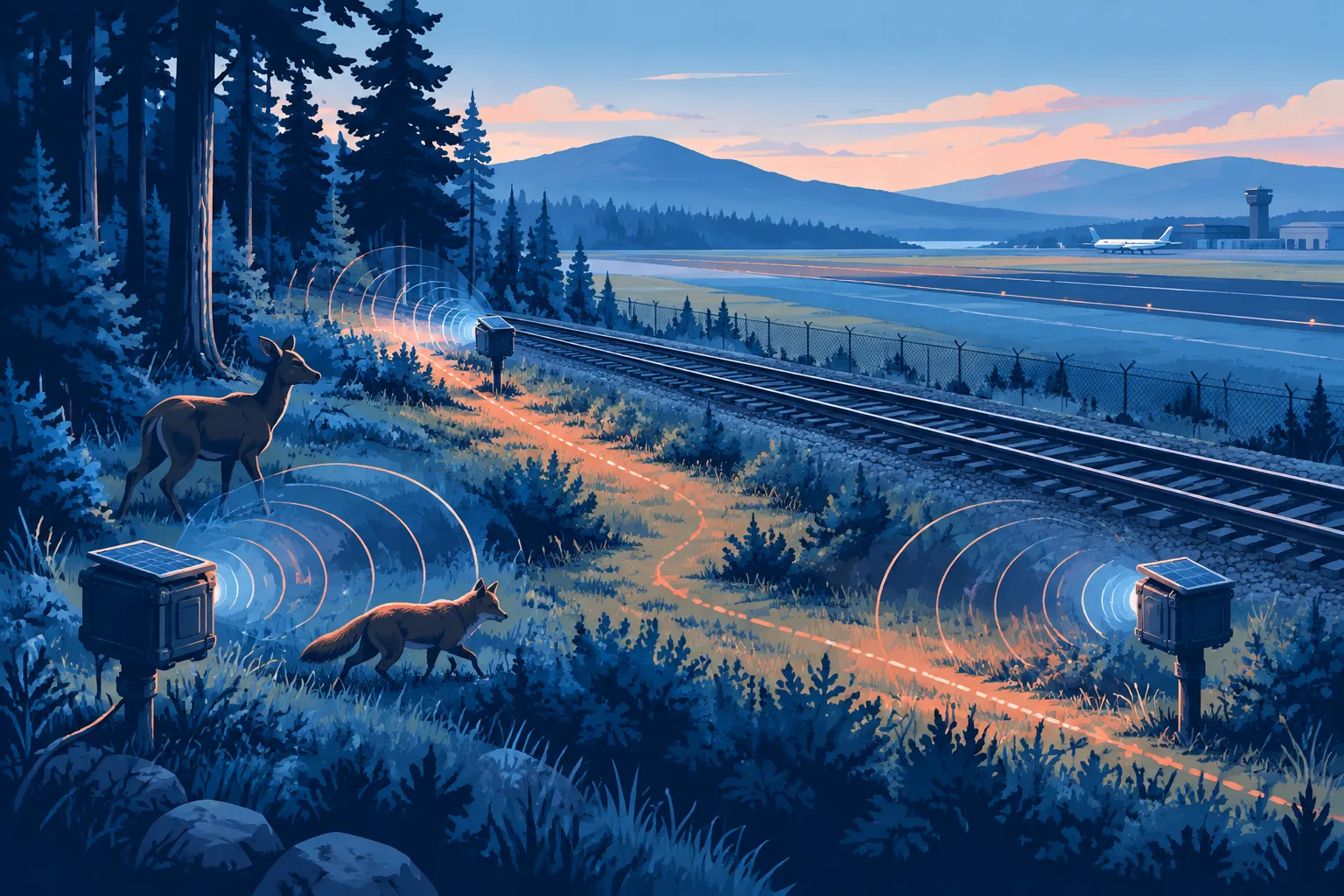
Wildlife collisions are an infrastructure problem as much as an ecological one. TechCrunch reports that Swedish startup Flox Intelligence is deploying edge-AI devices around rail lines, roads, airports and other sites to recognize nearby animals and choose sounds intended to drive them away before they enter dangerous areas.
The scale of the problem is substantial. TechCrunch cited a Federal Aviation Administration estimate that wildlife strikes cost United States civil aviation an average of about $272 million a year from 1990 through 2025. France’s rail operator SNCF says roaming animals affect more than 8,000 trains nationally each year and rank among its five leading causes of delay.
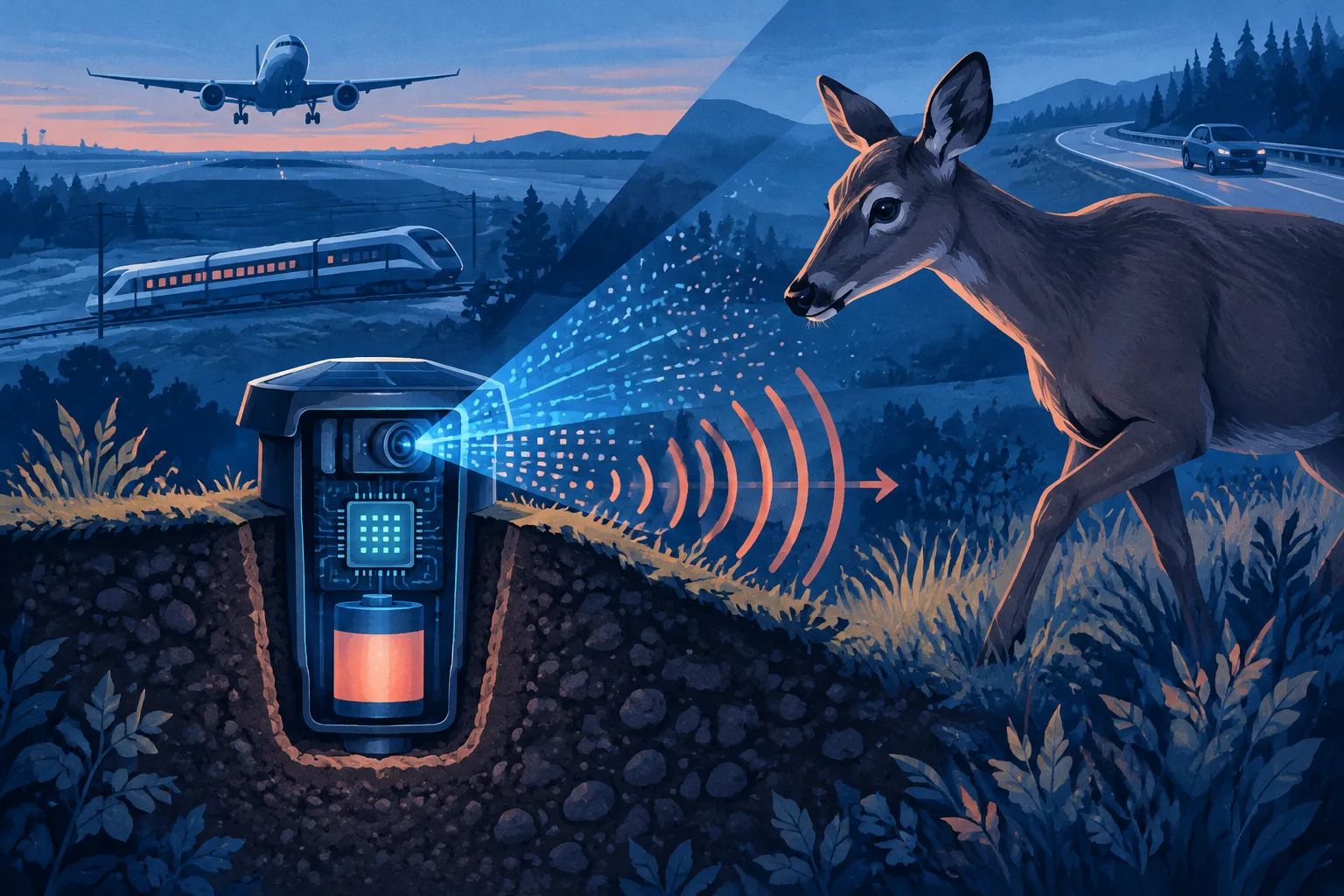
Flox’s device is designed to react locally rather than send every observation to the cloud. A motion sensor wakes the unit, a camera captures the scene, and on-device models attempt to identify the animal. The system then emits a sound selected for that species. Founder Sara Nozkova told TechCrunch that the system also changes its responses over time so animals are less likely to become accustomed to one repeated signal.
The company sells battery-powered units that can be attached to poles, trees and other structures. Its accompanying software shows customers where devices are installed and what they are detecting, and it can produce material for regulatory reporting and biodiversity monitoring. Flox ultimately wants the underlying software to run directly on outdoor machines such as trains, cars and drones.
Nozkova said roughly 150 devices are operating across North America, Europe and Australia. The reported locations include airfields, airport perimeters, road and rail corridors, national parks, farms, urban sites, mines and electrical substations. Along transport routes, deployments are concentrated at openings and crossings where wildlife corridors intersect infrastructure.

Flox charges for its edge units and then collects an annual software and AI subscription after the first year. It also licenses the technology through original-equipment-manufacturer partnerships, including one with train maker Alstom. Nozkova expects the company to finish 2026 with about $1.5 million in revenue, a projection that remains the startup’s own estimate.
The approach is not alone in the market. TechCrunch identified Robin Radar’s Scarecrow, which uses species-specific distress calls for birds, and iCHASE, which combines computer vision with a moving laser. Flox argues that its advantage comes from supporting a broader range of settings and from field data about how large animals respond. The report, however, does not provide independent success rates or comparative trials showing how reliably the system prevents collisions.
Flox has raised about $5 million across pre-seed and seed rounds and is opening a $10 million Series A, according to Nozkova. The planned financing would help expand from roughly 150 units to several thousand and extend the technology beyond its current wildlife applications. The ambition is clear; the next test is whether adaptive deterrence can remain effective as it moves across more species, climates and transport networks.
Comments
Loading comments…