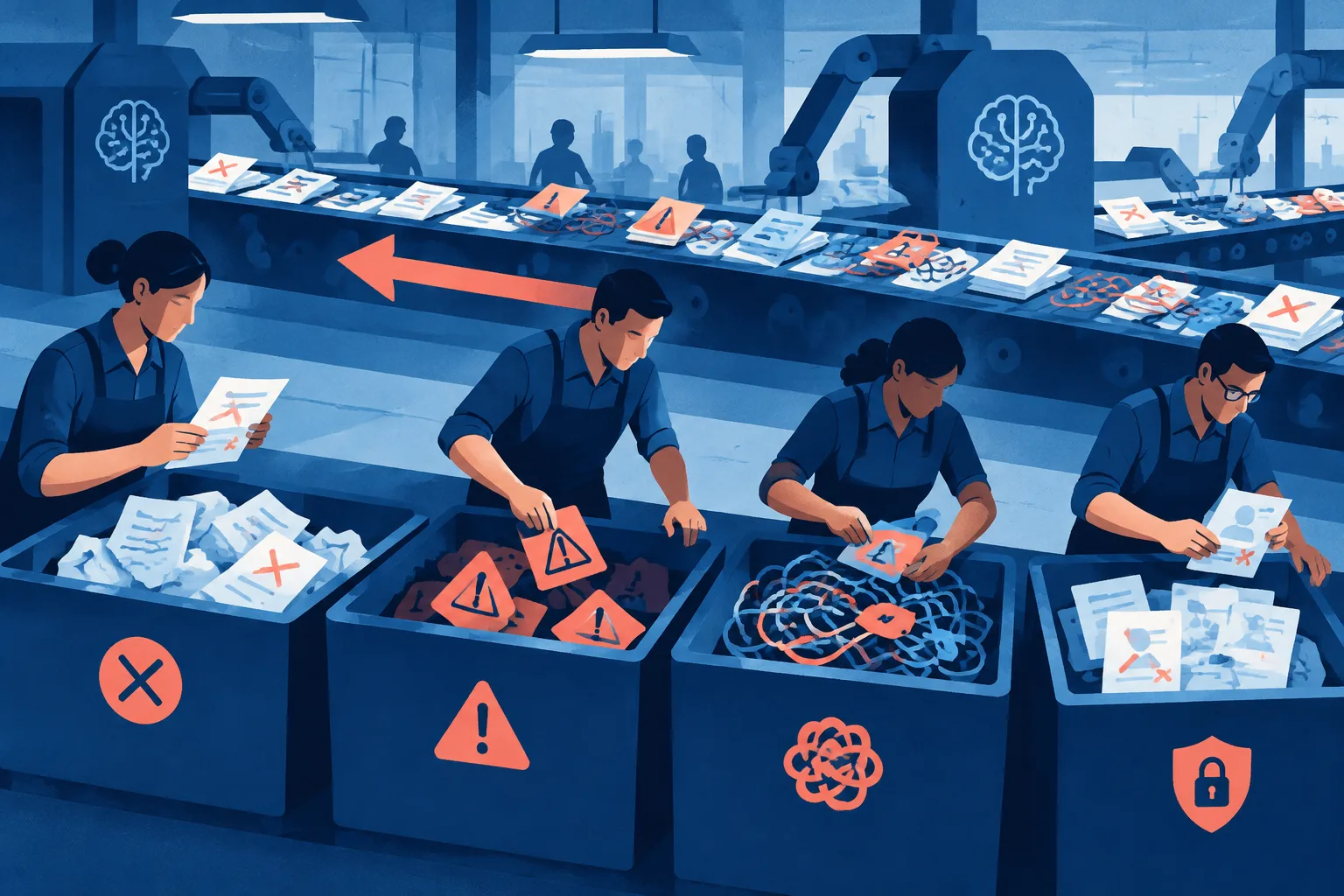
Some large employers are tempering the speed of their artificial-intelligence rollouts after workers encountered errors, weak output and new security problems. In an October 13 analysis, The Guardian reported that companies including Meta, Microsoft and Walmart are confronting the operational consequences of putting fast-changing AI systems into everyday work before processes, training and oversight were ready.
Meta has reportedly pulled back from plans to replace more staff with AI agents after employees spent increasing amounts of time correcting technical and security mistakes. The Guardian, citing Reuters and workers' LinkedIn posts, also said the company is rebuilding parts of the managerial layer it had reduced during its 2023 efficiency campaign. Meta did not respond to the newspaper's request for comment.
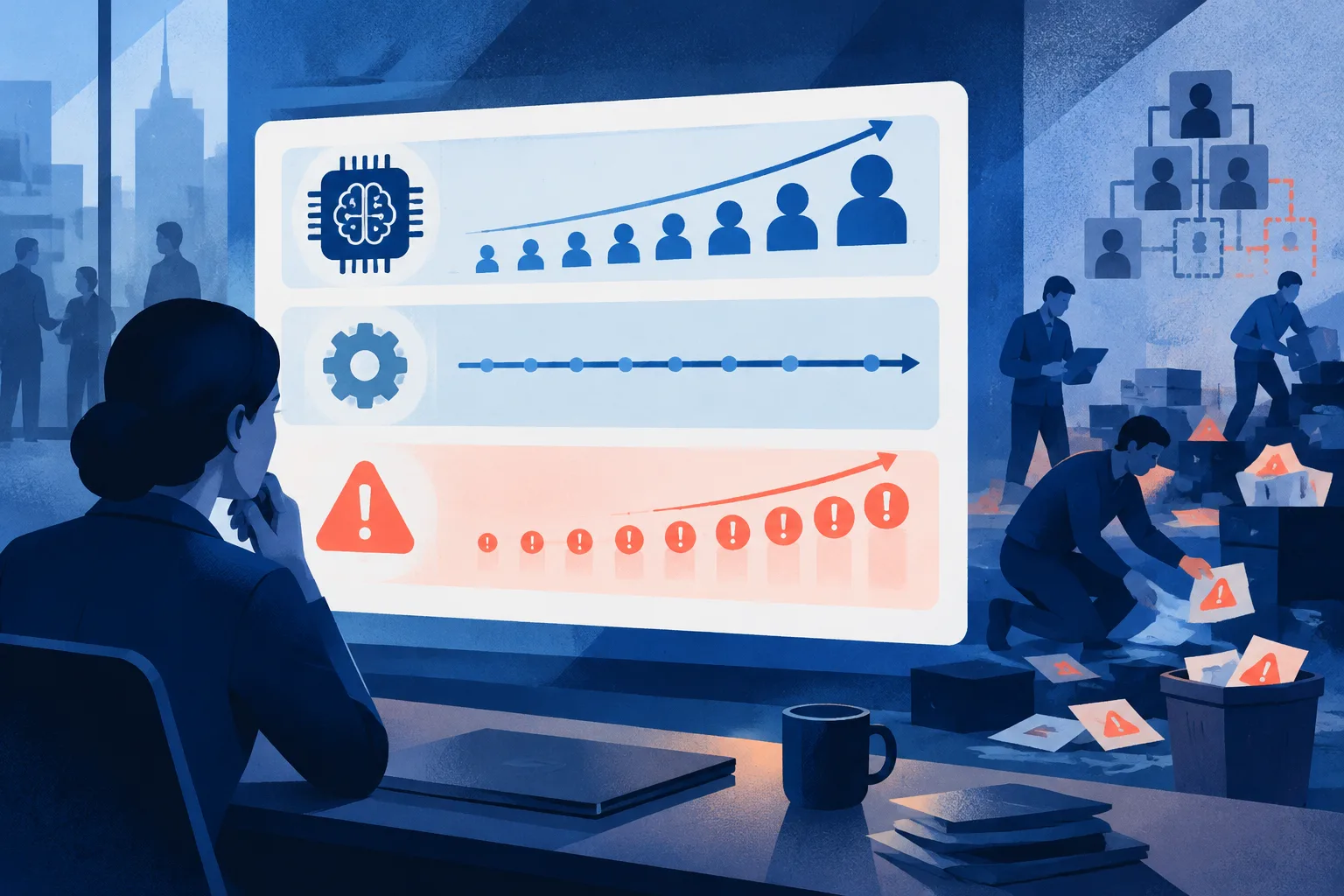
The pattern is broader than a single company. The Guardian said 90 percent of executives surveyed for an Atlanta Federal Reserve working paper reported that their AI initiatives had not yet produced productivity gains. A separate Ernst & Young survey found that 36 percent of senior AI executives at companies with at least $1 billion in annual revenue had experienced an AI incident involving consequences such as data loss, financial damage, brand harm or operational disruption.
Some employers are responding with tighter limits. The Guardian reported that Microsoft and McKinsey have restricted employee access to certain AI tools because of cost, while Palantir, Booz Allen Hamilton and Nvidia have limited use over concerns about organizational data reaching AI providers. Microsoft strategy executive Kathleen Hogan wrote that broad access and frequent use do not by themselves amount to business transformation.
Training has emerged as another fault line. An Indeed survey cited by The Guardian found that more than half of employees said they were not receiving the AI training they needed, while only 45 percent of managers felt prepared to lead workers who are highly fluent with the technology. Companies are therefore shifting away from generic, one-time webinars toward sustained instruction designed for specific roles.
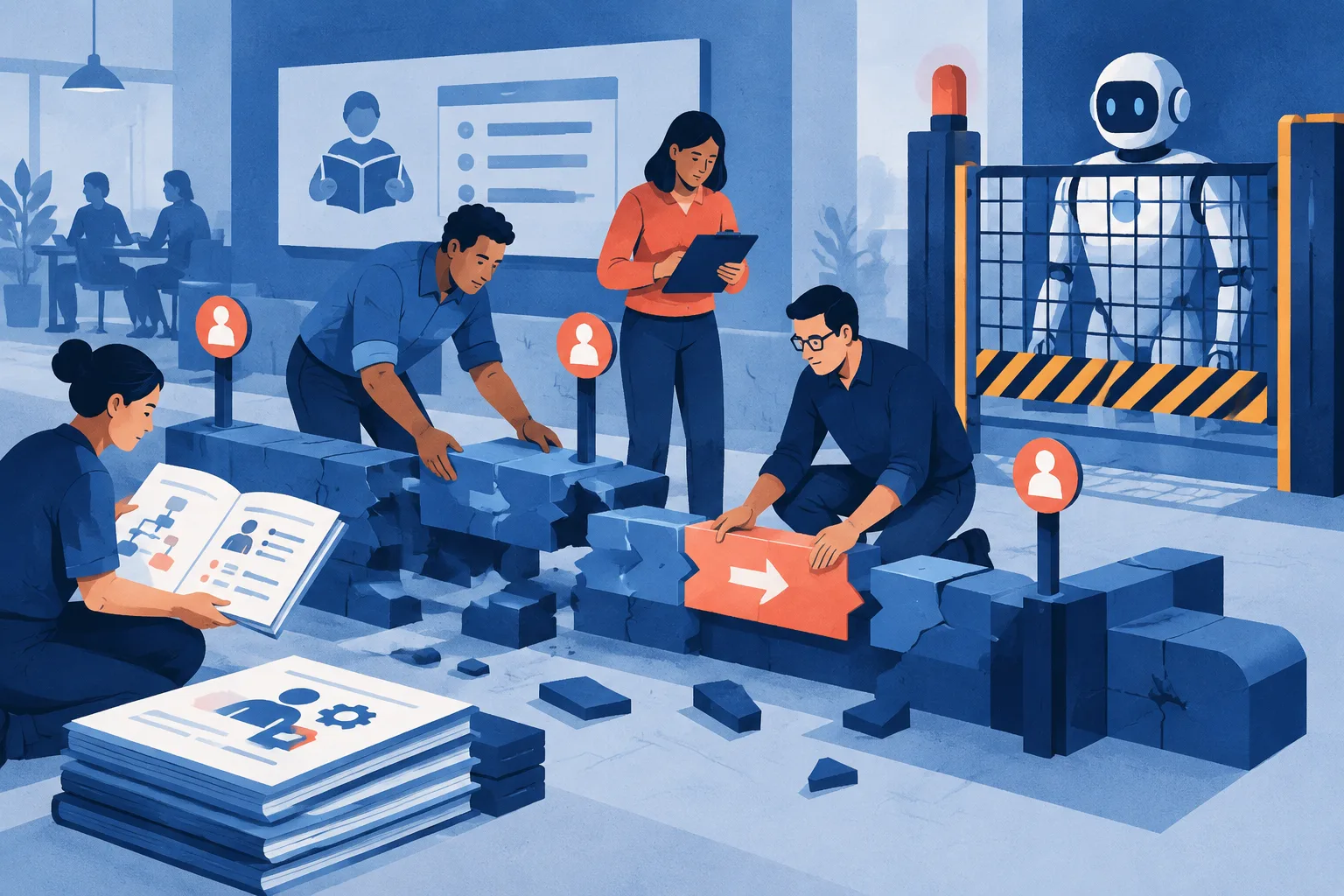
Microsoft's internal experience points to why process design matters. The company found that adding AI agents to a flawed workflow left the underlying workflow flawed, and accelerating one stage could simply produce a larger backlog at the next. The Guardian reported that Microsoft saw better results when it emphasized training and paired early-career engineers with experienced colleagues rather than treating the tool itself as the transformation.
Walmart workers described a more direct collision between automated systems and physical work. According to reporting summarized by The Guardian, employees said AI tools sometimes plotted impractical fulfillment routes, generated unhelpful safety alerts and produced unrealistic schedules. Walmart declined to comment. The examples do not establish that every automated decision failed, but they show how model errors can transfer extra work and pressure to people expected to follow them.
The evidence remains mixed rather than a verdict against workplace AI. The Guardian cited research finding no productivity increase after companies invested in AI and reduced staff, while more than 112,000 US job-cut announcements in 2026 have mentioned AI. Those figures do not prove that every deployment will fail. They do show that adoption, staffing cuts and measurable performance should be evaluated separately, with review costs, training, data protection and human expertise included in the calculation.
Comments
Loading comments…