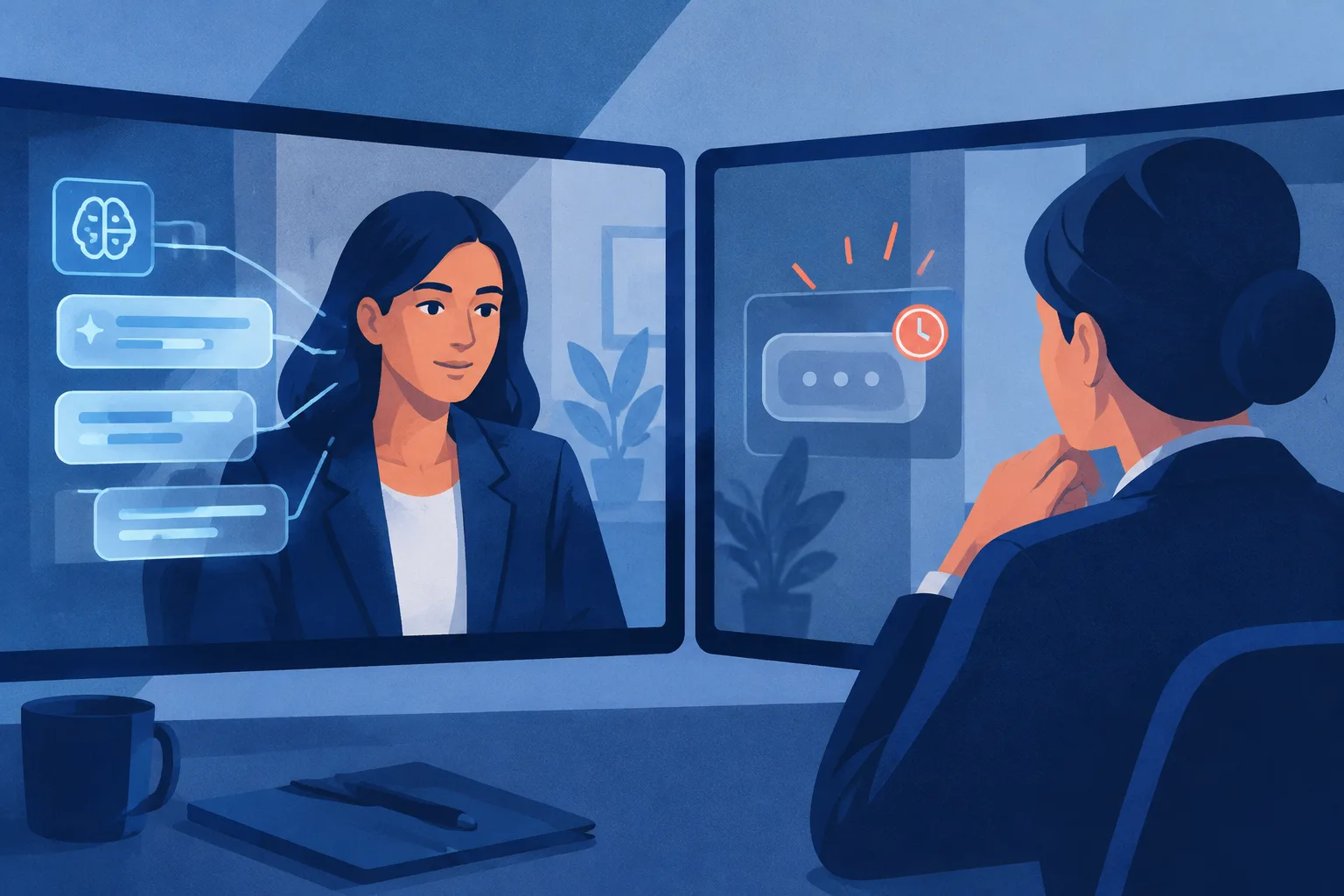
Artificial intelligence is creating a new kind of integrity problem for employers: candidates can now receive generated answers while an interview is under way. The Guardian reported on October 14 that UK recruiters are increasingly encountering applicants who appear to use real-time AI tools during remote interviews, adding a fresh layer of uncertainty to a hiring process already transformed by online assessments and video calls.
The report does not suggest that every use of AI in a job search is deceptive. The concern is undisclosed assistance that lets an applicant present generated responses as their own. Chris Morrow, who runs the Manchester recruitment agency Digitalent, told the Guardian that his team ends an interview when it concludes a candidate is using such a tool. He said the pattern can be visible in a pause before an answer, repeated filler phrases, and language that sounds unusually formal or stilted.
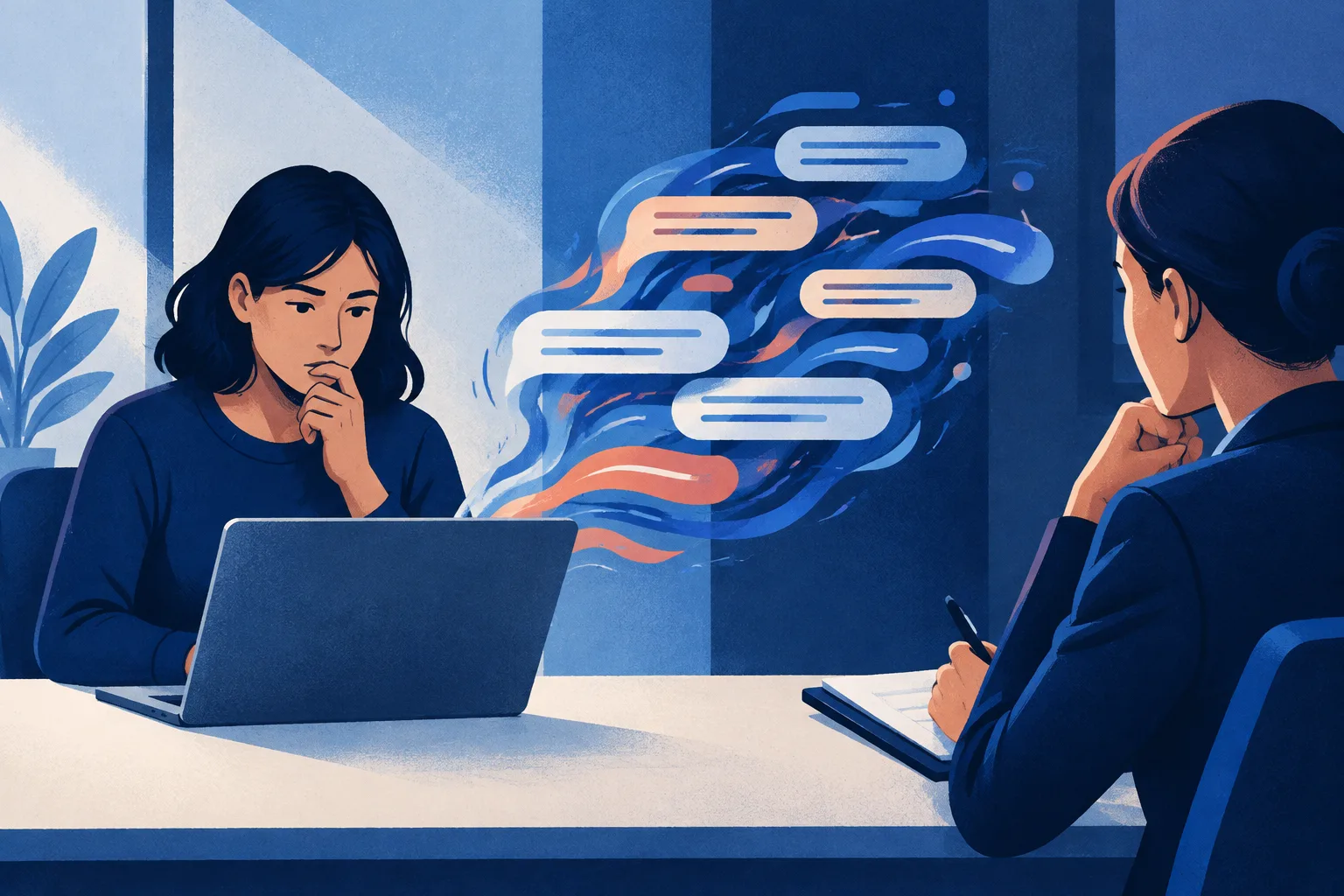
Employer concern has risen for three consecutive years in the Institute of Student Employers’ annual survey. According to figures reported by the Guardian, 92% of respondents said they had suspected or confirmed misconduct during assessment and selection, up from 85% a year earlier and 78% the year before that. The survey group has 290 employer members, including Marks & Spencer, Rolls-Royce and Accenture, though the institute did not identify which organizations answered the survey.
Interviews have become a prominent part of that problem. Sixty-six percent of survey respondents reported at least one graduate misusing AI during an interview. Unauthorized use in online assessments was reported by 47% of respondents, while the survey also identified concerns about AI-written application answers, CVs and cover letters. Those findings describe the employers that participated in the survey; they should not be read as a measurement of every graduate applicant or every UK employer.
The technology changes the task facing recruiters. A polished answer is no longer necessarily evidence that a candidate can reason through a question unaided, while a brief delay can have several innocent explanations, including nerves or a poor connection. Employers therefore face a difficult balance: identify material misrepresentation without treating ordinary pauses or formal speech as proof. The Guardian’s report shows recruiters relying on behavioral signals, but it does not describe a standardized or independently validated detection method.

Stephen Isherwood, the institute’s chief executive, told the Guardian that candidates who misrepresent their abilities risk ending up in the wrong job. His advice was more basic than any detection system: applicants should research a role and understand what it requires. That frames the issue as one of fit as well as fairness. If generated coaching helps someone clear an interview for work they cannot perform, both the employer and the new hire may discover the mismatch after the hiring decision.
The same survey complicates claims that AI is already wiping out graduate opportunities. Graduate hiring rose 4% in 2026 after falling 8% the previous year, and employers expected a further 7% increase over the following 12 months. The outlook was uneven: 40% of respondents were reducing their graduate intake, 45% were increasing it and 15% were keeping it level. Isherwood attributed the reductions to economic uncertainty rather than AI and said concern about automation’s effect on hiring was still two or three years away.
For now, AI’s most visible impact on entry-level recruitment may be procedural rather than numerical. Employers are being pushed to define which forms of assistance are permitted, tell candidates where the boundary lies, and design interviews that reveal judgment rather than reward fluent phrasing alone. Applicants, meanwhile, face a clearer distinction between using AI to prepare and secretly outsourcing the interview itself. The technology may not yet be shrinking the graduate pipeline, but it is forcing both sides to decide what an authentic assessment looks like.
Comments
Loading comments…