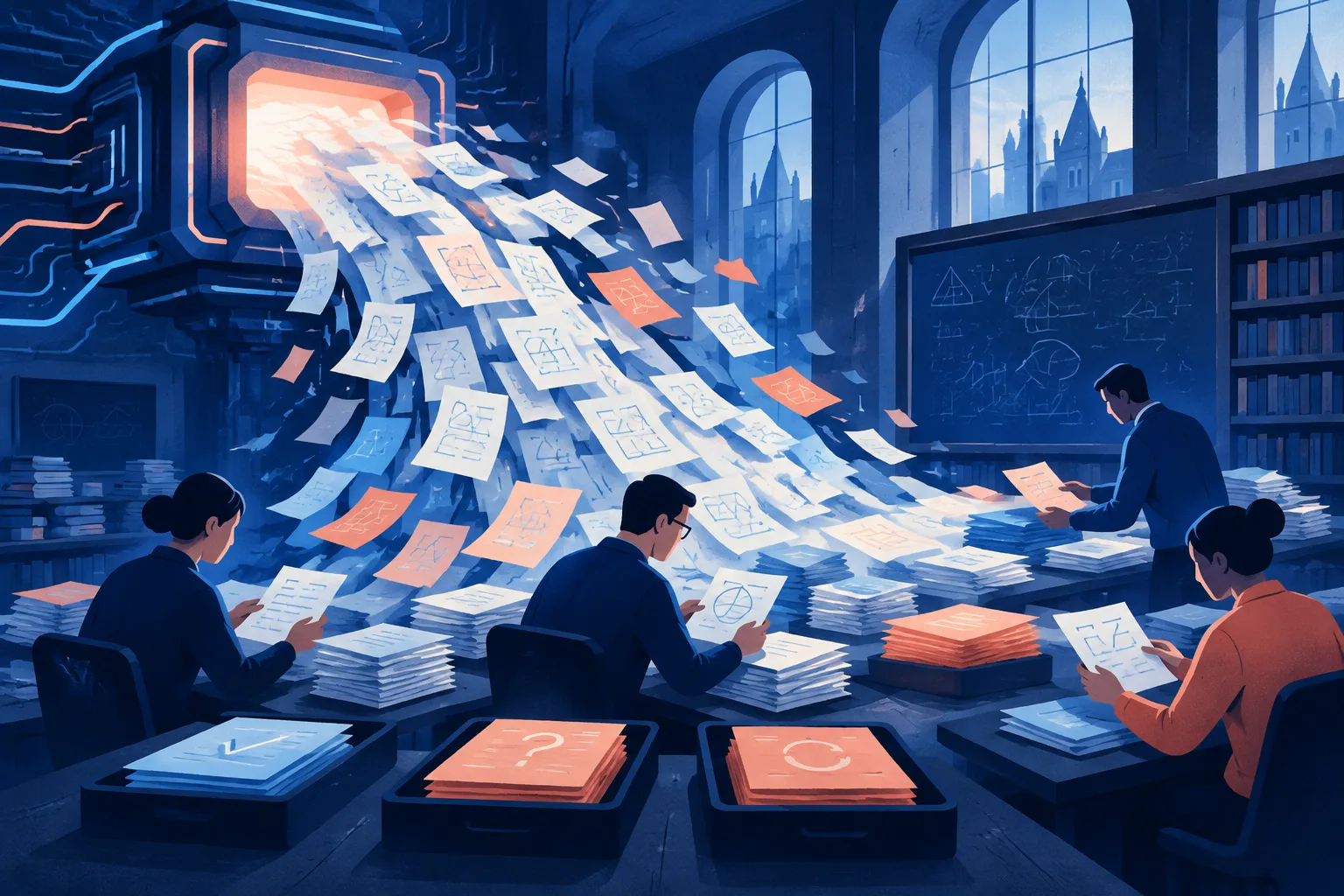
OpenAI has released nearly 400 artificial-intelligence-generated mathematical results across 719 manuscripts, confronting researchers with a volume of material that The Verge reports could take years to understand. The collection spans combinatorics, geometry, number theory, theoretical computer science, algebra, topology, probability, statistical mechanics and mathematical physics. Its scale has produced sharply mixed reactions: excitement about apparently important advances, frustration over incomplete verification and anxiety about the future of mathematical careers.
The central problem is not simply how many claims OpenAI published, but how unevenly they have been checked. Formalizations written in Lean can allow proofs to be evaluated computationally, and The Verge said those formalizations have helped researchers assess earlier OpenAI claims. OpenAI reported that 300 top-line results from the 719 manuscripts had been formalized, or about 42 percent, and said more would be added. Researchers cautioned that even a Lean file requires review to confirm it proves the same claim presented in the accompanying manuscript.
The repository was already changing as mathematicians examined it. As of October 8, OpenAI’s public history listed revisions to more than a dozen manuscripts and the removal of three papers after a sign error invalidated an argument, according to The Verge. Several researchers also described papers that were hard to follow, unusually compressed or weakly attributed. Others said early impressions were better than they had expected based on OpenAI’s earlier mathematical write-ups, though the quality remained inconsistent.
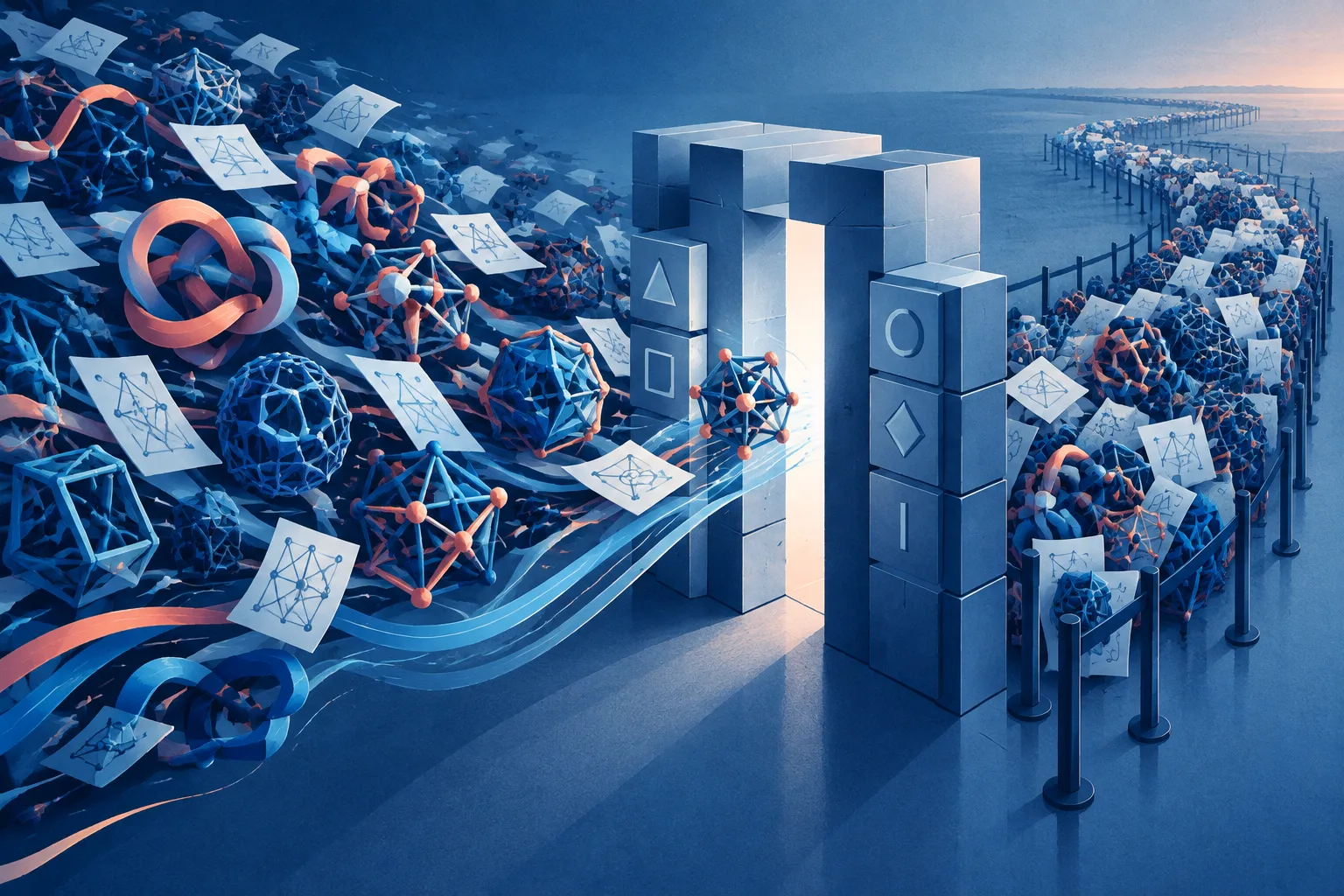
Despite those shortcomings, mathematicians interviewed by The Verge said parts of the release appeared genuinely impressive. Stanford mathematician Jared Duker Lichtman identified tens of results he considered potentially exceptional, including progress related to the Riemann hypothesis, a special case of the Hodge conjecture and a claimed solution to the four-dimensional Kakeya conjecture. The first two concern Millennium Prize problems. Those assessments remain preliminary because the collection is still being verified and contextualized.
The release also exposed a mismatch between machine production speed and the human capacity to evaluate research. OpenAI disclosed that its model attempted more than 4,000 problems and that a typical result used about three hours of ChatGPT Pro thinking compute. By contrast, experts must read proofs, examine formalizations, trace prior work, repair exposition and determine whether a result is both correct and genuinely new. The Verge reported that some mathematicians spent close to an hour merely reviewing the roughly 40-page table of contents and abstracts.
That burden has immediate academic consequences. Researchers told The Verge that some grant proposals and planned research programs had been overtaken by the release, with probability, combinatorics and theoretical computer science among the areas described as especially affected. Junior scholars may be particularly exposed because open problems can anchor dissertations, funding applications and job prospects. These accounts describe disruption reported by individual mathematicians; the article does not quantify how many careers or projects have been displaced across the field.

OpenAI consulted the newly formed Advisory Group on Mathematics and Artificial Intelligence about responsible publication. The group had urged AI labs to release work humans can understand, support the labor needed for verification, formalize proofs where possible and disclose the models and prompts used. OpenAI followed some recommendations by providing more information, preserving a public revision history and promising workshops and conferences. It did not identify the model, publish the prompts or disclose the complete set of attempted problems, according to The Verge.
The debate is therefore about more than whether a machine can produce correct theorems. Mathematicians told The Verge that research also depends on explanation, attribution, connections between ideas and the generation of new questions. A rapid release of answers can transfer the expensive work of interpretation and quality control to the academic community. OpenAI, for its part, said continued testing of frontier models in mathematics and science is important to building tools that can advance those fields.
There are also reasons not to treat the release as the end of human mathematics. Lichtman said the results he examined appeared to use existing methods and techniques in ingenious ways rather than establish an entirely new mathematical landscape. Other researchers emphasized that mathematics offers effectively unlimited directions for inquiry. The immediate challenge is narrower and more concrete: deciding which claims are correct, which are new, and how the strongest results fit into knowledge built by people over decades.
Until that work is done, the collection is best understood as a vast set of provisional research claims rather than hundreds of settled breakthroughs. The Verge’s reporting supports both sides of the reaction: some results may be important enough for top journals, while the repository also contains revisions, retractions and manuscripts that experts found difficult to evaluate. OpenAI has accelerated the production of possible mathematics; the bottleneck now sits with the humans asked to verify, explain and absorb it.
Comments
Loading comments…