
OpenAI has released 722 mathematical manuscripts generated by an unreleased frontier model, turning weeks of anticipation into a verification task for the wider research community. The Verge reported on October 6 that the collection is organized into 372 result families, which group related papers. The independent Advisory Group on Mathematics and Artificial Intelligence, known as AGMAI, says the batch contains solutions to hundreds of open questions, but the significance and correctness of the individual results will require assessment by mathematicians.
The scale makes this release different from a single headline claim. In September, OpenAI said the model had resolved more than 100 long-standing open problems across most areas of mathematics. The new collection adds manuscripts, summaries of some of the model’s reasoning, estimates of the computing used and statistics about the number of problems attempted. OpenAI says an average result consumed the equivalent of three hours of ChatGPT Pro thinking, a company-provided estimate rather than an independent measure of research difficulty.

Publication format is part of the story. OpenAI placed the results in a GitHub repository and said it created protocols for revisions and citations. The company also said it is exploring other community-hosted options that could better meet guidance from mathematicians. That approach makes a large body of work accessible quickly, but it does not by itself provide the established review, correction and attribution processes through which mathematical claims normally earn acceptance.
AGMAI’s recommendations, published in late September, asked AI laboratories to disclose information including the model name, prompts and compute costs, and to distribute results promptly through established academic channels when possible. The group also warned companies against treating mathematical releases as marketing vehicles, arguing that the practice can harm the mathematical community. OpenAI said future releases would improve citations, exposition and presentation so the papers are easier to understand.
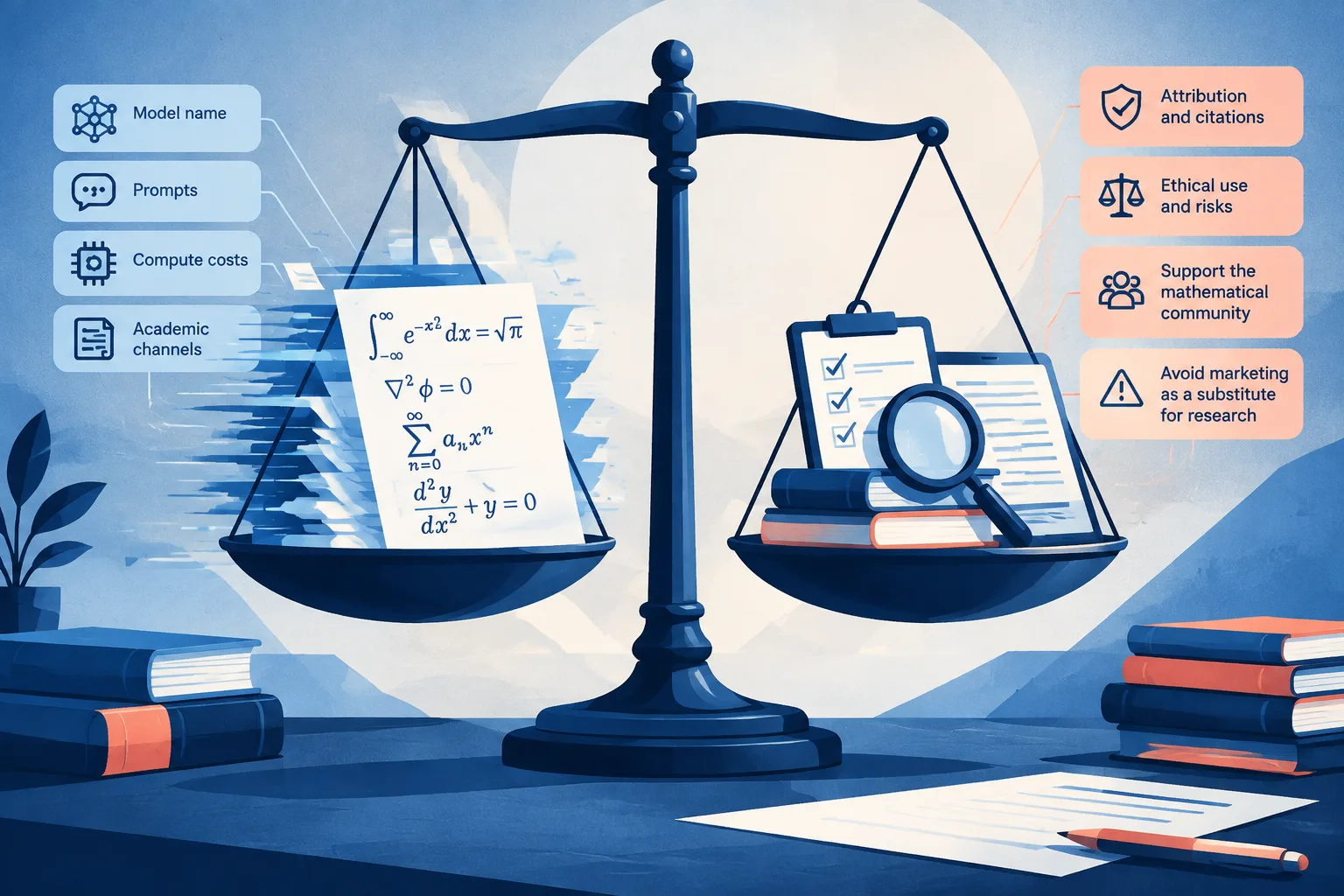
The collection arrives while researchers are still processing a growing stream of AI-generated mathematical work from OpenAI and rival labs including Anthropic. The Verge noted that the broader body of results includes work connected to a Millennium Prize problem, placing some of the claims among the most closely watched questions in the field. At the same time, the pace and presentation of announcements have intensified disputes over research practice, ethics and credit for the human mathematicians whose prior work supports new results.
The immediate achievement, then, is not a settled tally of hundreds of solved problems. It is the public arrival of an unusually large research corpus with enough supporting material for scrutiny to begin. Its lasting value will depend on how many manuscripts withstand expert examination, how clearly their intellectual dependencies are documented and whether the repository’s revision process can keep pace with corrections. Until that work is done, the release is best understood as a major set of claims entering the mathematical record—not the final verdict on them.
Comments
Loading comments…