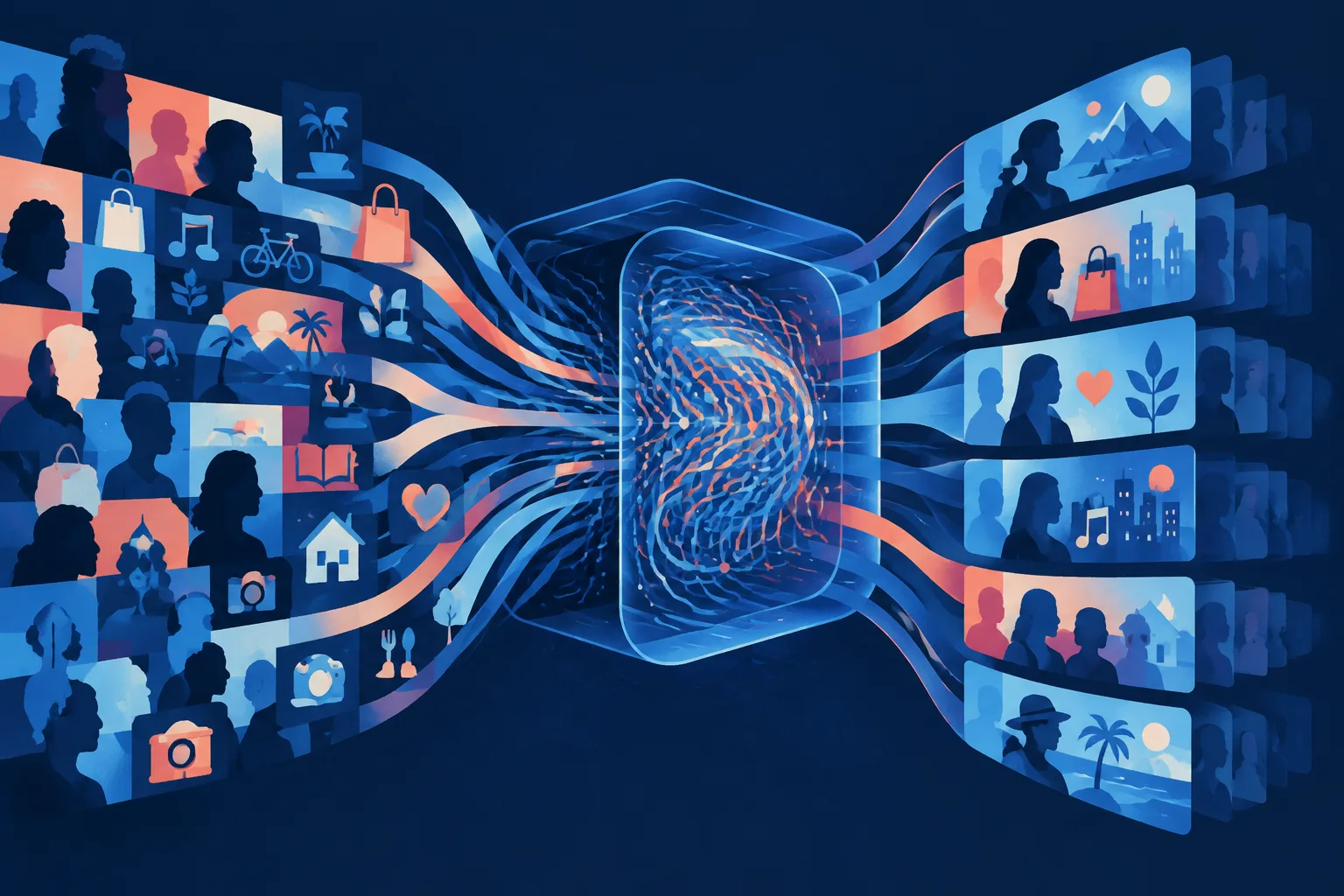
Mirror Particle is building a foundation model intended to predict how groups of people behave and why their preferences change, rather than asking a general-purpose language model to role-play as a target demographic. TechCrunch reports that the two-year-old San Francisco startup is initially selling the technology to market-research, brand, and product-strategy teams and will compete in Startup Battlefield 200 at TechCrunch Disrupt in October.
The company is entering a well-funded category. TechCrunch notes that Simile raised $200 million at a $2 billion valuation, Aaru raised $88 million at a $1 billion valuation, and Humans& announced a $480 million seed round before launching its Persimmon behavior-modeling product. Those companies differ in approach, but their financing suggests strong investor interest in replacing or supplementing conventional consumer research with synthetic prediction systems.
Mirror Particle chief executive and cofounder Abhivyakti Ahuja argues that LLM-based simulations start from the wrong foundation. Language models learn patterns in written material, while human decisions also reflect visual perception, spatial reasoning, social intelligence, and changing circumstances. In her view, fine-tuning a vast pretrained model on a relatively small demographic dataset cannot reliably overwrite the assumptions already embedded in it.
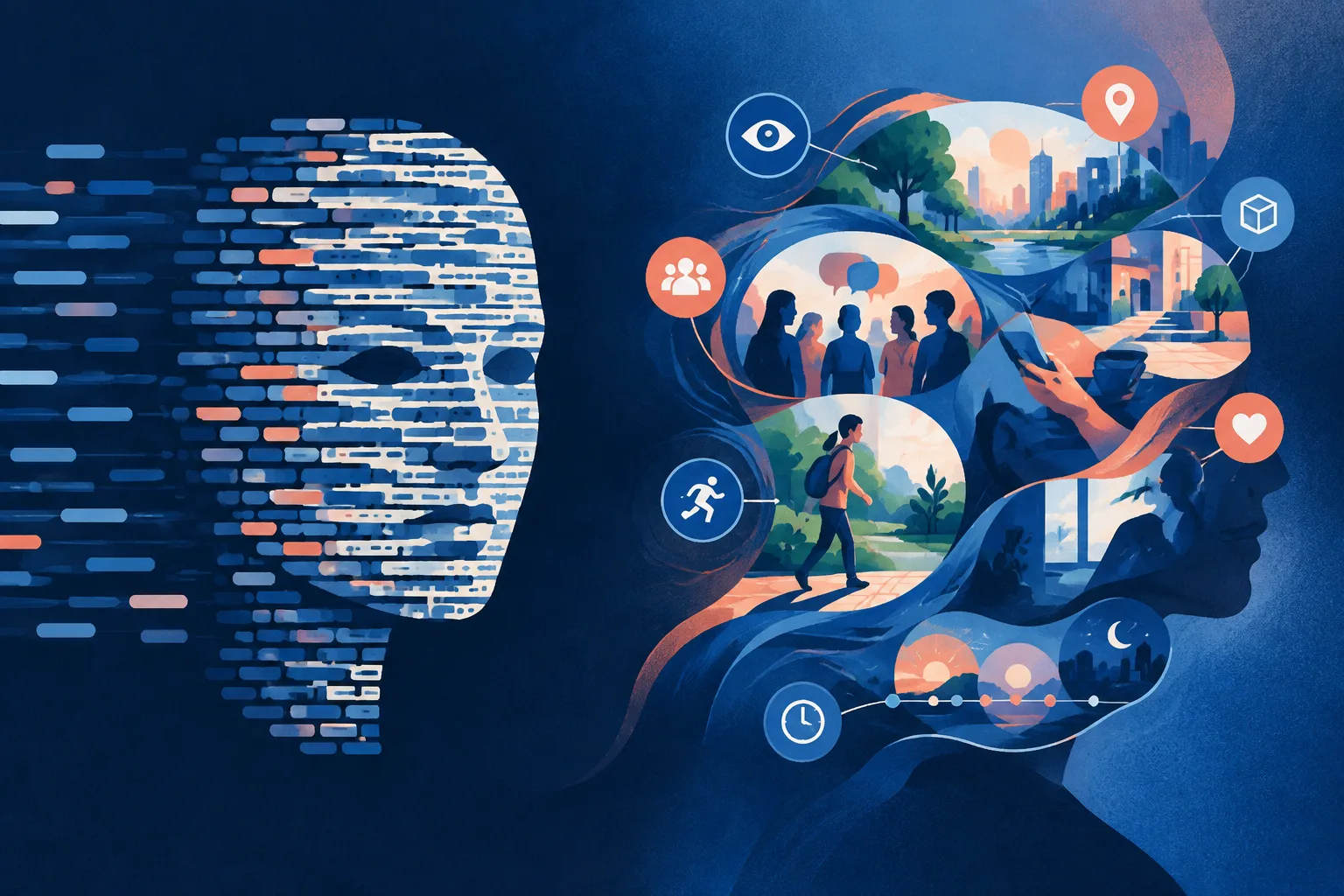
The startup says its alternative is a model built from scratch around behavior over time. It combines client customer data with signals from current events, popular culture, social media, and other sources, then follows how a demographic segment’s motivations and constraints shift through new experiences. The system emphasizes revealed behavior—what people actually do—rather than relying only on what survey respondents say they would do.
That longitudinal focus is central to the pitch. Ahuja told TechCrunch that Mirror Particle wants to represent a changing person rather than a fixed profile, including what triggers a shift and how large the shift becomes. A lack of change is also treated as a signal. The model then supplies customers with an explanation for its prediction, identifying the motivations, constraints, and context behind a recommendation.
TechCrunch described an early pilot with a prominent pet-food brand that wanted to know which package imagery might lift sales. According to Mirror Particle, the system concluded that the choice among chicken, beef, or vegetables was not the important variable; the larger obstacle was the brand’s mass-market, low-cost perception. The example illustrates the product’s intended value, but the report does not provide the client’s identity, comparative test results, or independent evidence that acting on the recommendation improved sales.

The initial commercial use is broader than generating better advertising copy. Mirror Particle says it could help a beauty company decide whether a target group wants an eyeshadow palette at all, or whether a different product such as blush would be a stronger bet. That positions the technology as a planning tool for product and brand decisions, where an incorrect prediction can influence inventory, development budgets, and market strategy.
Ahuja studied neuroscience and computer science at the University of Toronto before working at Amazon Robotics, where she met cofounders Will Song and Thomson Yen. TechCrunch says Song has worked on sales-personalization systems, while Yen focused on deep-learning approaches to how AI agents understand human behavior. The company has raised an angel round and says it is close to completing its first venture round; TechCrunch did not report the amounts.
Mirror Particle ultimately wants to become a general layer for anticipating human behavior, moving from population-level analysis toward predictions about individuals. That ambition raises questions the source does not yet answer, including model accuracy across demographic groups, consent for the data used, privacy protections, and how customers should audit predictions that could reinforce stereotypes. For now, the company has offered an alternative technical thesis and an early pilot—not proof that a machine can reliably forecast the changing human mind.
Comments
Loading comments…