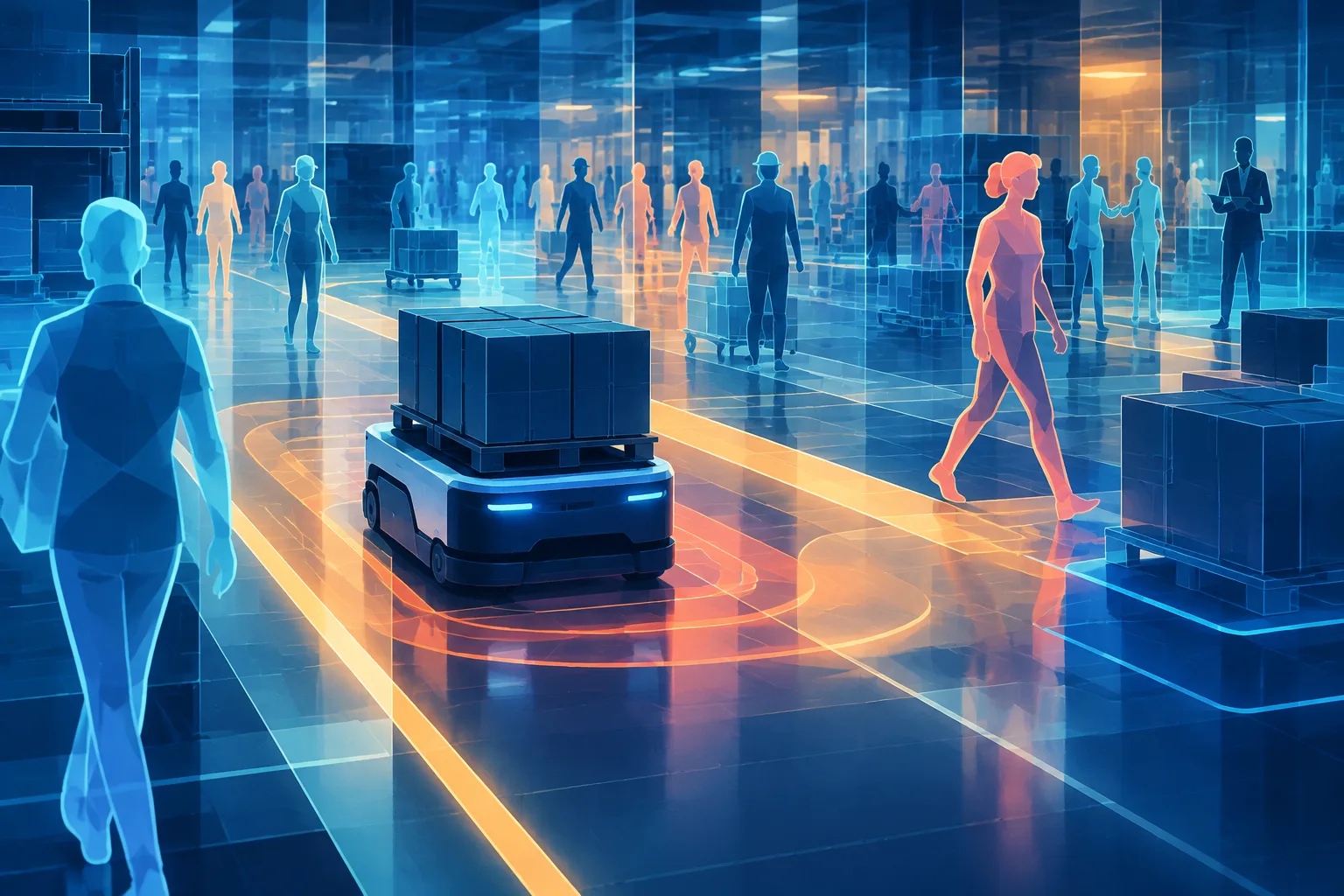
As robotics companies give generative AI systems more control over machines, a new startup wants to test what happens when those machines encounter people outside a polished demonstration. Safeworld emerged from stealth on October 5 with more than $12 million in seed funding and a plan to evaluate robot-control software inside simulations populated by realistic digital humans, TechCrunch reported.
Safeworld was founded by Ding Zhao, director of Carnegie Mellon University’s Safe AI Lab, startup executive Kyle Wong and machine-learning engineer Simo Rachidi. The round was led by Shine Capital and a16z Speedrun, with participation from Box Group, Carnegie Mellon University Endowment, Innovation Endeavors and SV Angel, according to the report.
The premise is that robot safety becomes harder to predict when control shifts from traditional, more deterministic software toward probabilistic generative models. Safeworld’s system is intended to place a robot’s actual control software inside virtual environments, then expose it to many variations of human movement and behavior before comparable encounters happen in a workplace.
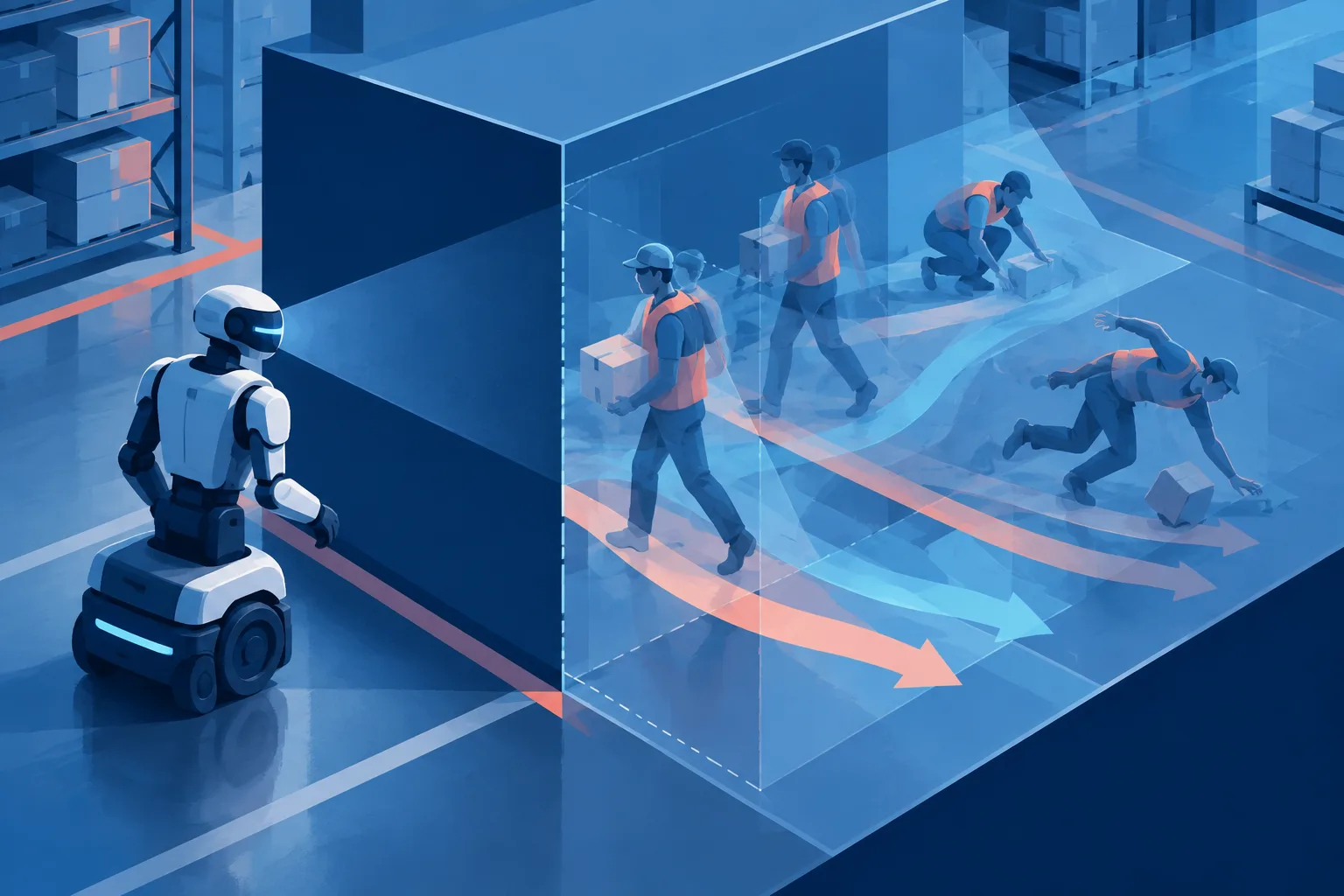
TechCrunch described one factory example centered on a blind corner. Safeworld could recreate that corner using a simulation platform such as Genesis or MuJoCo, add the robot and its software, and test thousands of encounters. Variables could include a person carrying boxes, a worker approaching at an unexpected angle, or someone tripping and falling in the robot’s path.
The founders argue that these cases are unusually difficult because robots operate in unstructured settings and safety requirements can differ by facility. Testing with digital people also avoids repeatedly putting real people into risky or awkward scenarios merely to see whether a robot detects them and stops in time.
Safeworld’s approach overlaps with simulation tools that robotics developers already use internally. Its bet is that manufacturers will still value an independent evaluator, both for specialized safety expertise and for creating safety cases that can be compared across companies. That proposition remains unproven, and TechCrunch noted that the startup is still deciding whether to sell an external software platform, provide services, or use another model.
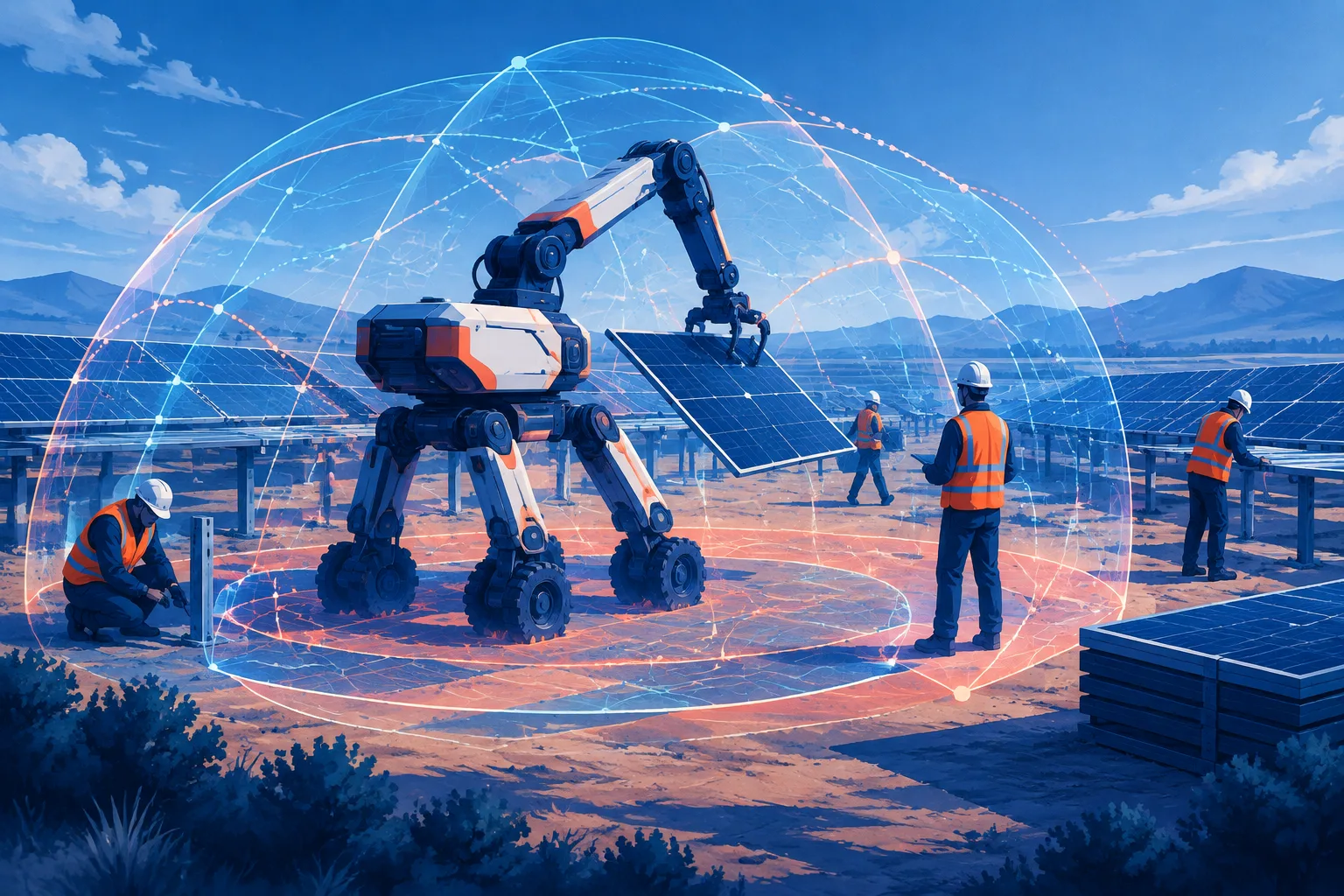
Gritt Robotics is working with Safeworld while developing simulations, according to the report. Gritt’s robots assist workers installing photovoltaic panels at industrial-scale solar farms, and the company hopes to expand into more complex construction work. Its chief technology officer, Vishal Dugar, told TechCrunch that safety validation must be empirical because formal mathematical proof is difficult for systems that need to respond to people in many poses, appearances and behaviors.
The wider question is whether simulated coverage can translate into confidence after deployment. Safeworld’s tests may help reveal failures involving stopping distance, visibility and unexpected human motion, but the report does not establish that simulation alone can certify a robot as safe in every real environment. The company and generative-AI robotics are both early, making the quality and breadth of the simulated scenarios central to the value Safeworld is trying to provide.
For robot makers, the commercial appeal is straightforward: discover dangerous edge cases before machines operate at scale beside people who may have no robotics training. For Safeworld, the challenge will be showing that its digital humans and virtual facilities expose failures that customers’ own testing would miss—and that independent simulation can become a trusted layer in an emerging physical-AI safety process.
Comments
Loading comments…