
Microsoft is preparing to move a much larger share of its artificial intelligence services onto chips it designs itself. The company’s newly announced Maia 300 is intended to become the primary inference system behind Microsoft products and services, according to reporting by The Verge on October 12.
The planned transition matters because inference—the work performed when a trained model answers a request—runs continuously across products such as copilots, conversational tools and emerging agents. Bringing more of that work onto Maia would reduce Microsoft’s reliance on accelerators supplied by Nvidia and AMD while giving the company tighter control over the hardware beneath its models.

Microsoft expects Maia 300 to begin handling production workloads in 2027. Scott Guthrie, the executive vice president leading Microsoft’s cloud group, said the company plans to scale the Azure Maia family to multi-gigawatt deployments beginning that year. That is a statement of Microsoft’s intended rollout, not evidence that the future scale or performance has already been achieved.
The company is making ambitious efficiency claims for the new system. Microsoft expects Maia 300 to produce 40 percent more tokens per megawatt than leading GPU-based systems. In a configuration containing 96 accelerators, it also projects as much as seven times the rack-level token throughput of Maia 200. The Verge’s report presents those numbers as Microsoft’s own estimates rather than independent benchmark results.
Maia 300 follows unusually quickly after Maia 200, which Microsoft announced in January. The earlier chip is already running production workloads for Microsoft Copilot, GitHub Copilot, Microsoft Foundry and Microsoft’s own AI models. Microsoft describes Maia 200 as the strongest-performing AI infrastructure in its fleet when measured against real service workloads.
The new generation is designed around workloads that place different demands on inference hardware than a simple one-shot response. Microsoft says Maia 300 is intended for long-context reasoning, conversations where latency is especially important and agentic tasks that sustain multiple steps. Those categories increasingly shape how AI companies describe the next phase of model deployment.
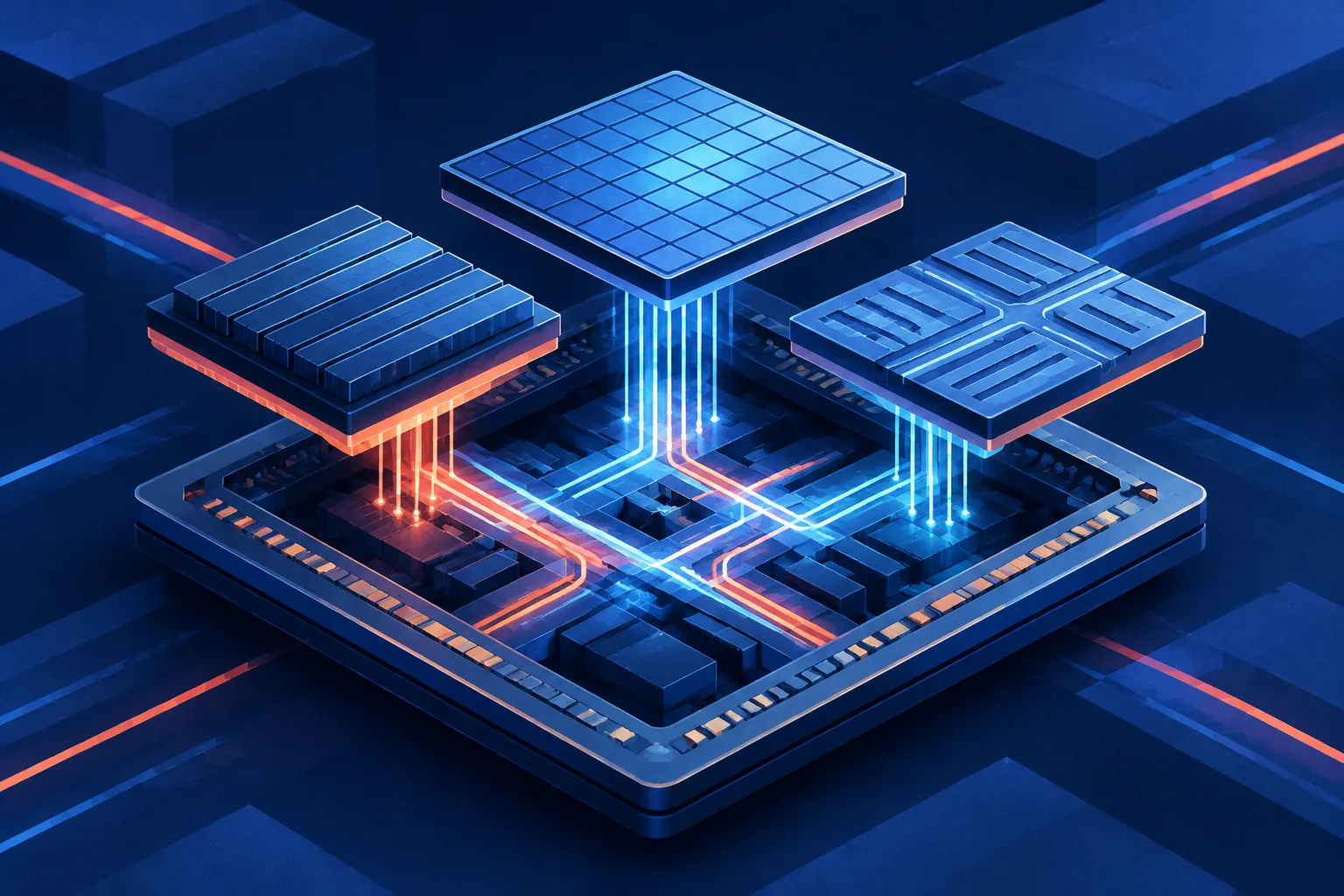
At the silicon level, Microsoft is moving to a chiplet design manufactured on TSMC’s N2P process. The architecture separates compute, memory-controller and input-output functions instead of treating them as one undivided block. Microsoft says that arrangement leaves more silicon area for computation while allowing each function to use technology suited to its particular role.
The strategic goal extends beyond lowering cloud costs. Microsoft AI chief Mustafa Suleyman said the company needs control of the full stack, including silicon that can be co-designed with Microsoft’s own models. The Verge notes that Maia 300 could support Microsoft’s effort to close the gap with Google DeepMind, OpenAI and Anthropic, though whether the chip materially changes that competitive position will depend on its real-world deployment after 2027 begins.
Comments
Loading comments…