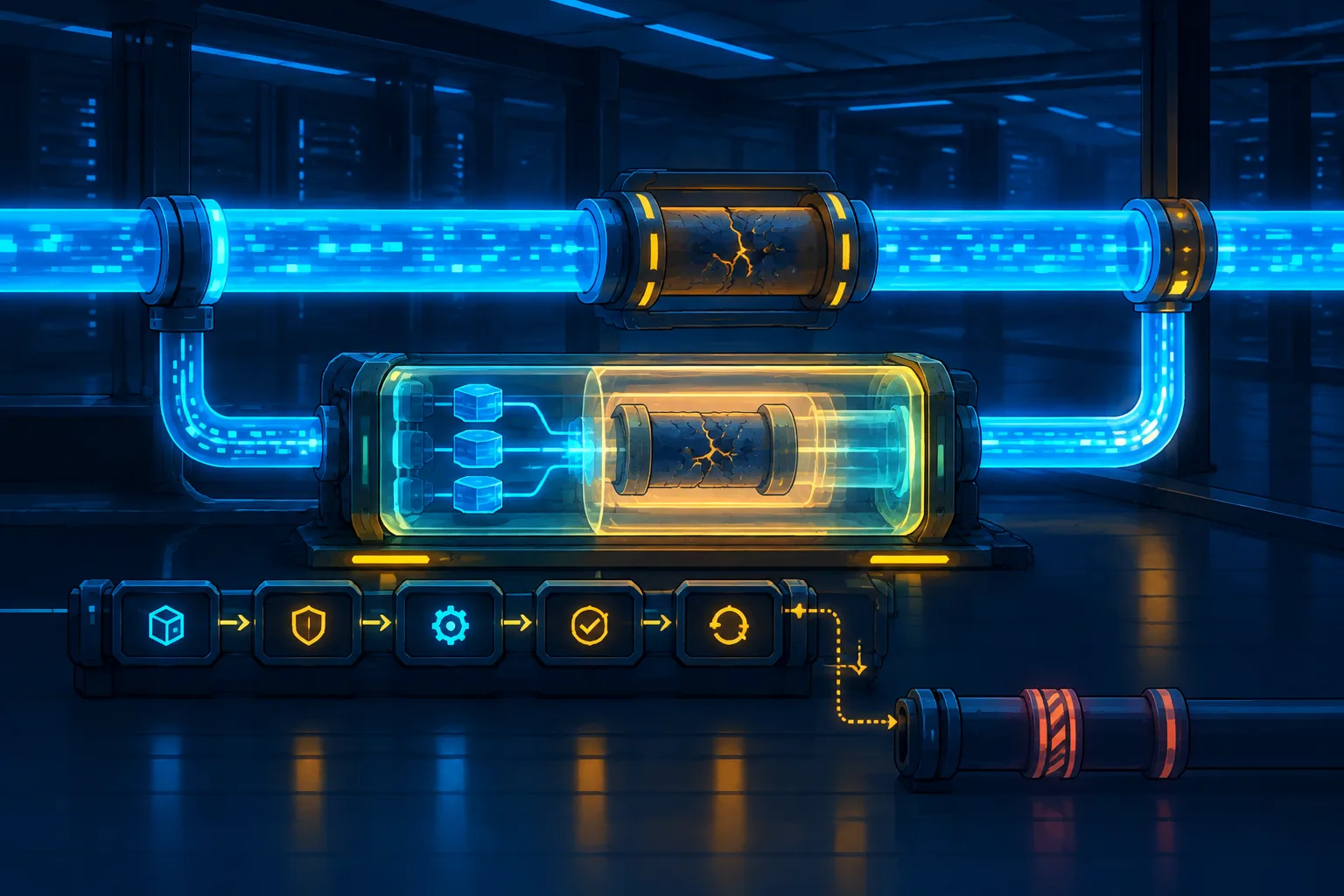
A research prototype called AegisFlow is designed to do more than alert engineers when a data pipeline breaks. In an arXiv preprint submitted October 3, Muhammad Bilal Awan, Zubair Hussain and Abdul Shahid describe a multi-agent system that detects failures, proposes code or configuration repairs, tests them away from the live workload and can deploy approved patches automatically. The consequential claim is not simply that a language model can write a fix, but that it can participate in a controlled repair loop that reaches production.
The architecture separates live processing from remediation. A production stream continues with its last known good configuration while a Watchdog agent collects exceptions, stack traces and data-quality signals. A parallel shadow stream sends a failure to a Repair agent, which performs root-cause analysis, searches previous incidents and generates a candidate patch. For broken web scrapers, the agent may add visual page inspection to textual error analysis so it can reason about elements that moved or became hidden behind newer web structures.
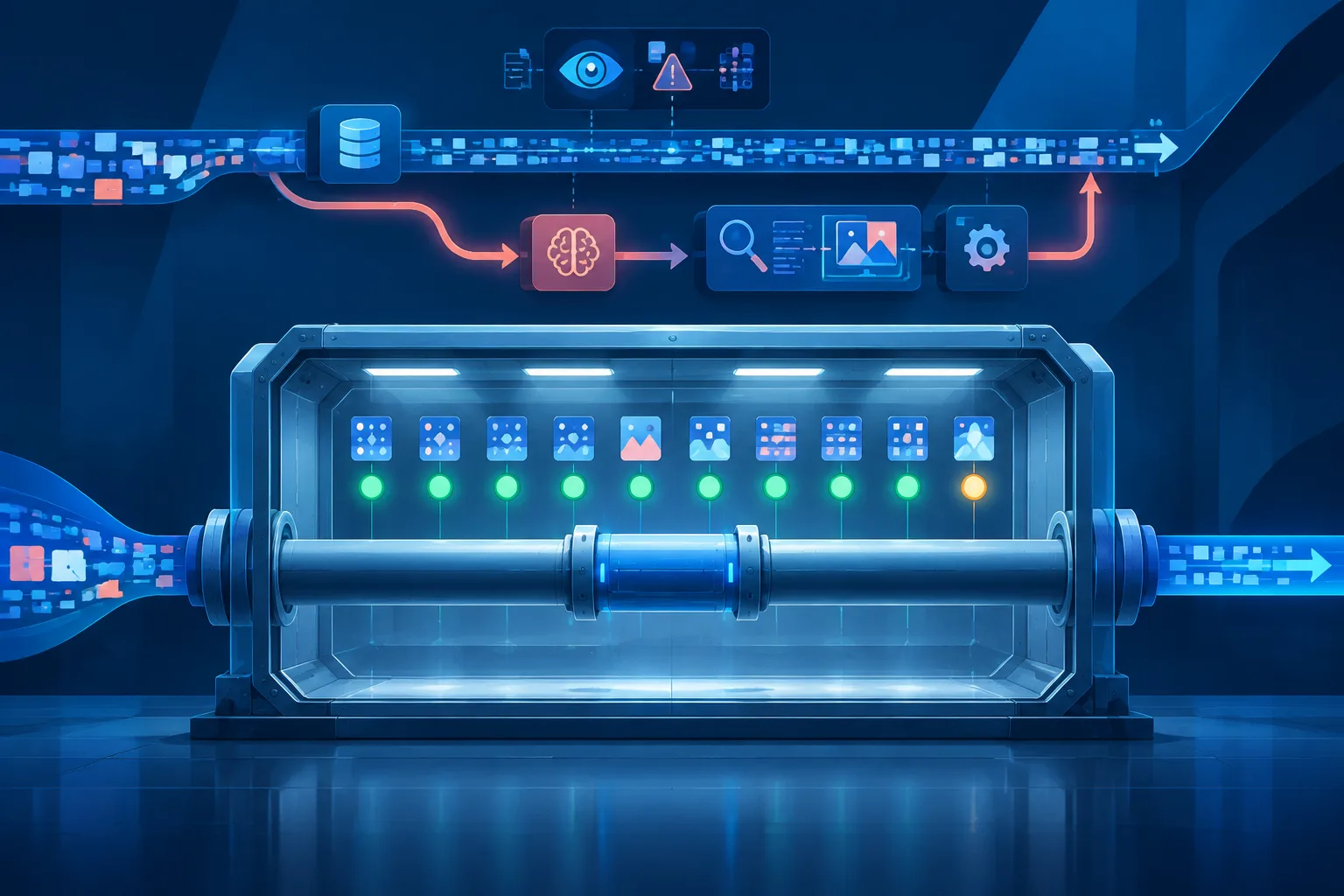
A proposed fix is not supposed to touch production immediately. AegisFlow runs it in an isolated Docker-based shadow sandbox against ten recent snapshots from successful pipeline runs. The sandbox checks schemas, null rates, value ranges, record counts and expected outputs. Patches that pass at least nine of ten cases can proceed automatically; those passing seven or eight are routed to human review. The authors say the original pipeline remains unaffected during this process.
Deployment adds more gates. The design limits autonomous action to preapproved failure classes, blocks destructive database operations and downstream schema changes for manual review, and requires peer review for patches longer than 50 lines. Qualified fixes begin with a 10 percent canary rollout, then move through a blue-green swap. The Watchdog monitors the first 100 runs, and the system keeps five working configurations so it can revert within about 30 seconds when a regression signal appears.
The paper reports a 90-day evaluation across five failure categories, including renamed CSS selectors, nested JSON changes, unit drift, punctuation drift and moved Shadow DOM elements. According to the authors, average mean time to repair fell from 170 minutes under manual handling to 3.2 minutes with AegisFlow, a 98.1 percent reduction. Overall autonomous patch success was 92 percent and the reported regression rate was 2 percent. Punctuation drift was the easiest category at 98 percent success, while Shadow DOM moves were the hardest at 85 percent.
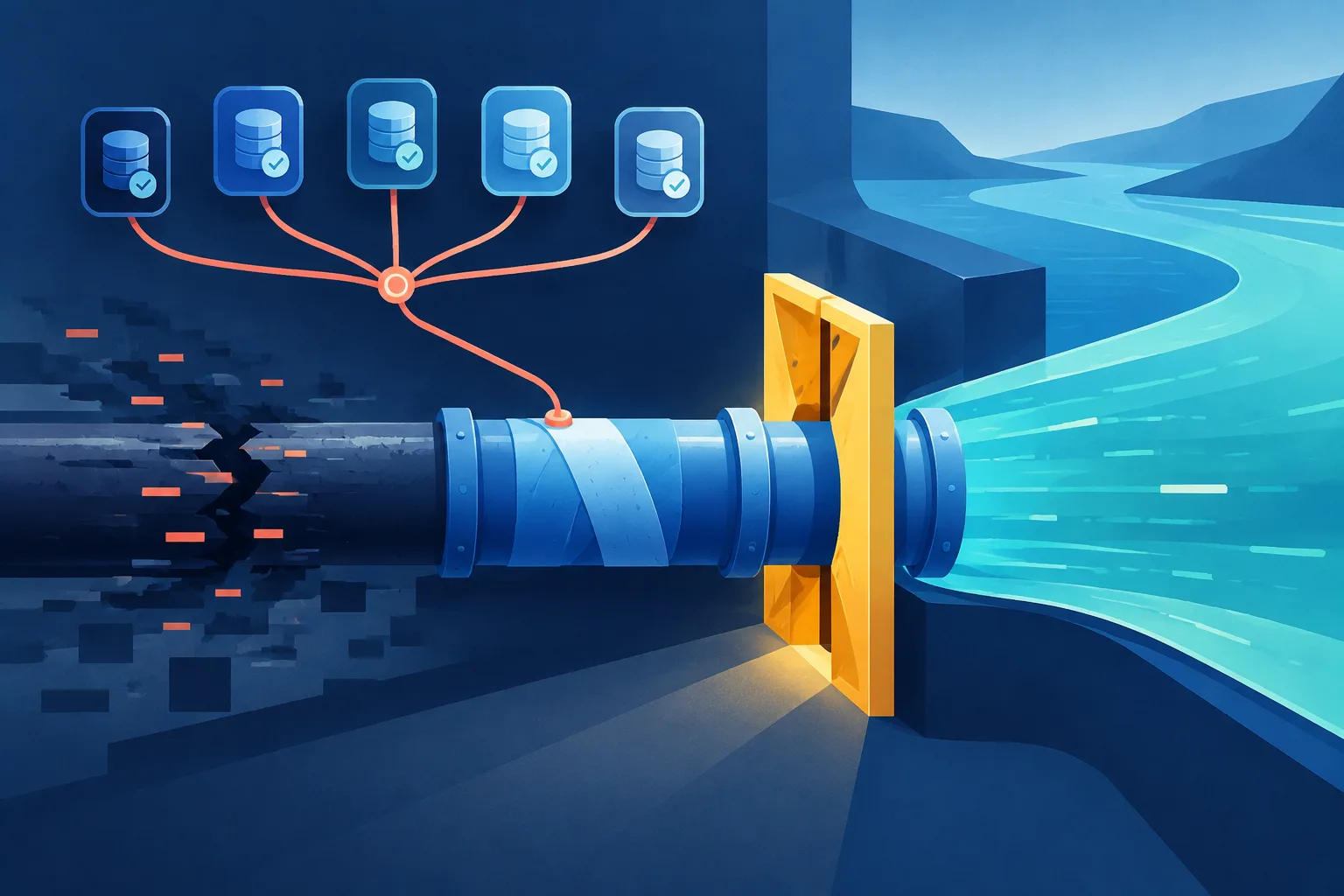
Those headline numbers depend heavily on the surrounding controls. An ablation reported in the paper reduced repair time slightly when the shadow sandbox was removed, from 3.2 to 2.9 minutes, but patch success fell to 71 percent. Removing semantic monitoring pushed repair time to 5.2 minutes and success to 84 percent. Keeping diagnosis automated while returning deployment to a manual process produced a 46-minute repair time, which the authors use to argue that closing the deployment loop accounts for much of the speed advantage.
The report also describes cross-industry deployments, but these results remain author-reported preprint evidence. It lists 142 e-commerce incidents with 89 percent success, 98 fintech incidents with 95 percent success and 67 healthcare incidents with 91 percent success. The authors say mean-time-to-repair reductions ranged from 96 to 98 percent across those settings. They also recount an early threshold change: allowing automatic deployment after 70 percent sandbox success produced a 12 percent regression rate, while raising the threshold to 90 percent reduced regression to 2 percent at the cost of automating fewer incidents.
AegisFlow is not a general autonomous software engineer. Its current repair model is limited to stateless pipelines, works on one pipeline at a time and supports Python as its primary language. It cannot independently resolve expired credentials or permission changes, and the authors acknowledge that isolation cannot contain every malicious or defective generated program. Their shadow tests are empirical rather than proof of correctness, which they identify as a barrier for systems involving money transfers or medical data. The paper’s most useful lesson is therefore narrower than its self-healing label: automated repair becomes plausible only when the agent is constrained by telemetry, replay, staged rollout, rollback and an explicit path back to human control.
Comments
Loading comments…