DoorDash processed 970 million orders and generated $4.5 billion in revenue during the second quarter of 2026. Bites, a 10-person pre-seed startup with roughly 300 participating restaurants in the Bay Area, is tiny by comparison. Yet reporting by The Verge shows that the startup has already drawn attention from the market leader because its AI-native ordering model cuts across the economics of the conventional delivery app.
Bites lets diners place orders from participating restaurants directly through ChatGPT as well as through a traditional app. The company connects with point-of-sale providers such as Toast and Square to pull restaurant menus into large language models and route orders to restaurants. Once a point-of-sale provider works with Bites, restaurants can opt in with a button, according to the report.
The pricing pitch is designed to be easy to understand. The Verge reports that DoorDash restaurant commissions can range from 15 to 30 percent per delivery order, with higher commissions tied to greater visibility on the platform. Bites instead promotes simplified delivery and service fees plus a flat $1 surcharge per order, usually paid by the diner, although a restaurant can cover it.
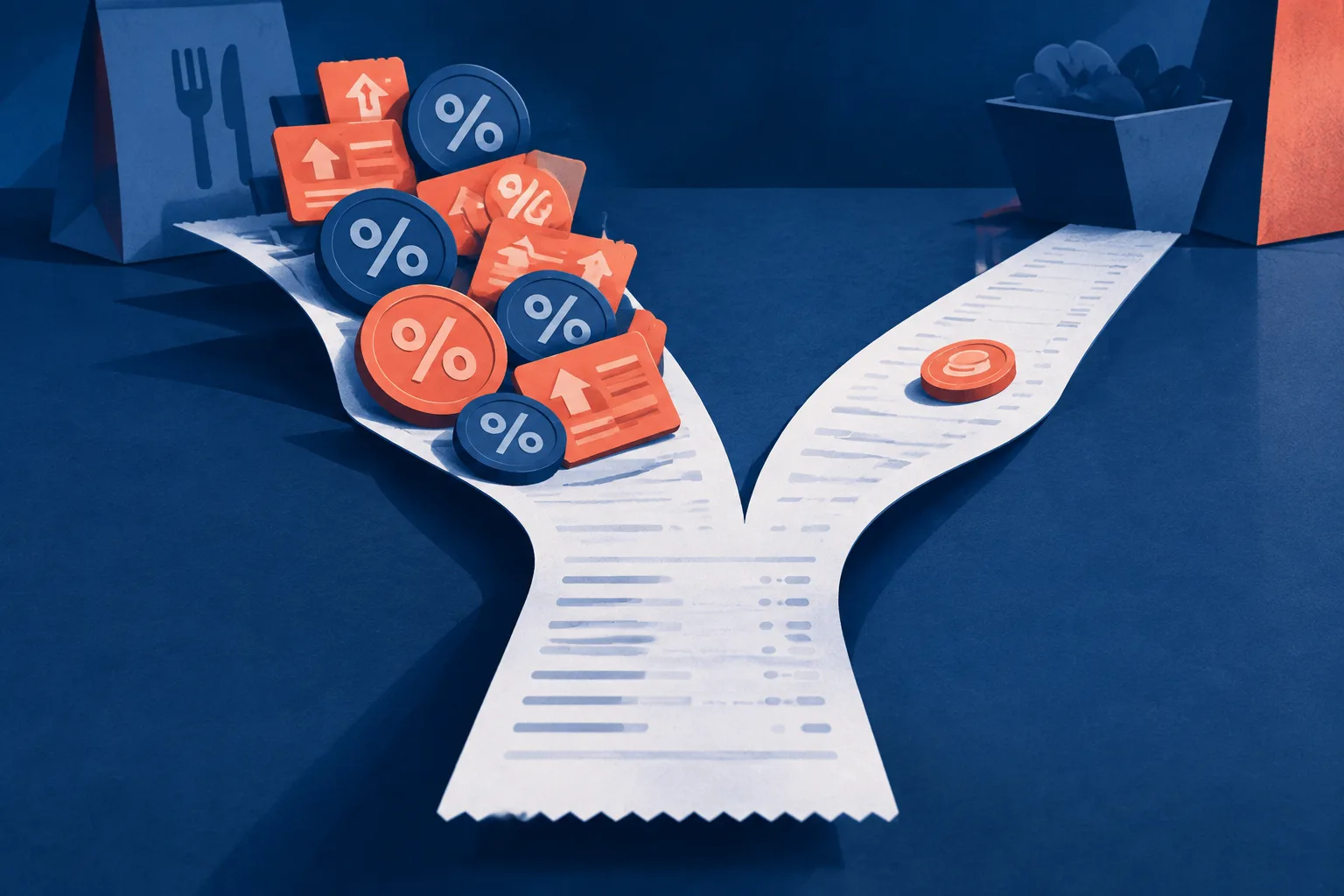
In one comparison, The Verge ordered a pizza and beverage through ChatGPT using the Bites plugin. The total, including tip, tax, and delivery charges, was $56.73. The same order on DoorDash came to $70.29, with higher service fees and an $11 increase in the listed pizza price. That is one test, not proof that every Bites order will be cheaper, but it illustrates the cost difference the startup is selling.
The confrontation surfaced in August, when DoorDash emailed Bay Area restaurants warning that some businesses might have appeared on Bites without their consent. The form letter, reviewed by The Verge, raised questions about terms, pricing, service standards, menu accuracy, and operating hours, and told restaurants how to request removal. DoorDash spokesperson Lisa Singh said some restaurant partners had raised concerns and that the message made clear no action was necessary for businesses that had opted in.
Bites founder and CEO Bala Subramaniam said 14 restaurant partners told the company they received a DoorDash letter. Bites acknowledged that some restaurants asked to be removed and said those businesses had appeared in old demonstrations. The company also said other recipients were not listed at all, while several restaurants learned about Bites from the warning and then expressed interest in joining.
The larger threat is not merely a lower fee. If customers increasingly ask AI agents to complete transactions, established apps may lose the screen space where they promote subscriptions, suggest add-ons, sell sponsored placement, and control discovery. The Verge notes that DoorDash’s advertising business reached $1 billion in 2024, while restaurants often receive limited customer information from platform orders.
Restaurant operator Jay Jayaraman told The Verge that before using Bites, about 80 percent of his orders came through DoorDash. He now estimates that 65 percent come through Bites, 25 percent through DoorDash, and the remainder through Uber Eats and Grubhub. He said margins are higher on Bites orders and that direct orders give him customer contact information. His experience is a single operator’s estimate, but it offers an early example of how agentic ordering could shift both revenue and the customer relationship.
DoorDash is also exploring agent-based ordering. In September, the company announced work on an iMessage feature that would let diners use prompts to repeat familiar orders. That move suggests the leading platform sees conversational ordering as useful, even as the model raises a difficult question: if diners already know what they want and an agent executes the purchase, the value of paid visibility inside a delivery app may shrink.
Bites remains an early-stage company with limited geographic reach, and even one of its supporters has not enabled ChatGPT ordering while he waits for a live demonstration. The report therefore does not establish that AI agents will displace major delivery apps. It does show where the pressure may build first: fees, sponsored discovery, and ownership of the relationship between restaurants and diners.
Comments
Loading comments…