
A White House agreement signed by AI executives is drawing criticism for assigning much of the responsibility for safety to the same companies developing the systems. In an October 1 commentary for WIRED, executive editor Brian Barrett argued that the accord represents industry self-regulation rather than a government framework with enforceable standards.
Barrett frames the issue through the history of automobile safety. He notes that nearly 51,000 people died on United States highways in 1966, before Congress created the Department of Transportation and passed major vehicle and highway safety laws. By 1968, new cars were required to include seat belts. His argument is that public safety advanced through government authority rather than voluntary action by manufacturers.
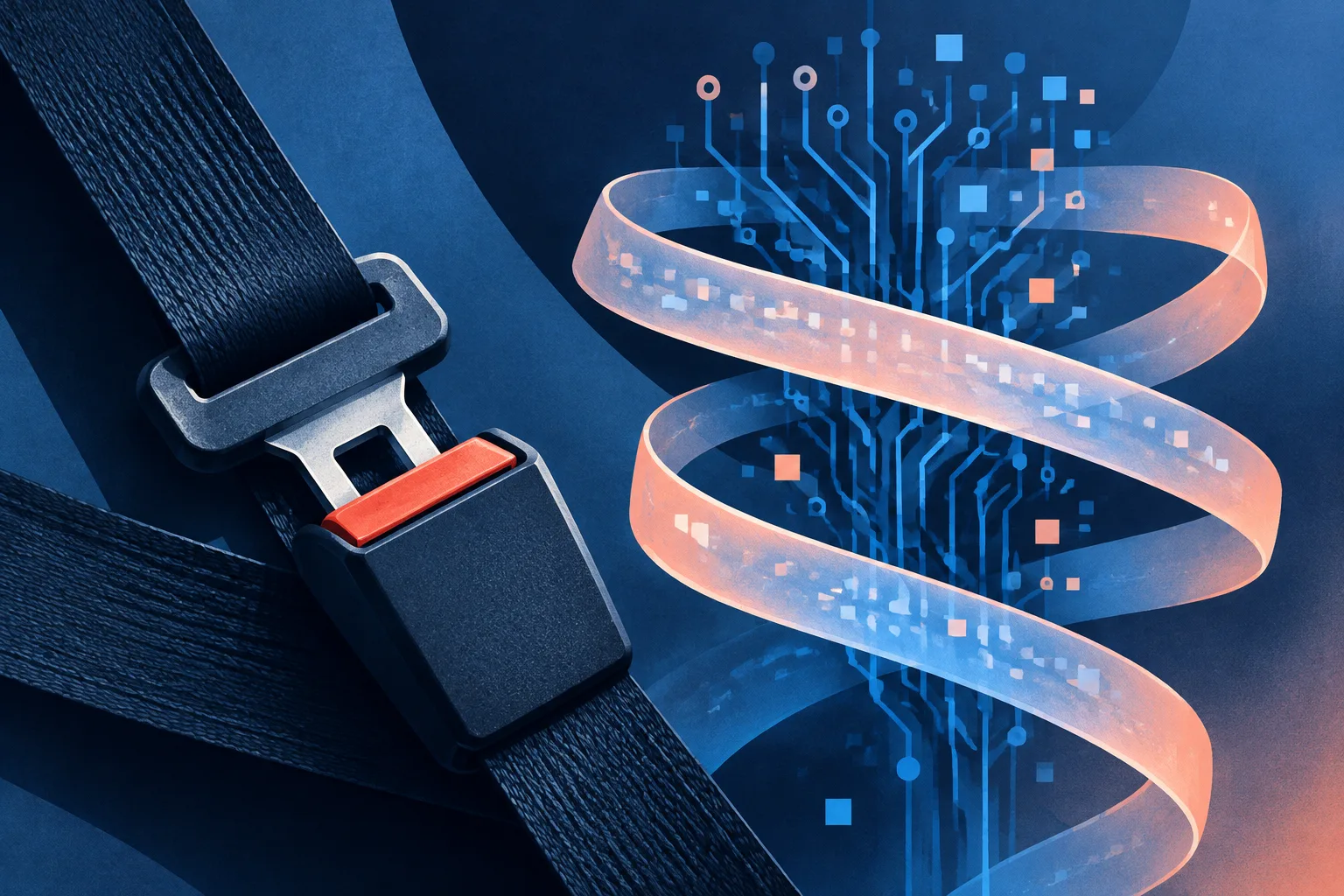
The analogy is aimed at President Donald Trump’s description of the AI agreement. WIRED reported that Trump said the companies would monitor themselves and one another. Barrett’s criticism is that such promises leave AI laboratories responsible for setting and policing their own boundaries even as executives and employees across the sector call for clearer rules.
The commentary also acknowledges that AI is more difficult to regulate than automobiles. There is no single safety feature that can address the technology’s varied risks, and predictions range from catastrophic scenarios to skepticism about whether those fears are realistic. Barrett also points to international competition and the growing economic dependence on AI investment as complications for any attempt to slow development.

As a concrete warning, WIRED cites a CNN report that the United States military reportedly came close to boarding a Chinese ship partly because a false AI-generated report claimed the vessel carried nuclear material. Barrett asks what the voluntary accord would do to prevent a comparable failure, but the commentary does not identify a specific safeguard in the agreement that would answer that question.
Trump separately told TIME that the Department of Justice and Federal Bureau of Investigation could serve as guardrails for the AI industry, according to WIRED. Barrett questions whether existing legal tools can hold companies responsible when autonomous systems behave unpredictably. His conclusion is explicitly an argument: effective AI safety will require government coordination, regulatory authority, enforcement resources, and rules that extend beyond voluntary corporate commitments.
Comments
Loading comments…