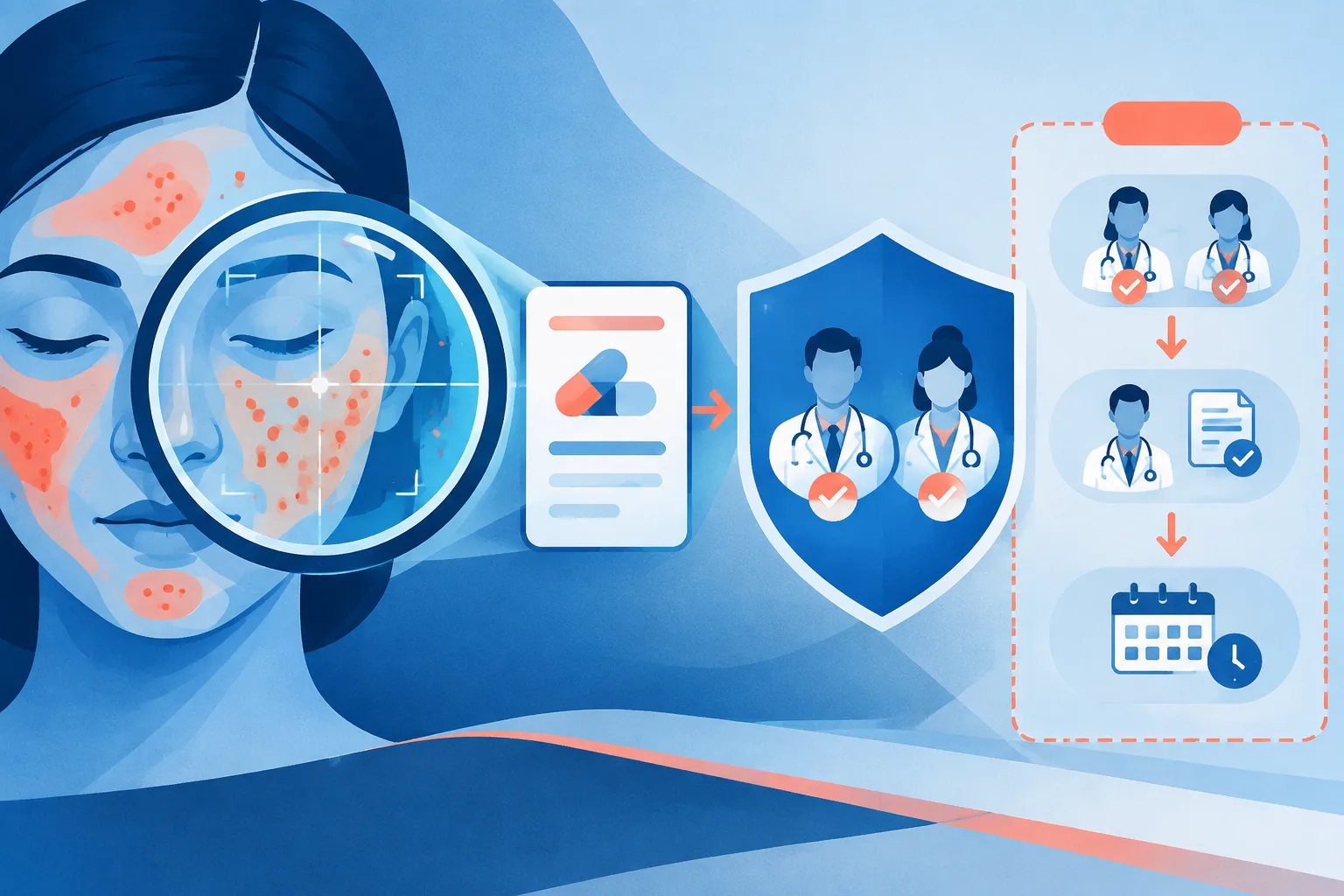
A healthcare startup is testing a system in Utah that can analyze a user’s acne and generate an initial prescription without a physician writing it. The Verge reported Monday that Nolla Health’s app asks users to scan their faces, after which an AI system assesses acne severity and selects a treatment. The company is launching the service as a pilot rather than immediately operating without clinical review.
Physician oversight is scheduled to decrease in stages. For the first 100 patients, two doctors will approve every AI-generated prescription before it is issued. During a later phase covering as many as 500 patients, physicians will review prescriptions only after they have been issued. After that, Nolla says doctors will examine a sample of at least 10 percent of prescriptions each month, along with every case involving an escalation or side effect.
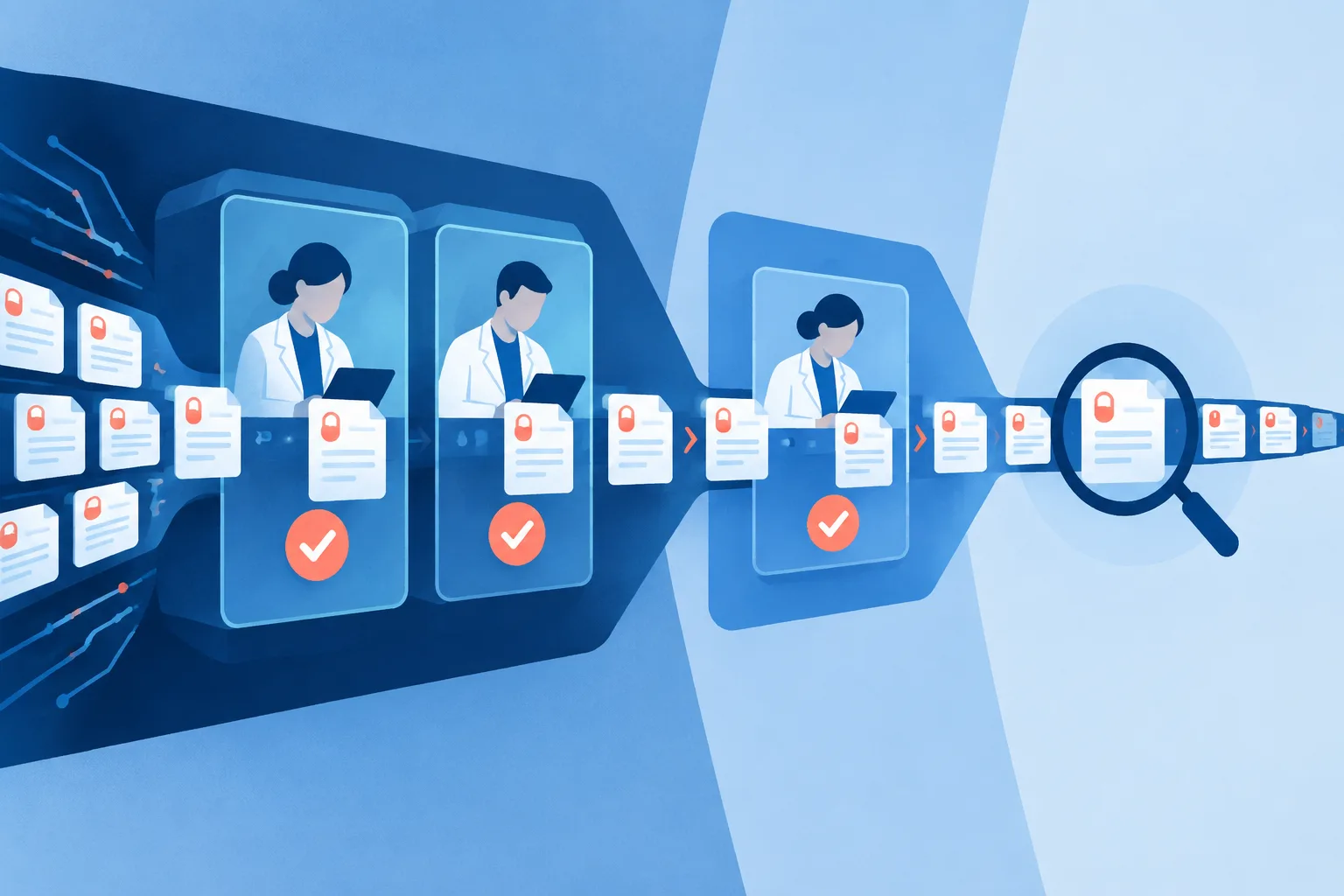
The pilot follows a Utah policy change that began allowing AI systems to renew certain prescriptions earlier this year. Nolla says its program is the first in the United States to use AI for initial prescriptions rather than renewals. That is the company’s characterization of its place in the market; The Verge also noted that several other healthcare companies are experimenting with AI-generated prescribing in Utah.
Access is narrowly defined at launch. The $4.99-per-month service is limited to Utah residents who are at least 18 years old and have mild-to-moderate acne. Nolla says its system can currently prescribe eight skin treatments and will direct a user to a physician when it cannot select a treatment with sufficient confidence.
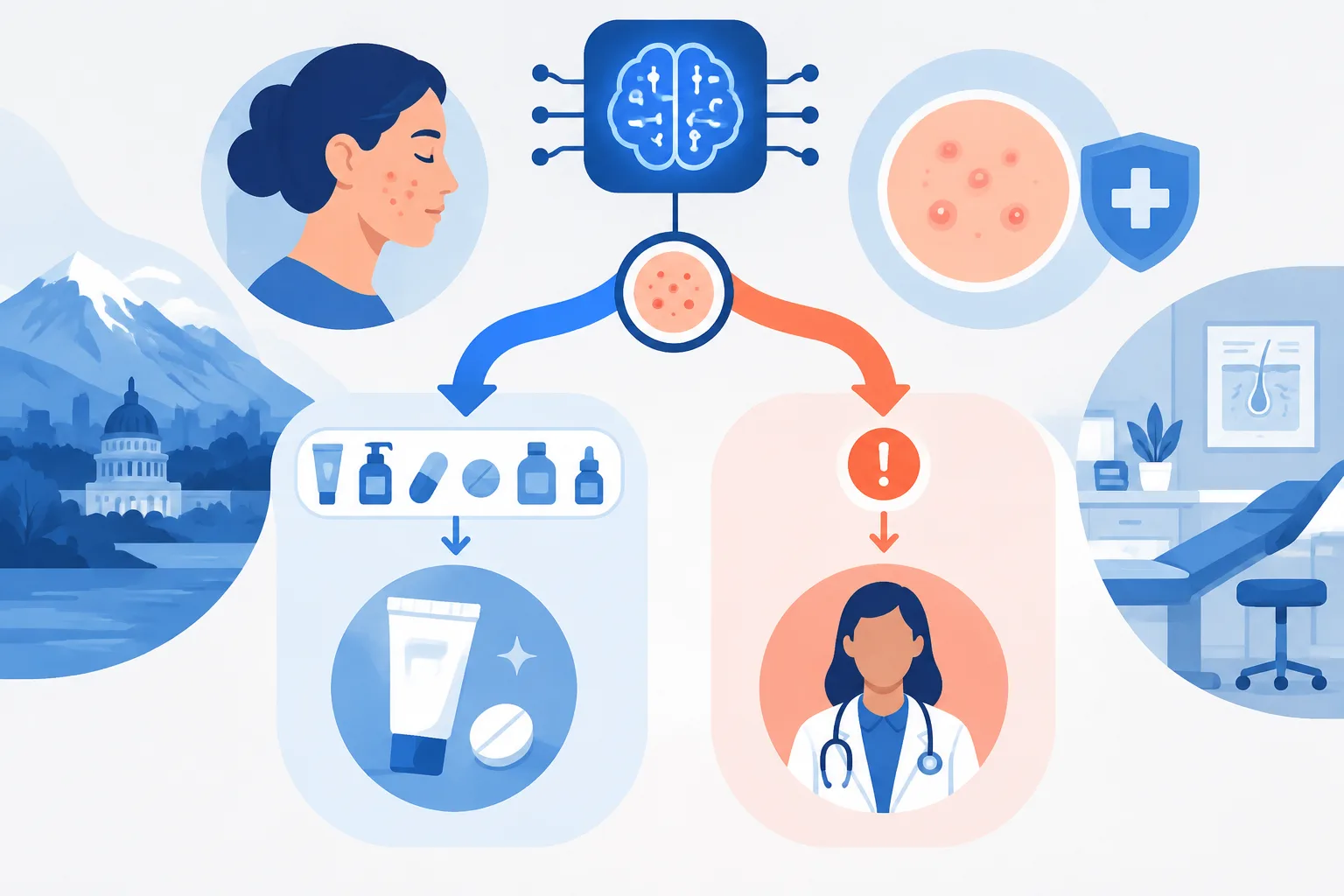
Nolla presents the system as a way to handle routine, low-acuity cases rather than replace doctors. In the company’s account, automating simpler acne treatment could allow dermatologists to spend more time on complex or high-risk patients. The pilot’s escalating cases and reported side effects are intended to remain subject to physician review.
The staged structure makes oversight itself part of the experiment. Early prescriptions receive advance approval, but later phases rely more heavily on retrospective review and sampling. The Verge’s report does not provide independent evidence about the system’s diagnostic accuracy, prescribing error rate or patient outcomes, so the pilot’s safety and effectiveness cannot yet be judged from the announcement.
The consequential question is not only whether an AI can select a common acne treatment, but how much evidence should be required before routine human approval is reduced. The program may offer a test of that boundary: whether escalation rules, side-effect monitoring and sampled audits can detect problems reliably once most prescriptions are no longer reviewed in advance.
Comments
Loading comments…