
Common Sense Media has rated ChatGPT for Teens an “unacceptable risk,” challenging OpenAI’s claim that the product offers stronger protections for younger users. The nonprofit’s assessment, reported by The Verge on October 7, focuses on whether parental alerts, crisis responses, and learning guardrails work reliably in practice. The dispute puts a central promise of age-specific AI products under pressure: safeguards must operate consistently, not simply appear in a settings menu.
OpenAI introduced ChatGPT for Teens in August as an experience with teen-focused guardrails and features intended to support learning. Common Sense Media says those protections fall short of what the company promised. According to the organization’s press release, its testing found that ChatGPT did not always alert parents when it should, failed to offer the appropriate help in some crisis situations, and could still do students’ homework.
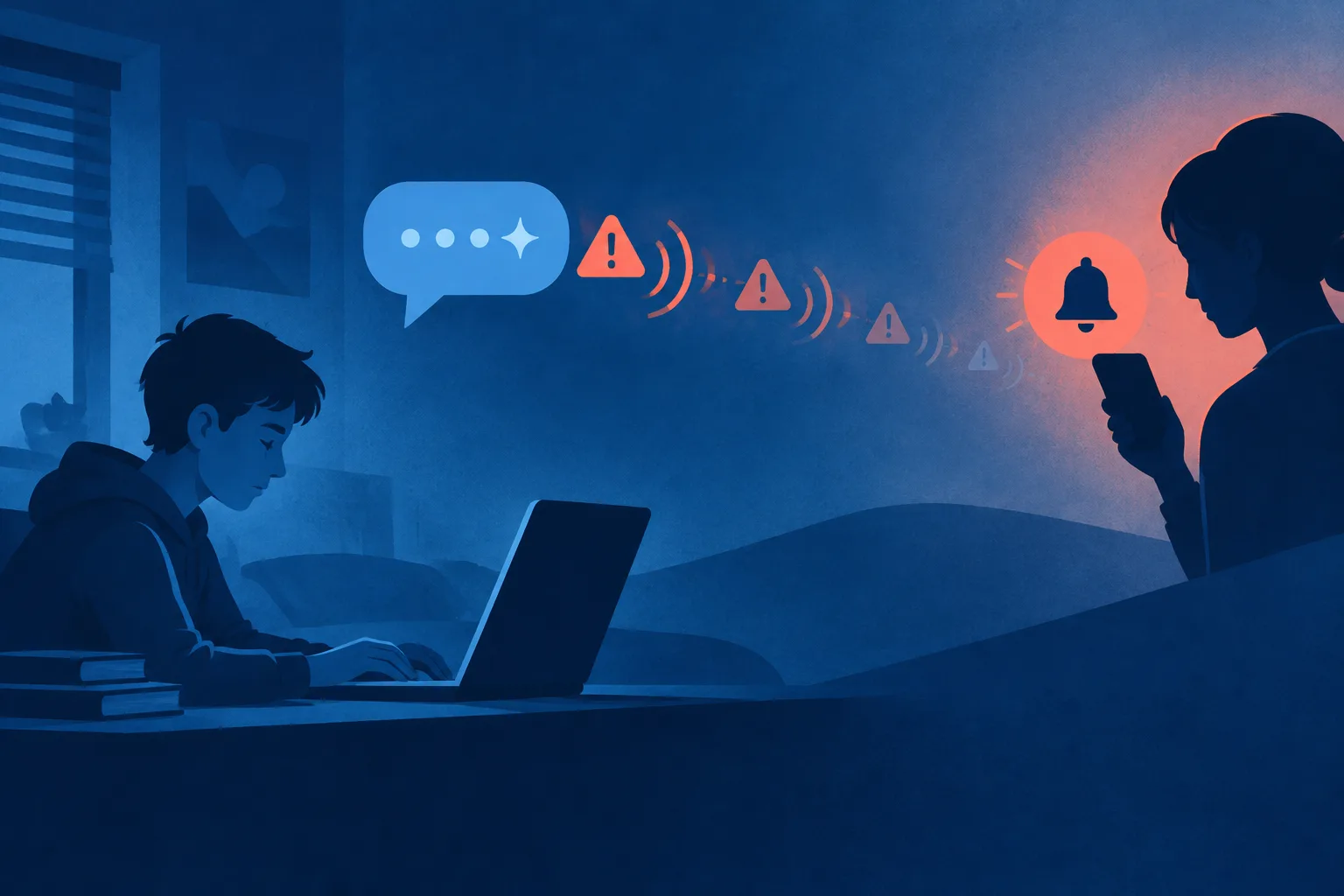
The parental-alert finding is the most serious point in the assessment. Tom Siegel, executive director of Common Sense Media’s Youth AI Safety Institute, said a teen could spend an hour discussing self-harm without a parent receiving an alert. His argument is that unreliable notifications may create false confidence among families who believe a linked account will surface urgent warning signs.
OpenAI rejects the assessment’s account of how its protections perform. In a statement provided to The Verge, spokesperson Eric Porterfield said the company’s review of the methodology suggested that much of the testing may have started and ended before parental controls were fully activated. OpenAI said that, if so, the tests would not establish whether the safety notifications worked as designed.
The company also said it remains committed to teen safety, independent evaluation, and tools that let parents guide how teenagers use AI. Its response did not accept Common Sense Media’s conclusion, instead making the timing of account activation a central issue in the disagreement.

Common Sense Media stands by both its method and its result. Siegel said the group confirmed with OpenAI before testing that teen-mode features, including eating-disorder notifications and study mode, had fully launched. He also said OpenAI disclosed only after the tests that parental notifications can take several hours to activate on newly linked accounts.
That timing detail did not settle the dispute. Common Sense Media acknowledged that some test accounts had been linked within the activation window, but said other accounts had been linked substantially longer and still produced no notifications. The organization argues that this supports its conclusion that parental alerts are unreliable in crisis scenarios; OpenAI maintains that the evaluation may not accurately represent the safeguards in normal operation.
The report therefore leaves readers with competing interpretations rather than an independently resolved verdict. What is clear from the exchange is that both sides treat notification reliability as consequential, and that product labels such as “for teens” depend on measurable behavior under difficult conditions. Common Sense Media is calling for demonstrated performance through independent testing, while OpenAI says rigorous evaluation must account for how and when its controls become active.
Comments
Loading comments…