
A new study questions whether off-the-shelf small language models are ready to handle the routine decisions surrounding a more powerful AI agent. Researchers Jundong Hu and Shekar Ramachandran tested small models on four support tasks and reported that none of the evaluated configurations cleared their preselected quality requirements.
The paper focuses on work an agent harness may perform repeatedly around a larger planning model: deciding whether a shell command can be approved automatically, retrieving relevant memories, deciding what should be written to memory, and selecting the correct tool. The authors built a closed-set benchmark with fixed prompts and automatic metrics for those four tasks.

Rather than judging the models against an abstract target, the researchers set each threshold using an inexpensive non-language-model method that could already perform the job. Those reference methods included rules for command approval, BM25 for memory retrieval, a writing heuristic, and a TF-IDF tool shortlist. A model counted as eligible only when its confidence bound—not merely its point estimate—cleared the relevant baseline-backed threshold.
The main sweep evaluated Qwen3 models with 0.6, 1.7, 4, and 8 billion parameters in FP16, using greedy decoding, one frozen prompt per task, and no model-specific tuning. Across four tasks and four model sizes, zero of the 16 configurations passed. The reported failures varied: some models became too permissive or too cautious on shell commands, while others fell short on retrieval, memory-writing, or tool-selection accuracy.
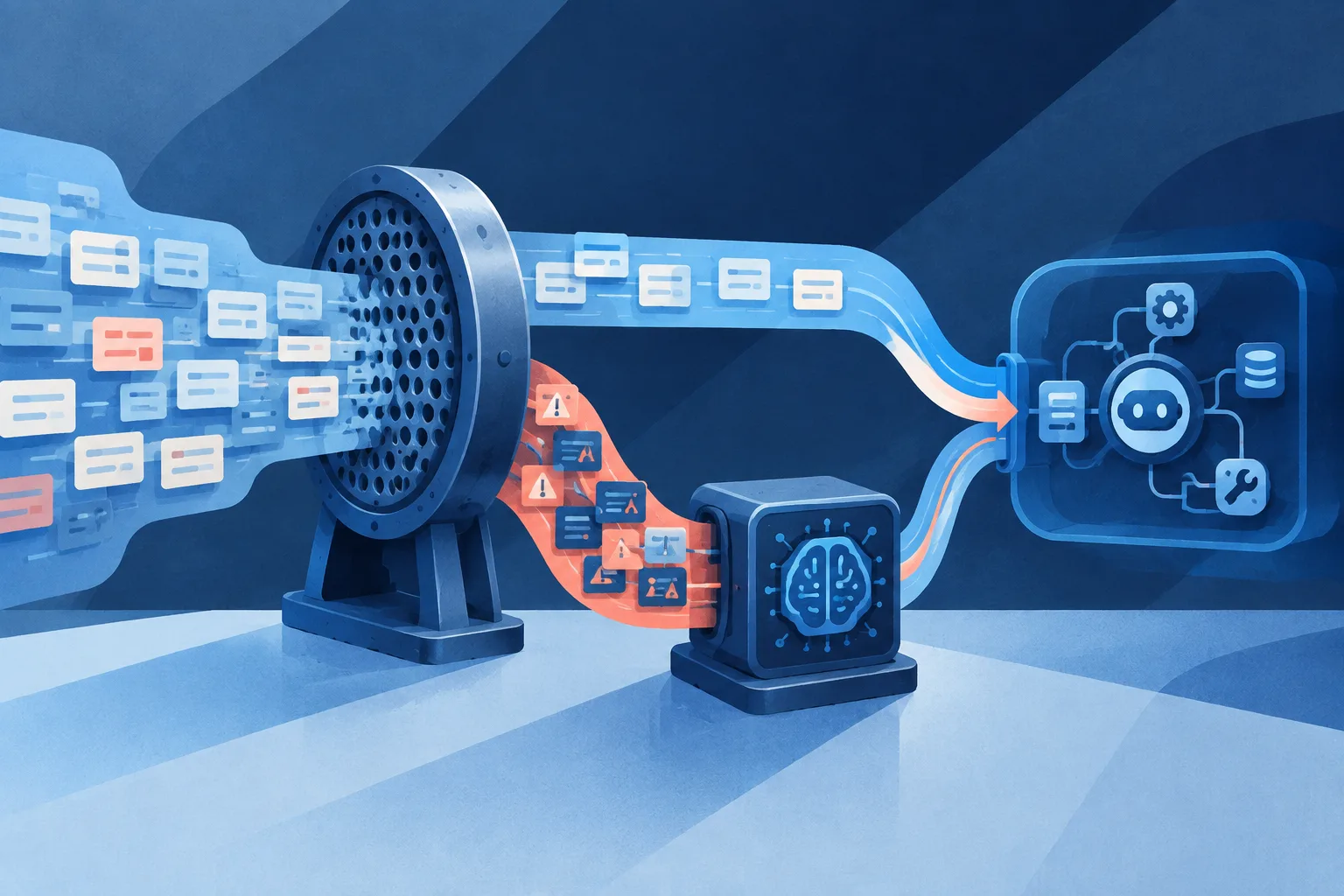
The authors tested whether the result depended on one model family or one phrasing. A separate Llama-3.x sweep produced 12 more ineligible configurations. Across the original prompts and three neutral rewrites per benchmark cell, the paper reports zero eligible results out of 112 configurations. The authors nevertheless limit their claim to the tested families, tasks, thresholds, and frozen-harness setup.
Reducing the models to 4-bit precision also failed to make any configuration eligible. The study evaluated three quantization approaches and found that the damage varied with model size, becoming less pronounced for larger models. Its conclusion was not that precision never matters, but that within this experiment the eligibility gap tracked model size more strongly than quantization choice.
The paper’s practical recommendation is a gated design rather than a wholesale handoff. A reliable conventional baseline should handle the cases where it already meets the quality bar, with a small model used only for the subset where it adds measurable value. One example combined a BM25 shortlist with a 4-billion-parameter re-ranker and improved on BM25 alone, although the combined result still did not certify the model as independently eligible. The study therefore frames small models as selective components, not automatic replacements for simpler safeguards.
Comments
Loading comments…