
Frontier AI models are making rapid gains on theoretical problems beyond mathematics, according to a study described by WIRED on October 14. MIT researcher Neil Thompson and collaborators tested models on questions drawn from recent scientific papers and found that the strongest systems’ success rate rose from about 2 percent in mid-2024 to roughly 35 percent by mid-2026.
The work covered probability, theoretical statistics, economic theory, high-energy theory, gravitation and cosmology, and quantum physics. Thompson told WIRED that AI’s ability to handle many theory questions could be transformed within a few years. The reported improvement is striking, but the scope was deliberately narrow: the researchers chose areas where models could reason through a problem without running a physical experiment or a computer simulation.
Thompson conducted the study with doctoral student Gabriel Manso and research scientist Claudio Mayrink Verdun. The team selected problems stated in papers posted online from December 2025 through May 2026, then evaluated a sequence of OpenAI systems: o1, o3, GPT-5, GPT-5.1, GPT-5.4, and GPT-5.5. Solutions published after the models’ training cutoffs served as the reference answers.
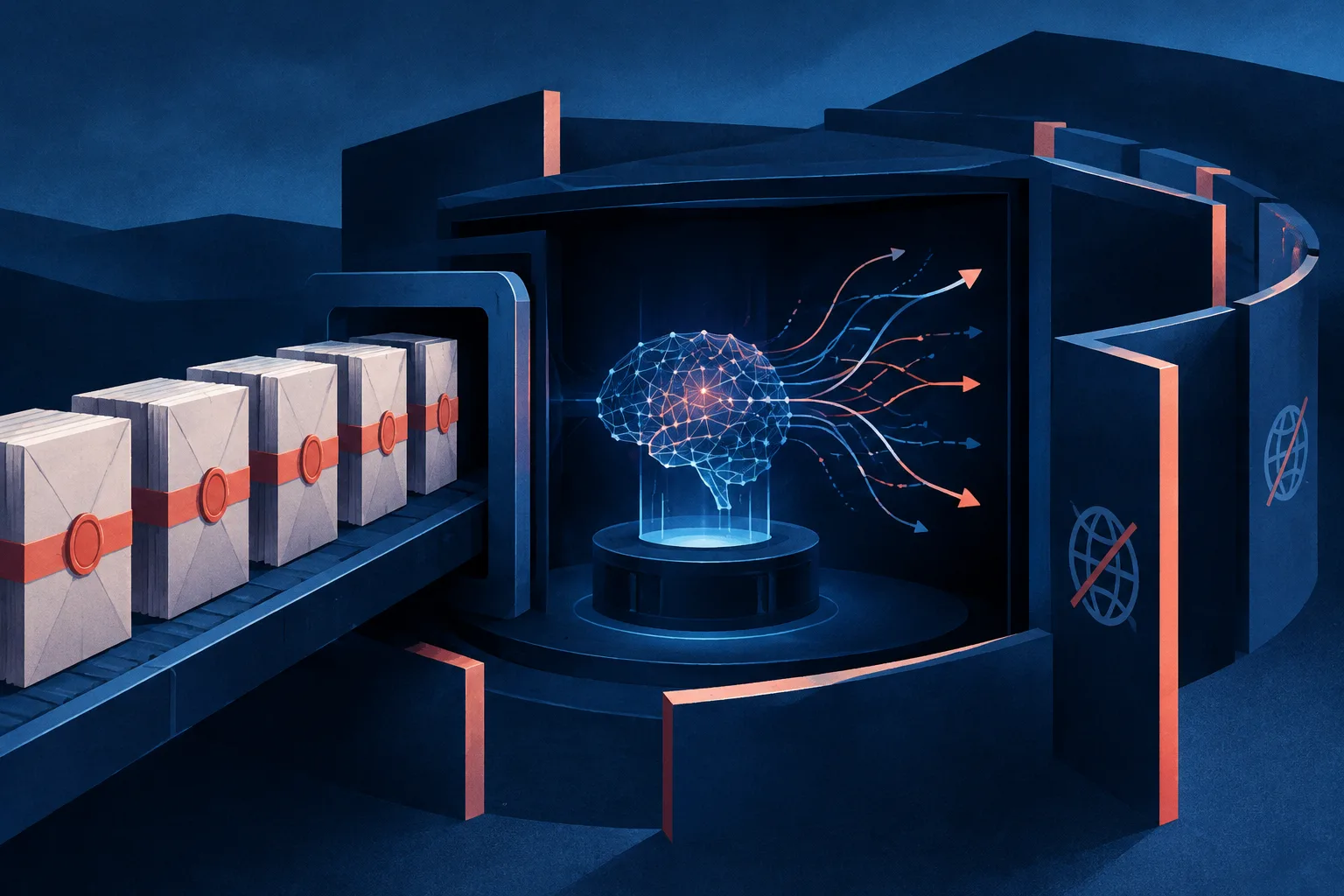
That timing was central to the test. Because the solutions appeared after the cutoff for GPT-5.5 and earlier models, the researchers’ design was intended to prevent the systems from simply reproducing answers encountered during training. The models also had no internet access, blocking them from searching for the published solutions. Within those controls and the selected domains, they had to construct answers from their learned capabilities.
The result does not mean AI can autonomously conduct science across the board. Many scientific questions depend on collecting data, building instruments, running simulations, performing experiments, or interpreting ambiguous evidence. The study excluded those requirements. It instead suggests that the kinds of changes already affecting mathematics could reach other fields where progress depends heavily on formal reasoning.
WIRED placed the findings against a turbulent recent period in AI-assisted mathematics. In September, OpenAI said an unreleased model had solved a longstanding Navier-Stokes problem concerning equations for fluid motion. The announcement became controversial after an NYU mathematician, who had been collaborating with an academic associated with Anthropic, accused OpenAI of moving ahead after learning about their progress.

OpenAI and other groups have since announced hundreds of proposed solutions to longstanding mathematical problems, WIRED reported. Some mathematicians have called for restrictions on AI use, arguing that the process of working through a problem can be as valuable as obtaining the final result. The reliability issue is also concrete: WIRED noted that OpenAI withdrew several solutions after publishing its latest collection.
Manso said experts will still be needed to generate ideas, connect results, inspect complex reasoning, and determine whether an answer is sound. A model can state that its conclusion is correct even when closer examination exposes an error. That makes verification a core part of any scientific workflow built around generative systems, especially when the solution is too complicated for a quick human check.
The study points toward a possible acceleration of theoretical work, not the removal of scientific expertise. Thompson said theoretical advances can sometimes unlock practical progress, so faster problem-solving could move discovery forward. AI laboratories and newly formed research groups are already expanding work on AI for science, including efforts that would combine theoretical analysis with systems able to conduct real experiments.
The immediate significance lies in the pace of change. Moving from about 2 percent to about 35 percent on the researchers’ selected problem set in two years suggests that theory-heavy fields may have little time to develop standards for attribution, validation, and responsible use. The unanswered question is not only which problems models can solve, but how researchers will confirm the answers, preserve the value of human reasoning, and decide when an AI-produced result is reliable enough to become part of science.
Comments
Loading comments…