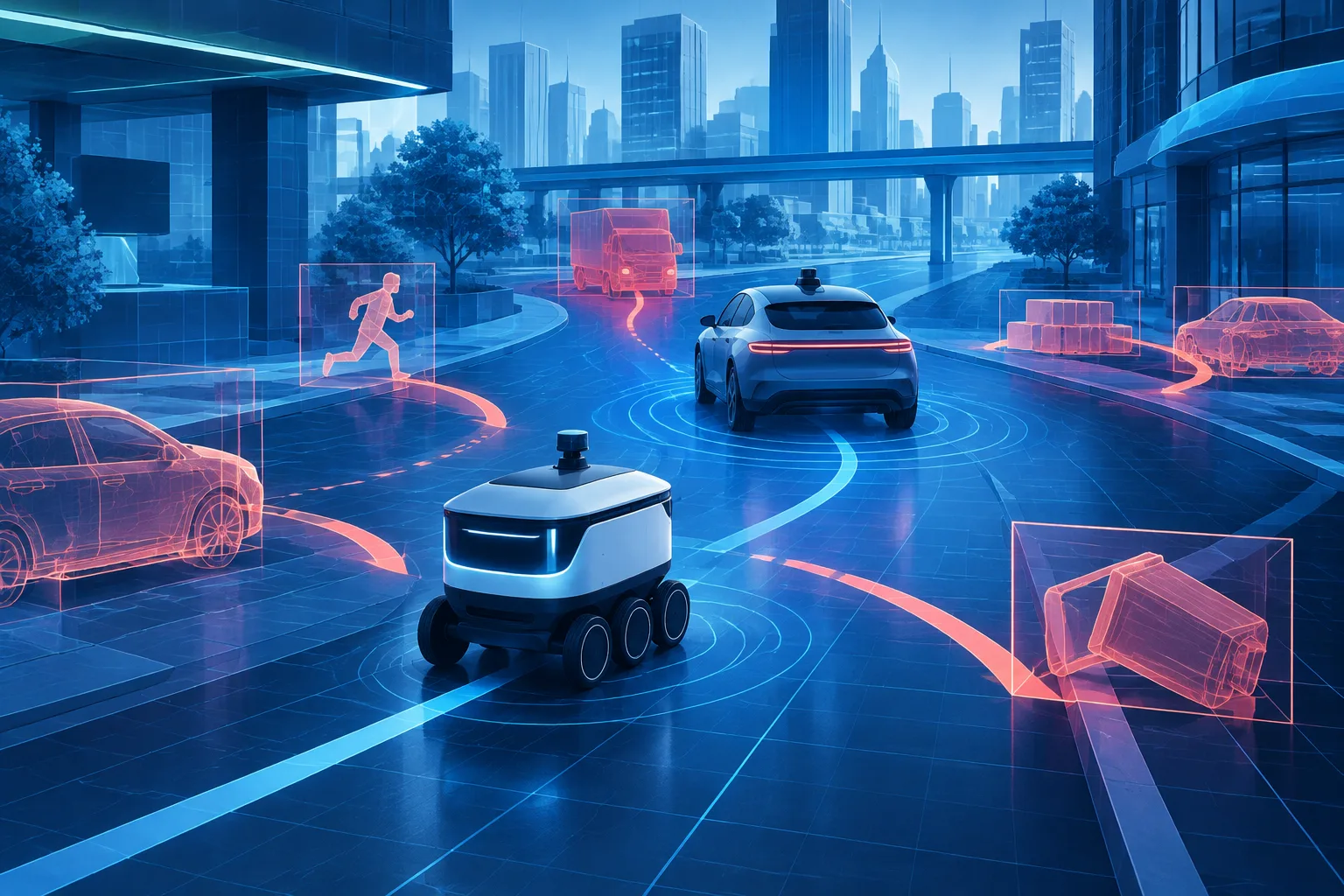
Laplace Intelligence is building a testing system meant to find the failures of robots and autonomous vehicles before those systems reach streets, factories or other physical environments. TechCrunch reports that the Ann Arbor startup combines interactive simulation with AI agents that deliberately search for weaknesses, an approach its founders describe as automated red-teaming for physical AI.
The premise is simple but increasingly urgent: software agents can behave unpredictably, and the cost of an unexpected action rises sharply when the agent controls a vehicle or machine. Laplace CEO and co-founder Howie Sun told TechCrunch that the company wants developers to discover and repair problems before deployment, while eventually producing evidence that customers, insurers and regulators can use to assess safety.
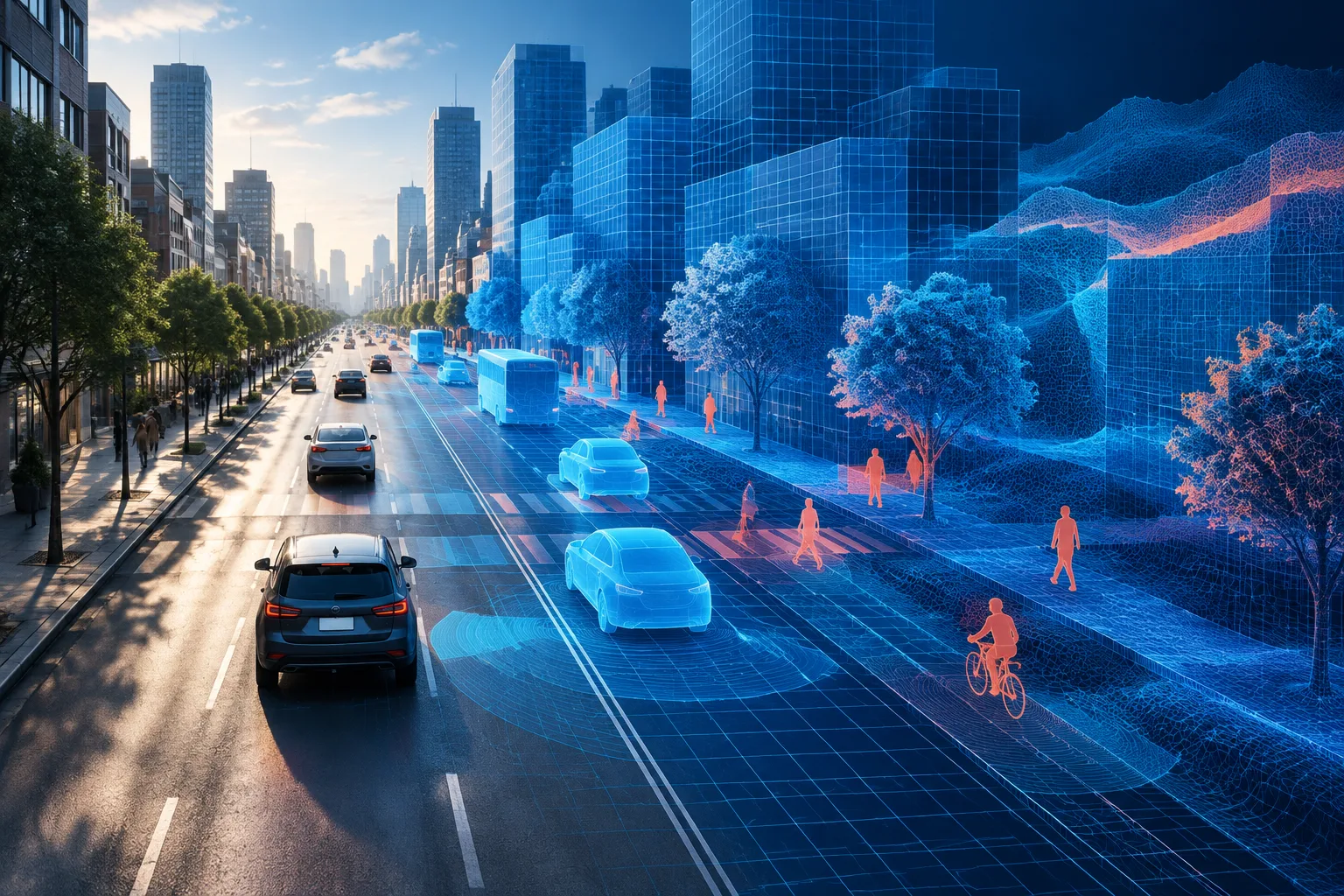
Laplace’s system begins with a high-fidelity virtual environment reconstructed from real locations. The startup uses a post-trained version of Nvidia’s Cosmos world-simulation platform and blends multiple kinds of geographic information. A street-level photograph can provide a visual reference, while mapping data helps reproduce the scale and layout of an Arizona highway or a pedestrian crossing in Paris. The simulated participants react to one another instead of following a fixed, prerecorded sequence.
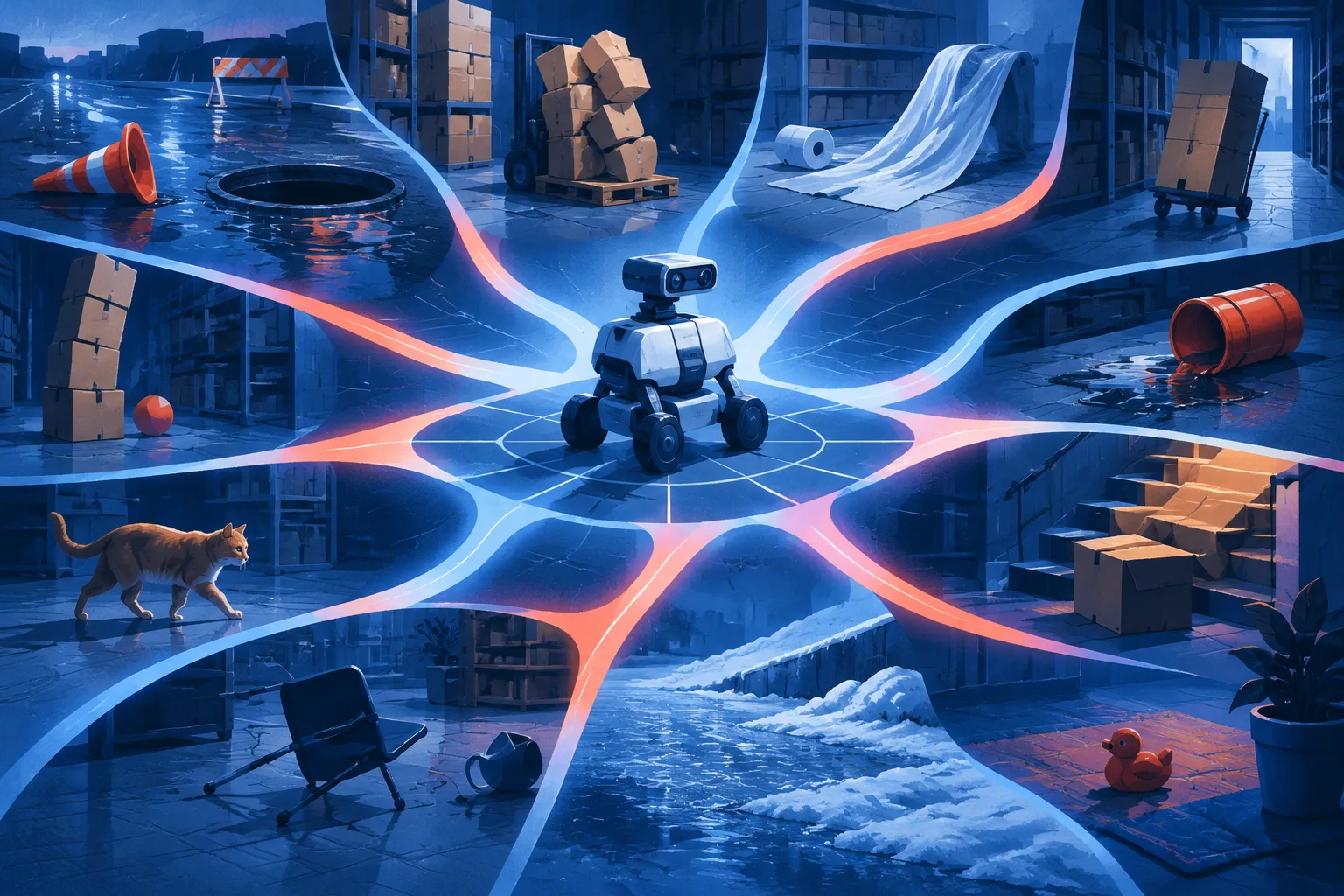
The other half of the product is adversarial scenario generation. AI agents continuously design rare or difficult situations intended to expose a system’s blind spots. According to Sun, those agents can draw from sources such as news coverage and police collision reports to devise new tests for autonomous vehicles. That shifts part of the search for edge cases away from human teams, which traditionally rely on recorded incidents or scenarios engineers imagine in advance.
That distinction matters because driving systems have years of road footage and incident data, while general-purpose robots do not. A robot placed into a home, warehouse or public space may face combinations of people, objects and changing conditions that its developer never recorded. Laplace is betting that an agent capable of generating interactive surprises can explore that long tail faster than a human testing team can enumerate it.
Sun and chief scientist Henry Liu founded the company about a year ago after working together at the University of Michigan. Their academic research focused on challenging autonomous-driving systems in simulation, and a 2023 paper attracted interest from vehicle developers, according to TechCrunch. The company says it is already generating revenue and has reached modest profitability, with most business currently coming from autonomous-driving applications. Reported customers include Japanese truck manufacturer Isuzu and Texas autonomous-trucking company Bot Auto.
The startup’s early traction does not by itself prove that simulated failures will reliably predict failures in the real world. The quality of the test depends on how accurately the environment, participants and physical interactions are modeled, as well as whether the adversarial agents uncover meaningful cases instead of merely producing unusual ones. TechCrunch’s report does not include independent performance measurements or detailed customer results, so the effectiveness of Laplace’s approach remains to be demonstrated at scale.
Even with that uncertainty, the company is pursuing a consequential gap in the physical-AI boom. Developers increasingly want models to operate machines, but familiar software testing is not enough when an error can cause physical damage. If Laplace can make adversarial simulation repeatable and credible, red-teaming may become not only a development tool but part of the evidence demanded by buyers, insurers and regulators before autonomous systems are allowed into the real world.
Comments
Loading comments…