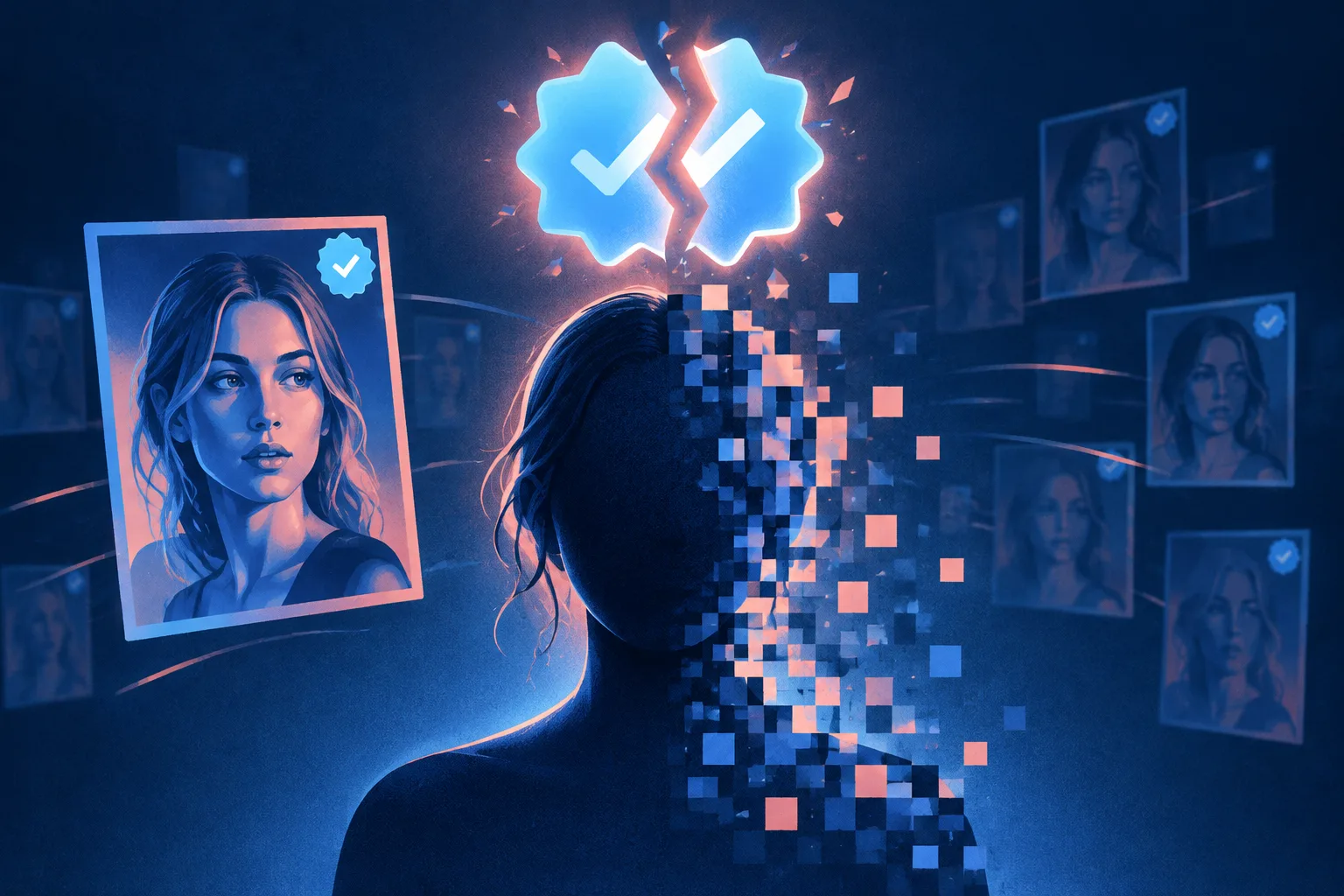
An AI-generated image attributed to actress Mia Goth spread widely from a verified Instagram fan account after reports of her divorce, exposing how several platform systems can combine to make false content appear credible. The Verge reported on October 13 that the post drew hundreds of thousands of likes and was treated as authentic by entertainment publications before Goth’s representatives said the image was fabricated.
The disputed post appeared on an account named miagoth_, which displayed a blue verification checkmark and had more than one million followers. It depicted Goth wearing a shirt with a message about an ex-partner and paired the image with a song about being single. Screenshots then moved beyond Instagram onto other social platforms, extending the reach of the false attribution even after questions emerged about its origin.
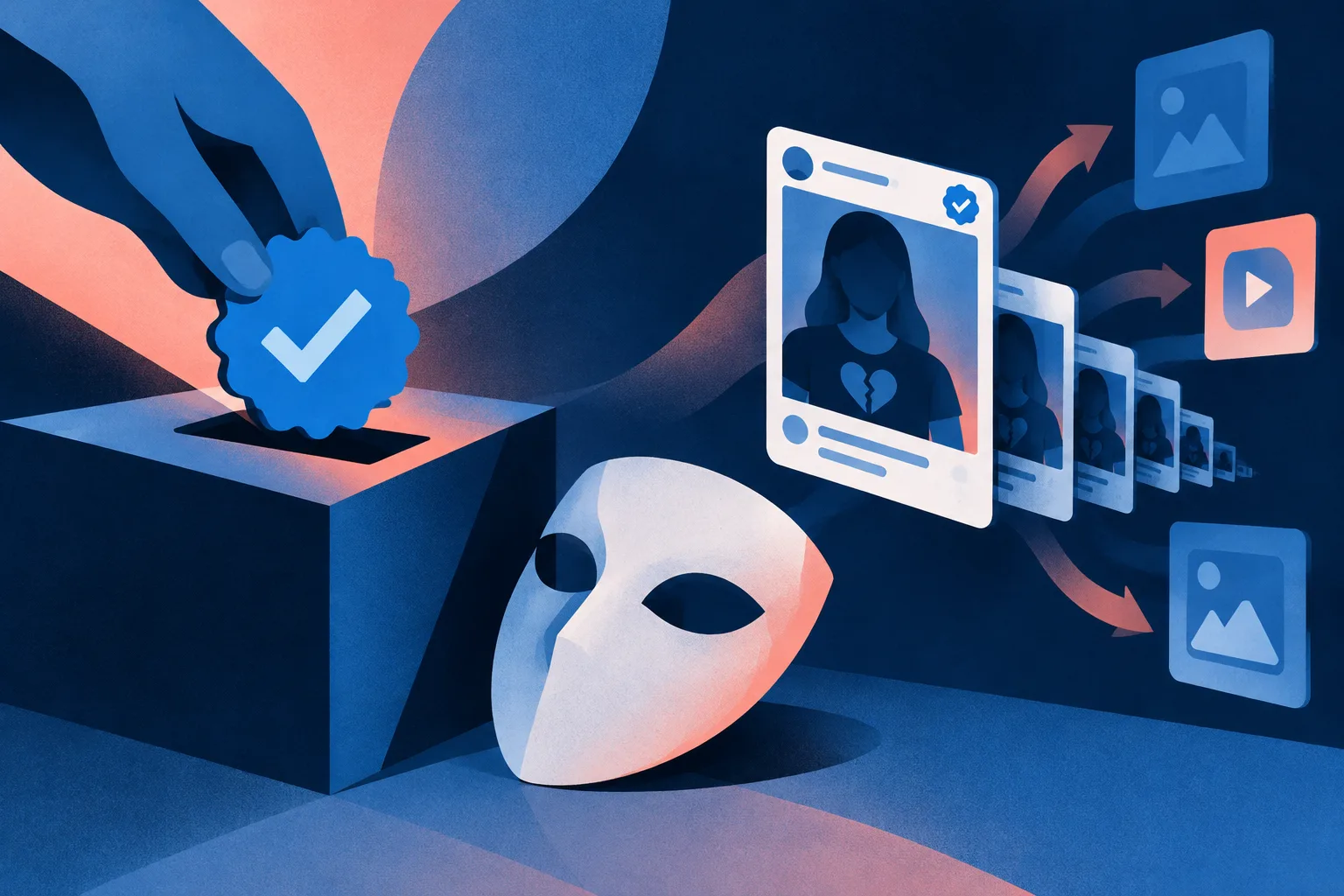
Goth’s representatives told The Verge that she does not own or use social-media accounts. They said they had submitted multiple complaints asking Instagram to remove the fan page because it was posting counterfeit AI images using her likeness. The account identified itself as fan-run, but the familiar blue badge may have encouraged viewers and publishers to read it as an official source rather than an unaffiliated page.
That confusion reflects a change in what verification means. Meta began selling blue checkmarks through a paid program several years ago, allowing accounts to obtain a visual signal that historically indicated an official or authentic entity. In this case, the badge sat beside a fan account using a public figure’s name and image, creating a credibility shortcut that appears to have outpaced the account’s disclosure.
The consequences were not limited to casual engagement. The Verge reported that OK! and People covered the image as though it were genuine, while people in the entertainment industry were among those who liked it. The episode shows how an initial platform signal can travel into news coverage and secondary posts, turning a fabricated image into a broader information problem even when no single share contains a lengthy false claim.
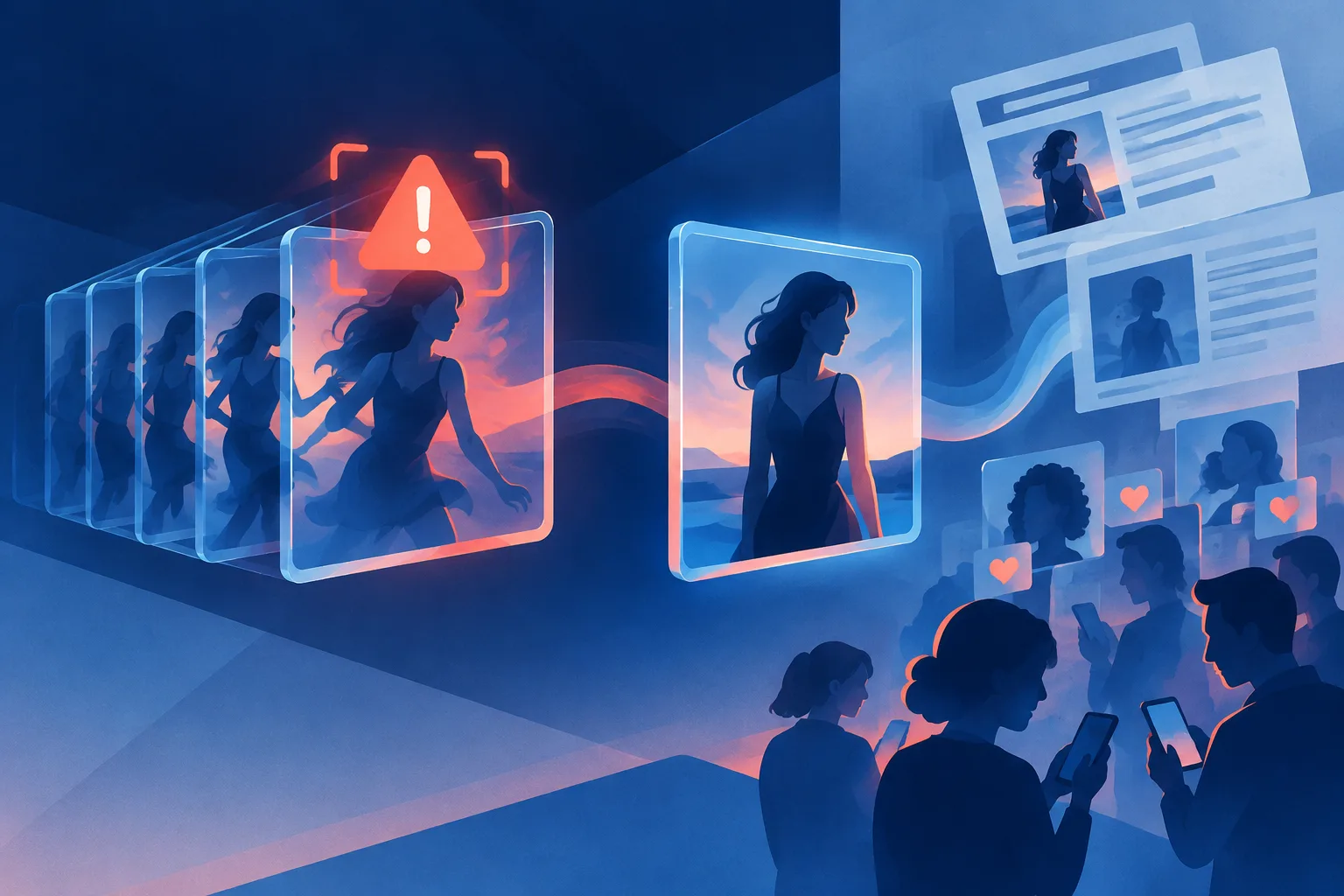
Meta’s AI-labeling policy leaves another gap. The company labels some material made with generative AI, and photorealistic AI videos of real people may require disclosure. According to The Verge, Meta’s rules do not require the same label for still images. That exception matters because a single realistic image can be copied, screenshotted and redistributed with its original context or any disclosure removed.
Meta did not immediately respond to The Verge’s request for comment. By Tuesday morning, the fan account appeared to have been cleared from Instagram. The removal may stop new posts from that source, but it does not erase the screenshots or the coverage that already circulated, and the report does not establish whether Meta took the account down or whether its operator removed the material.
Public figures have raised similar concerns as generative tools make convincing impersonation cheaper. The Verge pointed to Scarlett Johansson’s 2024 objection to a ChatGPT voice she said resembled hers after she declined to work with OpenAI, and to Taylor Swift’s warning about AI-generated political images falsely depicting her position. The latest case adds a platform-governance issue to that debate: when a paid badge suggests authenticity and still images escape mandatory AI labels, users are left to resolve a contradiction the product itself helped create.
Comments
Loading comments…