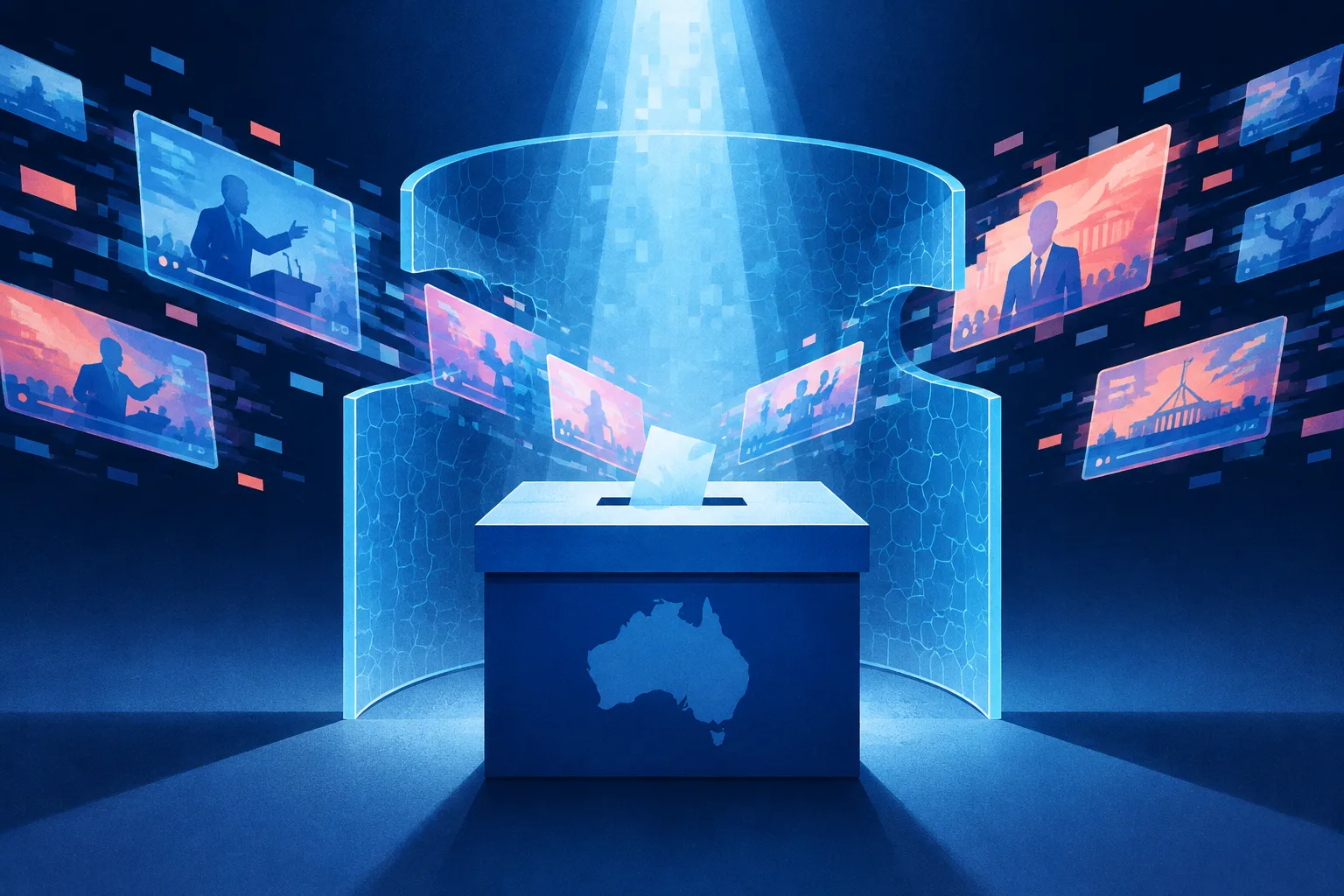
An AI-generated campaign video shown at One Nation’s Victorian campaign launch has turned a provocative political stunt into a test of Australia’s election safeguards. Guardian Australia political reporter Josh Butler described the clip as a collection of racist stereotypes, including synthetic depictions of an African man with a machete, a Middle Eastern man wearing an explosive vest, a South Asian man discussing migration and an Indigenous elder speaking about government support.
The video’s significance extends beyond its content. According to the Guardian, inexpensive and widely available generative-video tools have lowered the cost of producing inflammatory political material that would once have required actors, a crew and a larger budget. That change lets campaigns create and circulate synthetic scenes quickly, while the rules governing them remain divided among agencies with narrower mandates.
The immediate regulatory gap is especially clear online. The Guardian reported that the Australian Communications and Media Authority cannot act against the video because its authority does not cover this type of internet-only material. Electoral commissions, meanwhile, can police falsehoods about the voting process but not every misleading statement or offensive campaign message.
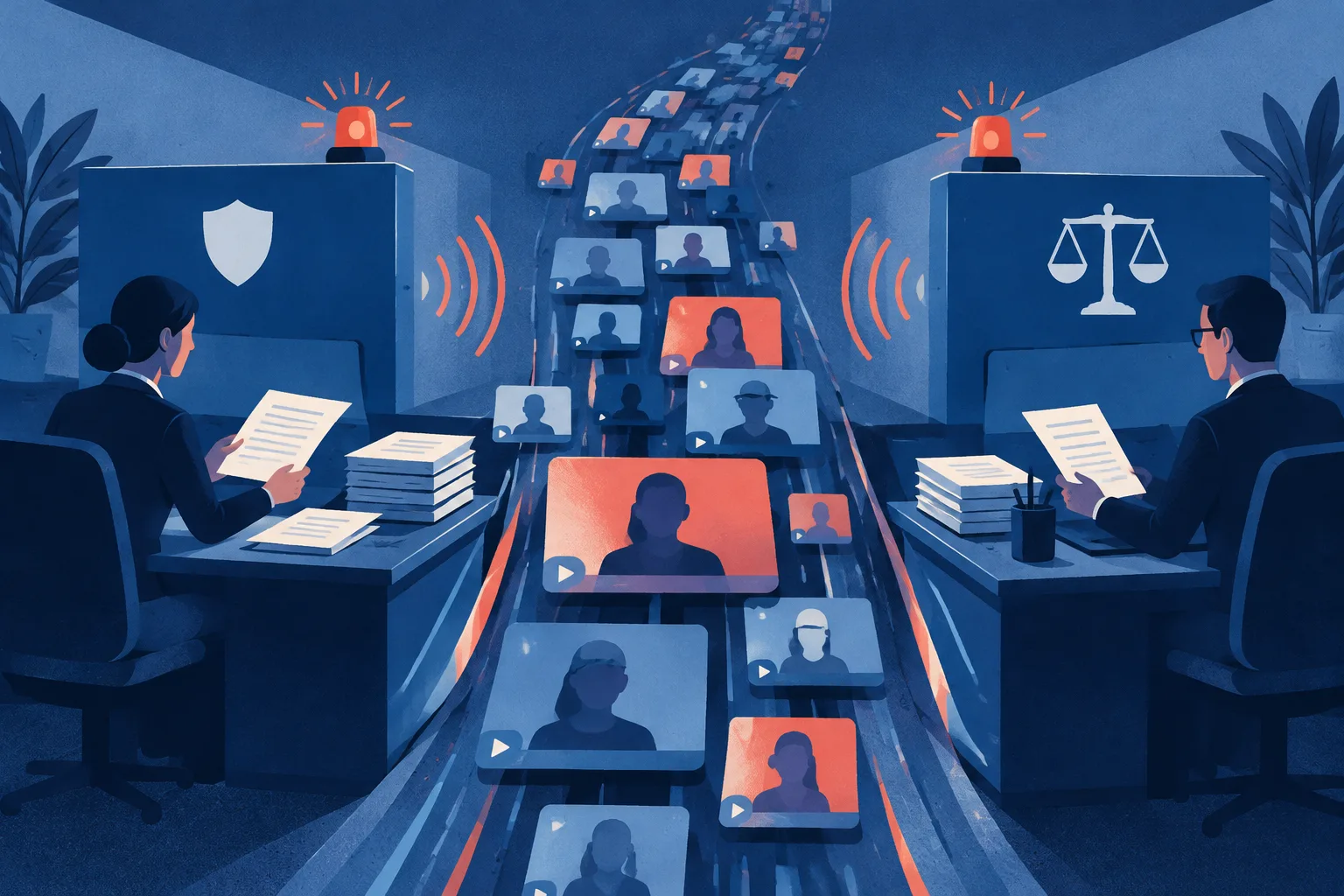
That boundary could be tested if the material moves onto television. The Guardian cited a News Corp report that One Nation was preparing a broadcast version, which could bring it within the communications regulator’s jurisdiction. Even then, an unnamed industry source told the newspaper that the advertisement’s tone was unlikely to violate existing broadcast rules. Whether a broadcast version actually appears remains uncertain.
Pressure for a broader response is building. Independent senator David Pocock has spent two years urging the government to address generative AI in election campaigns, the Guardian reported, and his petition seeking a ban on election deepfakes has gathered 35,000 signatures. Australia’s joint parliamentary committee on AI also heard this week that action was overdue.
In a submission to that inquiry, the Australian Electoral Commission warned that AI can make authentic and manipulated material harder to tell apart, confuse voters about which sources are authoritative and create new difficulties for election agencies. The commission said synthetic material circulating during voting could damage either the reality or the public perception of electoral integrity.
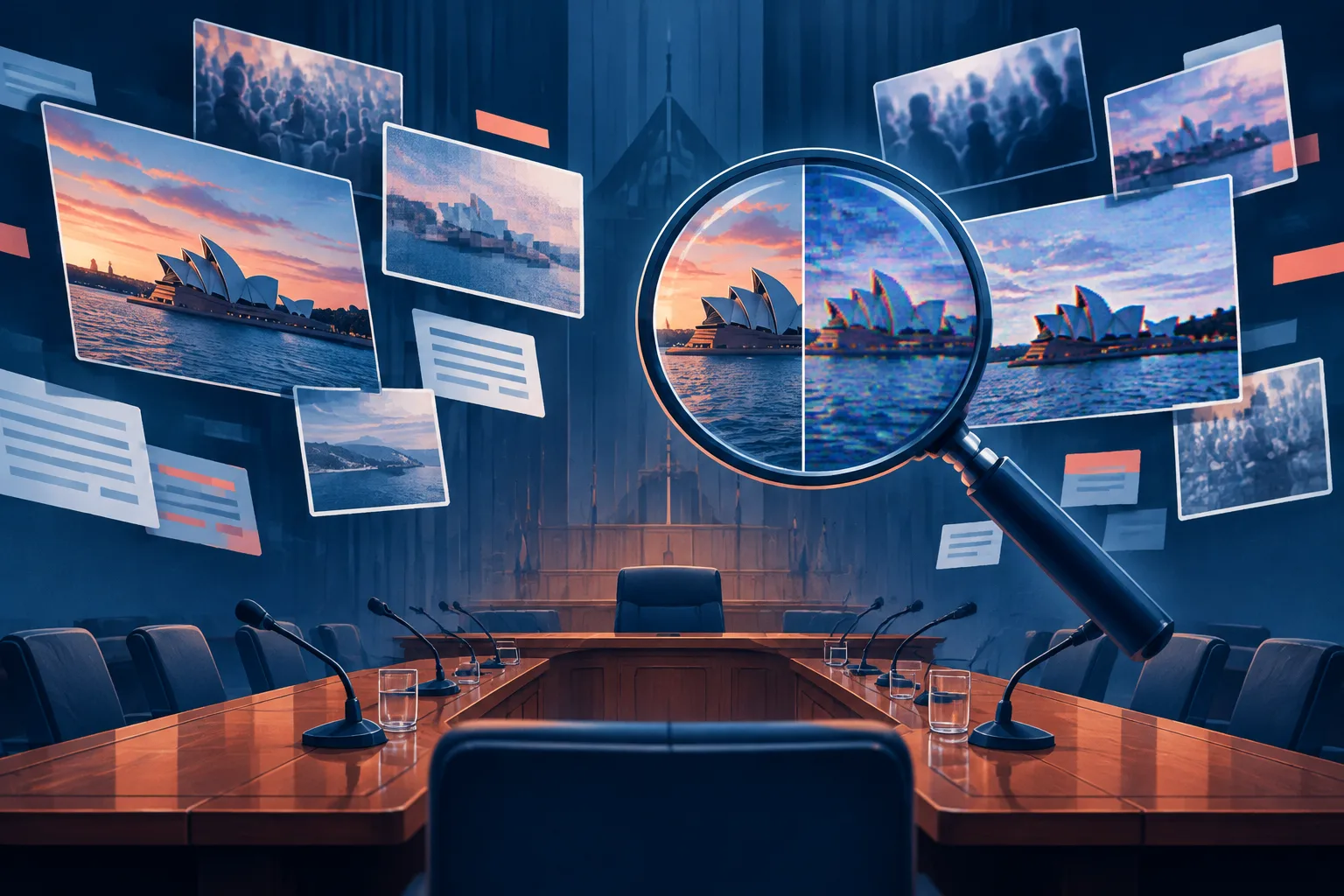
The concern is not new. A parliamentary report published in October 2024 warned that AI could be used to undermine democratic processes, deceive the public, reinforce bias and manipulate opinion. The federal Labor government has nevertheless resisted calls to prohibit AI-generated campaign material during election periods, even as it works on legislation addressing other AI-related harms, according to the Guardian.
The One Nation clip also arrived amid several other synthetic political posts. The Guardian pointed to an AI-made advertisement from conservative campaign group Advance, an image posted by Liberal MP Jason Wood that AAP identified as fake, and multiple AI-generated interview-style videos that fact-checkers said appeared to be filmed outside Parliament House. Professor Terry Flew of the Centre for AI Trust and Governance told the parliamentary inquiry that no single Australian agency covers the full range of misinformation risks and recommended considering a ban on election deepfakes.
Any new rule would still need to distinguish between different kinds of synthetic politics. The One Nation video does not appear to impersonate a real voter or fabricate an event involving an identifiable public figure; its characters are fictional, and its message is overtly partisan. That makes it different from a deceptive deepfake, while still illustrating how generative tools can scale material designed to inflame and divide.
For regulators, the unresolved question is therefore larger than whether one offensive video should be removed. Australia must decide which agency should oversee synthetic campaign media, whether online political advertising should face rules comparable to broadcasting, and where disclosure or prohibition should begin. The current episode supplies evidence of a gap, but the shape and timing of any legislative response remain uncertain.
Comments
Loading comments…