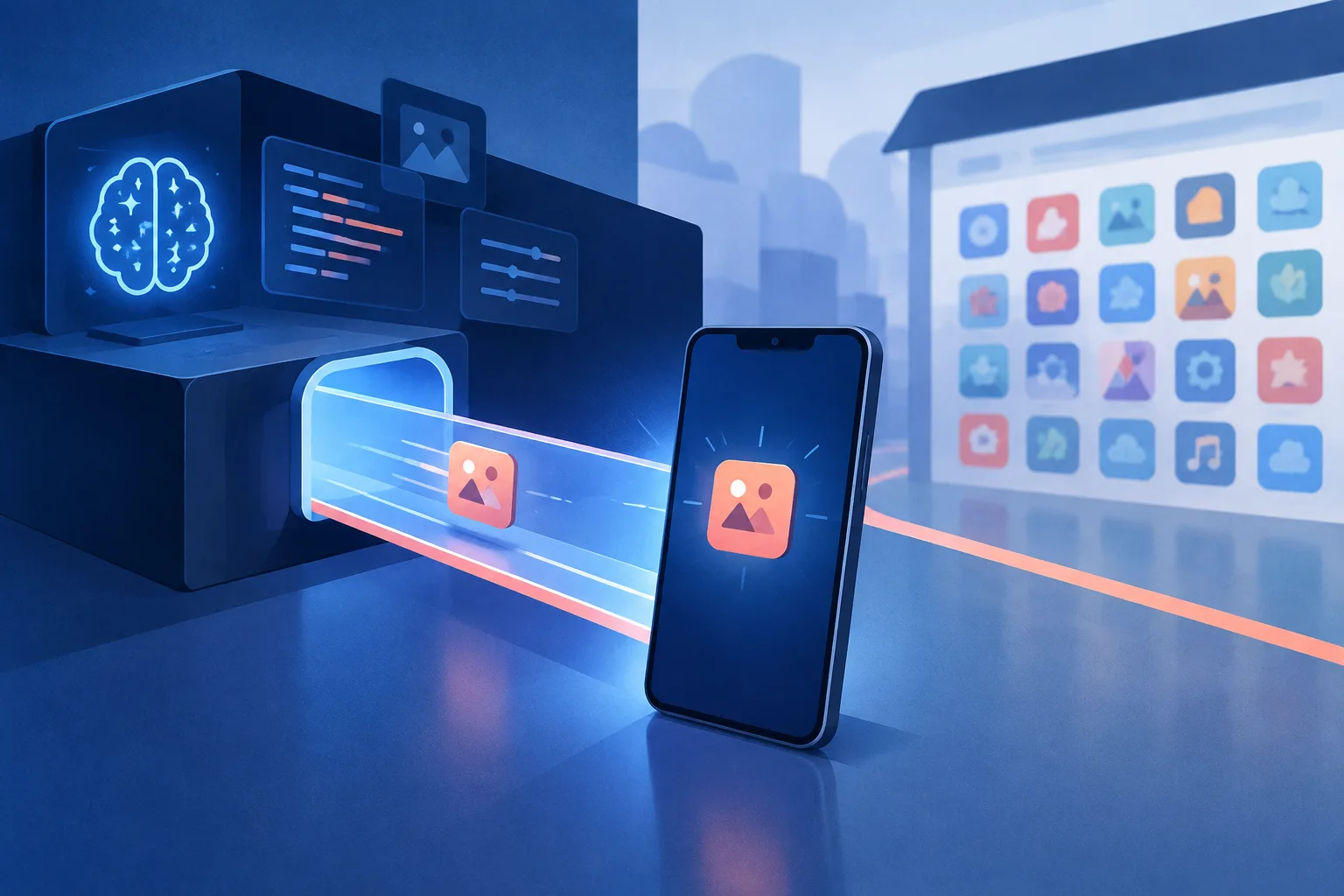
Google is creating a new distribution path for Android software made with generative AI. A feature announced on October 13 will let people launch personal apps built in Google AI Studio on their own Android devices through Google Play, TechCrunch reported. The apps do not have to appear in the public Play Store, turning what was previously a publishing process into a private route from an AI development tool to a phone.
The distinction is central to the feature. Personal apps will remain private to their creator and will not appear in Google Play search results or public listing pages. Users can launch them with a standard Google account rather than opening a professional developer account. At launch, TechCrunch reported, the option is limited to people in the United States who are at least 18 years old.
Google is addressing a practical barrier for people experimenting with so-called vibe coding, in which a user describes an application and relies heavily on AI to produce or revise the code. Before this private option, placing a native Android experiment on a phone could require publishing it through Google Play, potentially making it available to the store’s roughly 3 billion users. That friction encouraged some people to keep their experiments as web apps instead.
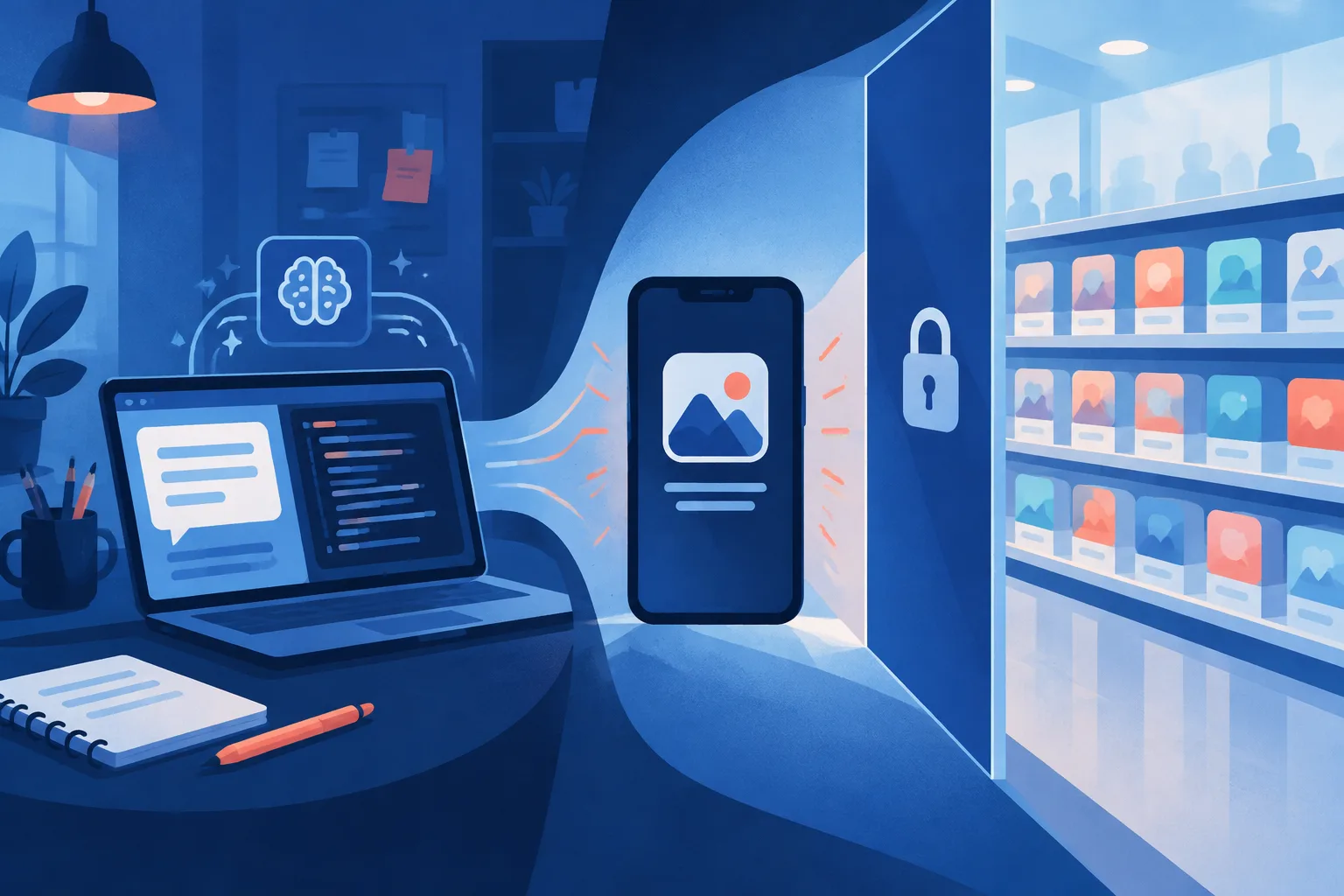
The new lane does not remove Google Play’s rules. TechCrunch reported that personal apps still must comply with the platform’s existing policies. The difference is their audience: a creator can use an app without presenting it as a finished public product. That separation gives Google a way to support low-stakes experimentation while keeping private projects outside the searchable marketplace.
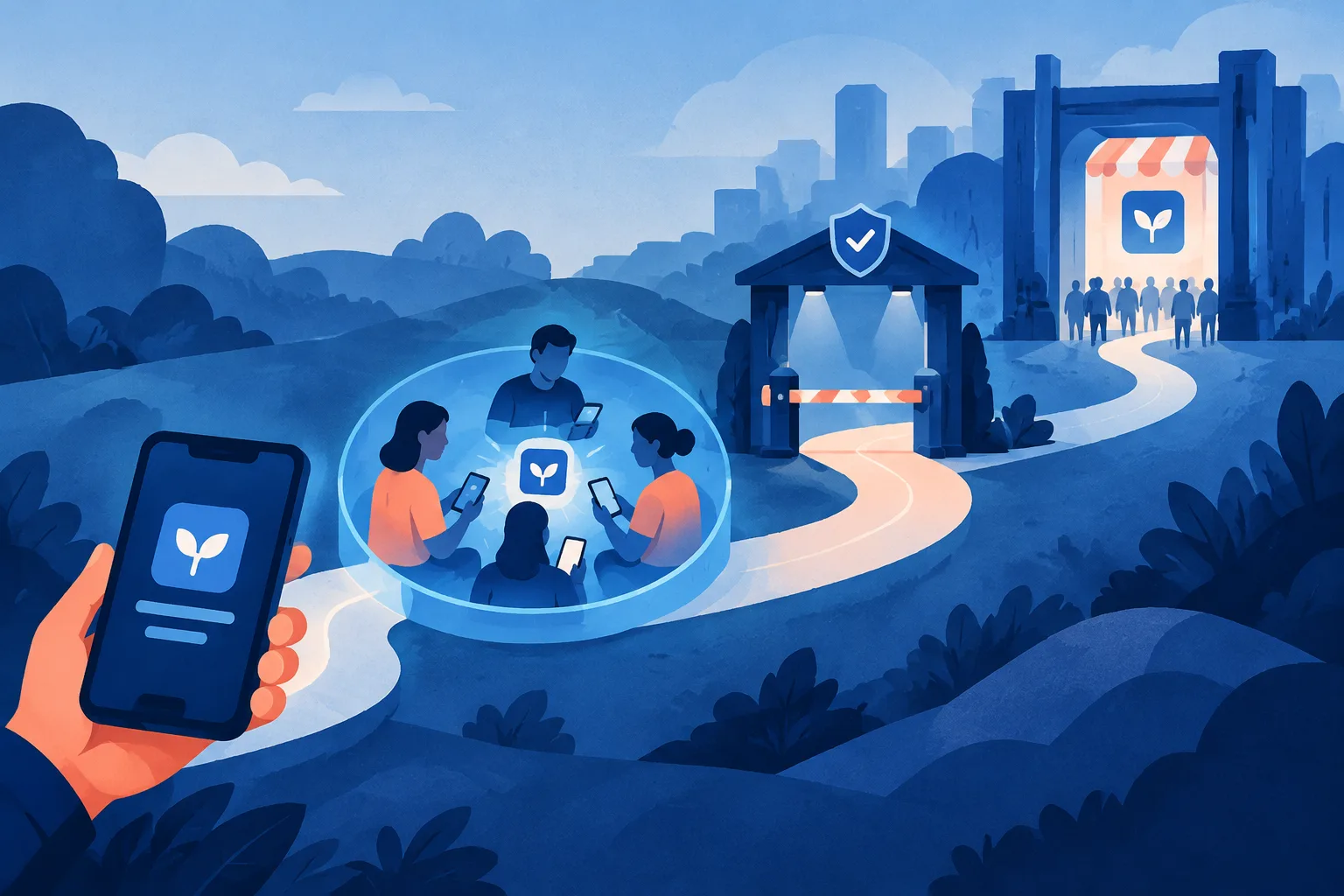
The audience is expected to expand gradually. Google said it plans to let creators share personal apps with a trusted group in the coming months. That could support narrowly tailored tools for a family, a group of friends, or a local organization without requiring a global release. TechCrunch cited a child’s T-ball league as one example of the limited communities such an app might serve.
Google is also building a path from private experiment to public software. If a personal app develops a wider audience, its creator will be able to move toward a professional developer account and submit the app for public distribution. TechCrunch reported that the app would then have to complete Google Play’s trust and safety reviews before appearing in the store for everyone.
The design gives Google an important position in the emerging market for AI-generated software. AI Studio supplies the building environment, Android supplies the device platform, and Google Play now supplies private delivery as well as a route to public release. The company is not promising that every generated app is production-ready; instead, it is lowering the threshold for trying an app on a real device while preserving a review step for broader distribution.
Google announced the feature alongside other Play Store changes involving AI-powered game recommendations, an expanded Ask Play assistant, community features and age-range sharing. But private app launch may be the most structural change. It treats software as something an individual might generate for a single purpose and a tiny audience, rather than a product that must be packaged for a mass marketplace from the start.
That shift could increase the volume and variety of Android software without immediately flooding public search results. It also moves the platform’s responsibility earlier in the development process, because experimental apps will still operate on personal devices and remain subject to Play policies. The result is a new middle ground between a web prototype and a public mobile app—one built specifically for the age of AI-assisted development.
Comments
Loading comments…