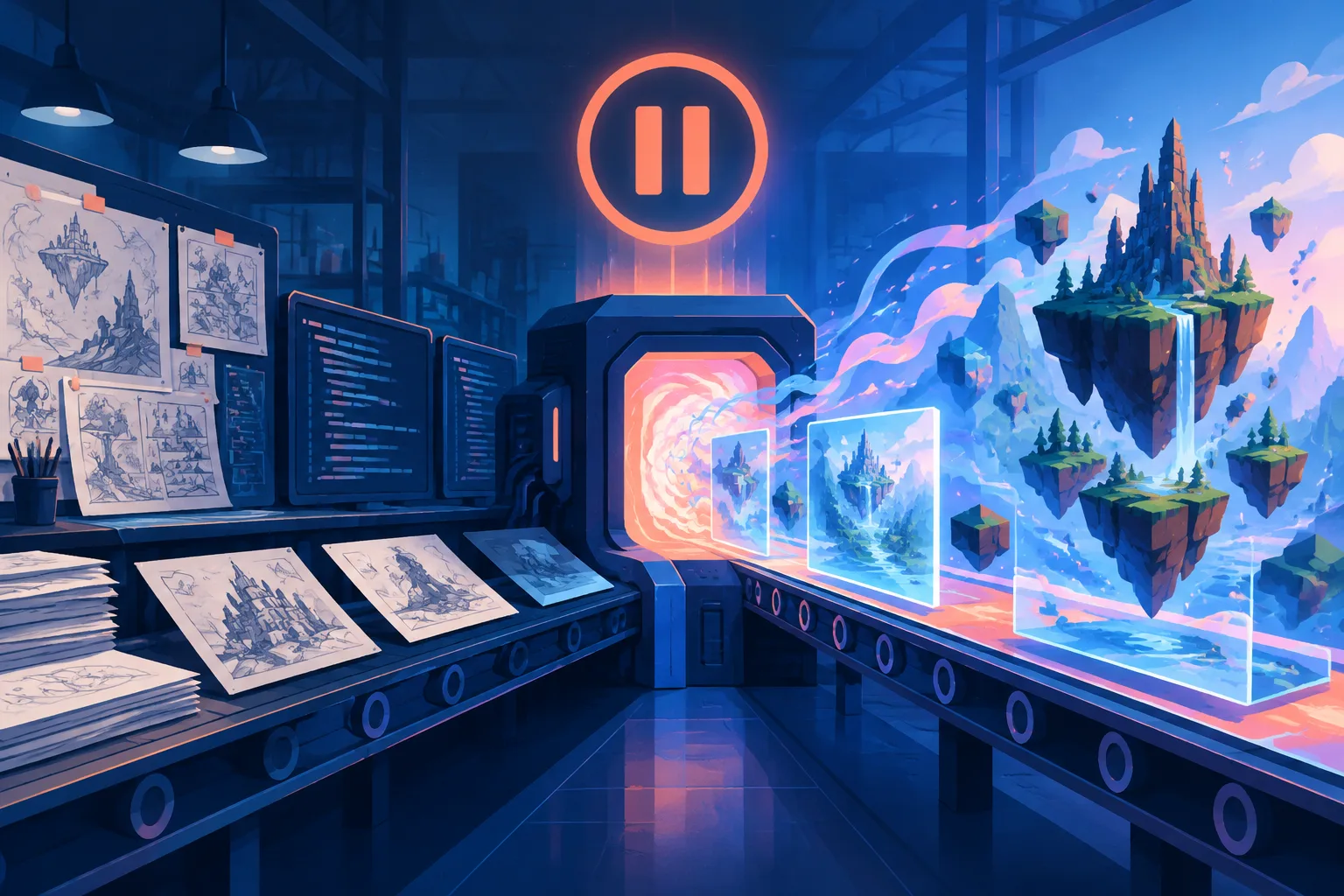
Epic Games has reportedly delayed an upcoming Disney video game as it restructures the project around a much heavier use of artificial intelligence. Engadget, citing reporting from Bloomberg, said one of the game’s directors told the development team that production would follow an AI-first plan. The internal directive reportedly called for code and artwork to be produced through AI workflows rather than created entirely by hand.
The change was not universally welcomed inside the team, according to the report. Some developers were said to have hoped the instruction was not fully serious. Epic, however, has already been adding generative-AI capabilities to its Unreal Engine platform. In a statement provided to Bloomberg and quoted by Engadget, Epic communications director Jake Jones said the company is adopting AI-accelerated development while keeping Epic’s developers as the creative leaders of its work.

The project sits inside a much larger relationship. Disney invested $1.5 billion in Epic in 2024 as the companies set out to build what they described as a games and entertainment universe. Disney-owned characters had already appeared as cosmetic options in Fortnite, but the investment signaled a deeper collaboration extending beyond those appearances.
Engadget said the most promising Disney project at Epic had previously been rumored to be an extraction shooter in the style of Arc Raiders. That game was reportedly expected to arrive in November before its launch moved to March, a delay that Bloomberg said had occurred before the new AI directive. The reporting does not establish whether the AI transition will change that schedule again, or how much of the existing work will be replaced.
What makes the move unusual is the scope attributed to the new production plan. Generative AI is already used by many game developers, but the most common applications have been research and programming support rather than the creation of finished visual assets. A mandate that extends across both code and art would place the technology closer to the core creative pipeline, where questions about quality, authorship, employment, and accountability are harder to separate.
Resistance within the industry has also grown. Engadget cited the Game Developers Conference’s annual survey, in which 52 percent of respondents said generative AI was bad for the games business, up from 30 percent in 2025. The same survey found that developers who use the technology often apply it to tasks such as research and programming instead of asset creation. Epic’s reported direction therefore goes further than the pattern described by many of the developers surveyed.
The project will be watched as a practical test rather than simply another corporate AI announcement. A successful release could encourage large studios to make AI a standard production layer across disciplines. A troubled development cycle could strengthen the argument that automation adds disruption without delivering reliable gains. For now, the underlying details remain based on source accounts reported by Bloomberg and summarized by Engadget, while Epic’s public response confirms its broader commitment to AI-accelerated development but does not resolve how the mandate will work in practice.
Comments
Loading comments…