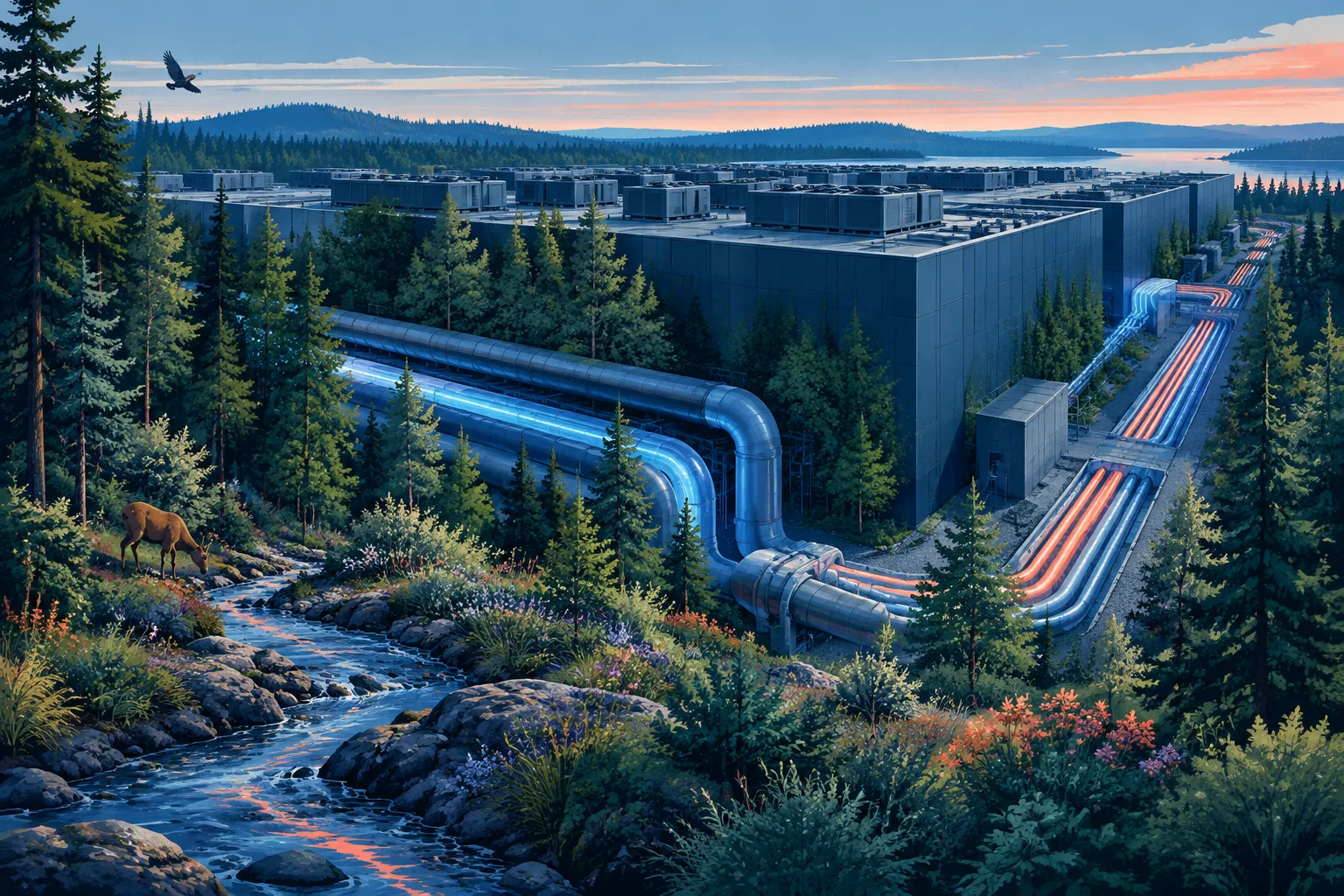
Microsoft is trying to make its rapidly expanding data center network a less disruptive neighbor by borrowing ideas from nature. The company calls the approach “biomimicry”: adding native trees and gardens, repairing damaged ecosystems, and using planted buffers to reduce the visual and acoustic impact of facilities. A detailed report by The Verge found that some local partners welcome the work, even as residents and environmental advocates question whether site-level restoration can keep pace with the much larger footprint of AI infrastructure.
The initiative is moving beyond a small pilot. Microsoft told The Verge that it operates more than 300 data centers in over 34 countries and plans nature-inspired restoration work at more than 20 sites in the United States and Germany. The company says similar measures will be used for every new US project and for a growing number elsewhere. Proposed tactics vary by location, reflecting Microsoft’s stated goal of adapting each project to the surrounding habitat.
San Antonio shows why the company is under pressure to change. City Councilmember Ric Galvan told The Verge that more than a dozen data centers operate in his roughly 55-square-mile district, with the total potentially rising to about 20 if proposed projects proceed. Residents have dealt with construction traffic, tree removal, bright lighting, and continuous operating noise. In 2022, Microsoft cut more than 2,600 trees across 33 acres for a data center, a move that intensified local concern about heat and lost green space.
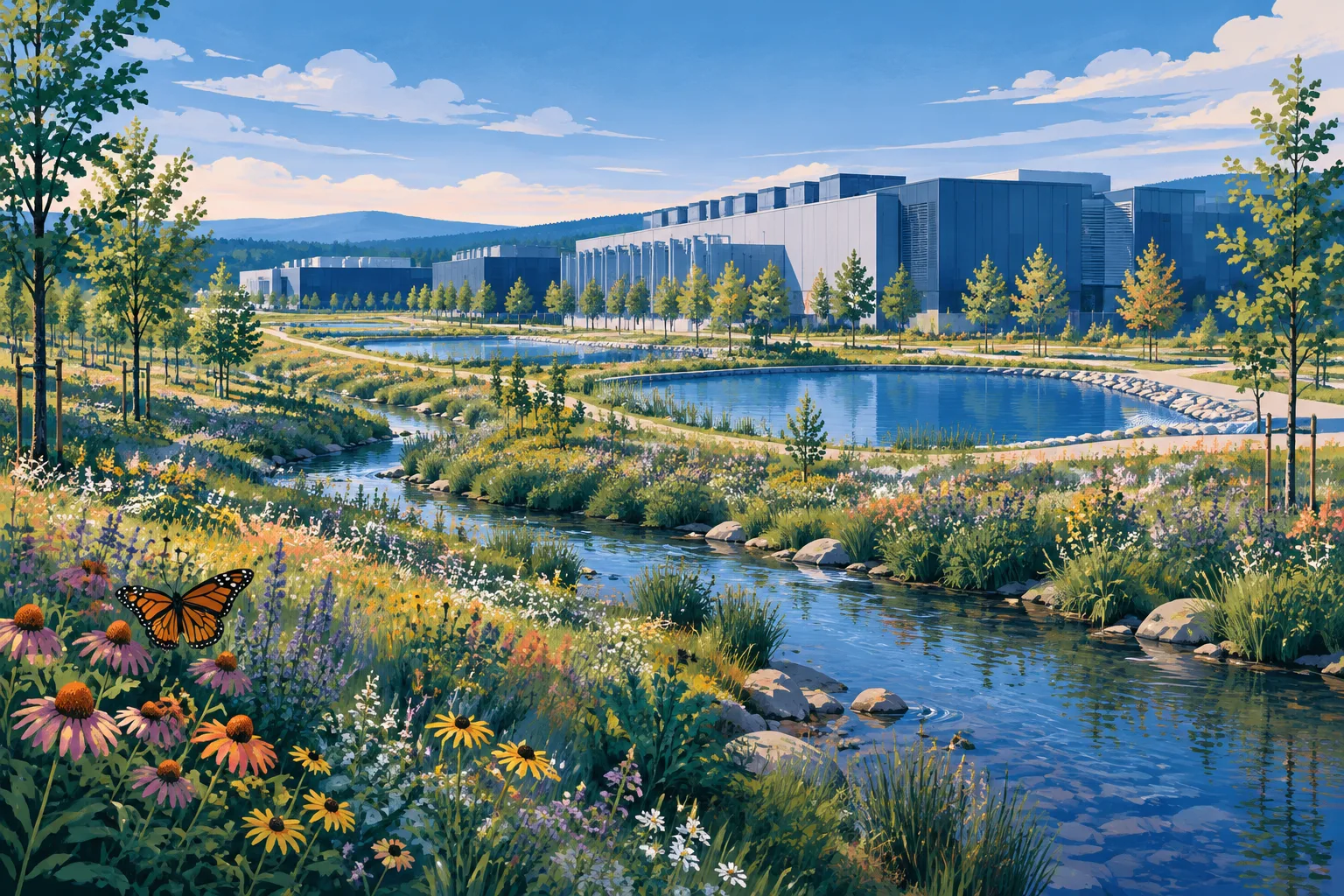
Microsoft says it is now considering pollinator gardens in San Antonio to support migrating monarch butterflies, along with vegetated buffers intended to soften noise and views. A company spokesperson also pointed to more than 400 acres of planned woodland and pollinator-prairie restoration in the area. Galvan acknowledged that Microsoft has been more responsive than some other operators, including by employing a local representative who answers community concerns.
A project in Mount Pleasant, Wisconsin, offers a more developed example. Microsoft funded a $4.2 million effort in 2023 to restore the flow of a creek crossing property it is repurposing from the former Foxconn LCD factory site. The local Root-Pike Watershed Initiative Network worked with the company on the restoration and praised stormwater ponds designed with forebays that help contain sediment. Those measures suggest ecological design can produce tangible benefits around an individual campus.
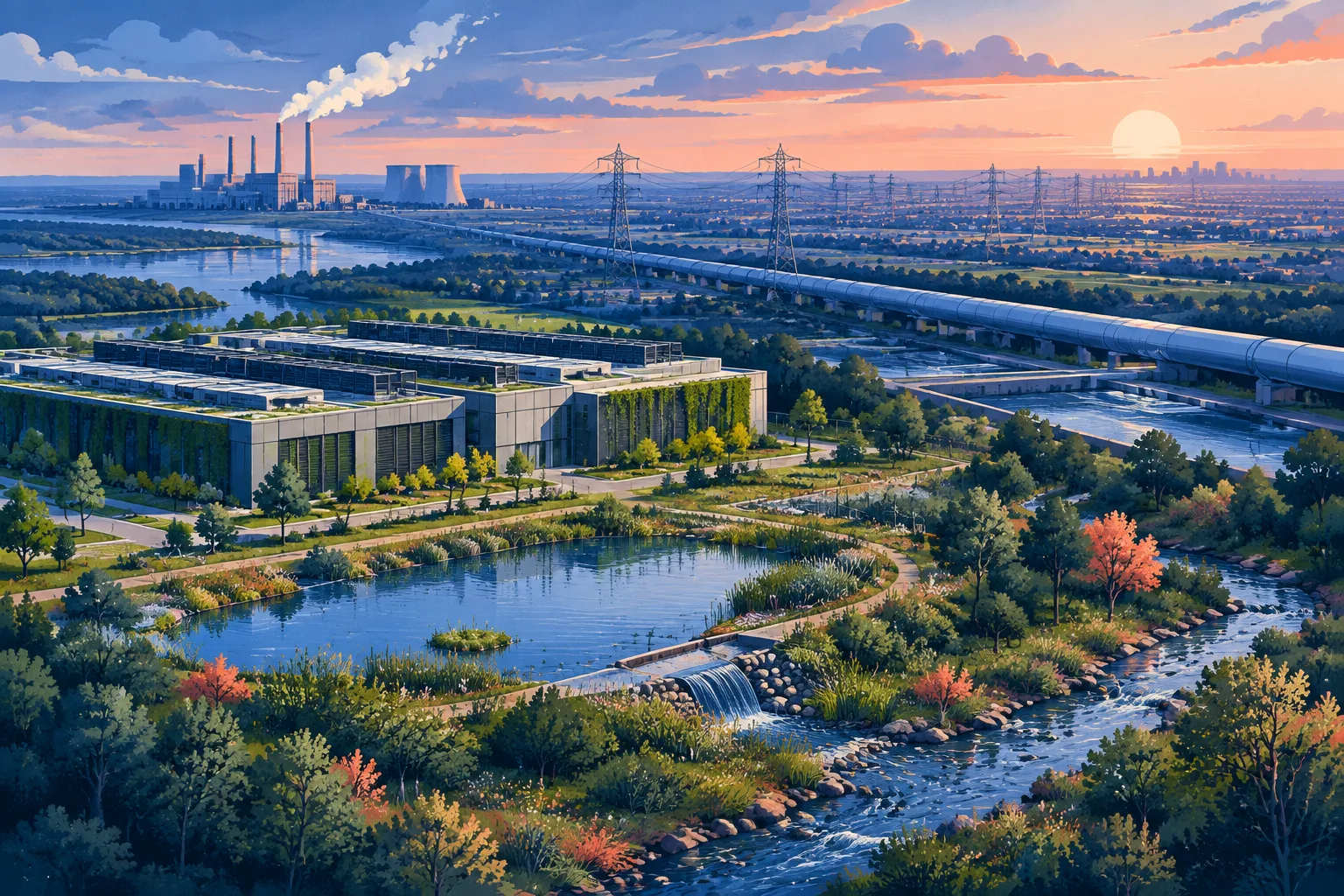
The central dispute is about scale. Public Citizen’s Texas director, Adrian Shelley, told The Verge that native habitat work is positive but insufficient when new data centers also drive fossil-fuel infrastructure. Microsoft signed a 20-year agreement with Chevron in June to power a planned AI data center campus in West Texas, according to the report. Shelley argued that landscaping cannot make a gas plant a desirable neighbor, while supporters of the restoration efforts say local environmental improvements still have value.
Water demand adds another layer of uncertainty. The Houston Advanced Research Center estimated that Texas data centers used about 25 billion gallons last year, roughly 0.4 percent of statewide consumption. Depending on which proposed facilities are built and the cooling systems they use, the organization projects the share could rise to between 0.5 and 2.7 percent by 2030. Its researcher Erin Kinney told The Verge that locally tailored biomimicry could be valuable, but said the benefits must be measured transparently and aligned with community expectations.
Microsoft has pledged to become water positive and carbon negative by 2030, yet its reported carbon pollution rose 25 percent in 2025 as AI increased its infrastructure needs. Former Microsoft sustainability leader Holly Alpine told The Verge that the biomimicry projects she saw were well designed, but not enough to outweigh broader emissions linked to AI and fossil-fuel activity. That tension defines the company’s experiment: restored creeks, native plants, and quieter boundaries can improve individual sites, but they do not by themselves answer whether every proposed data center belongs in a resource-constrained community.
Comments
Loading comments…