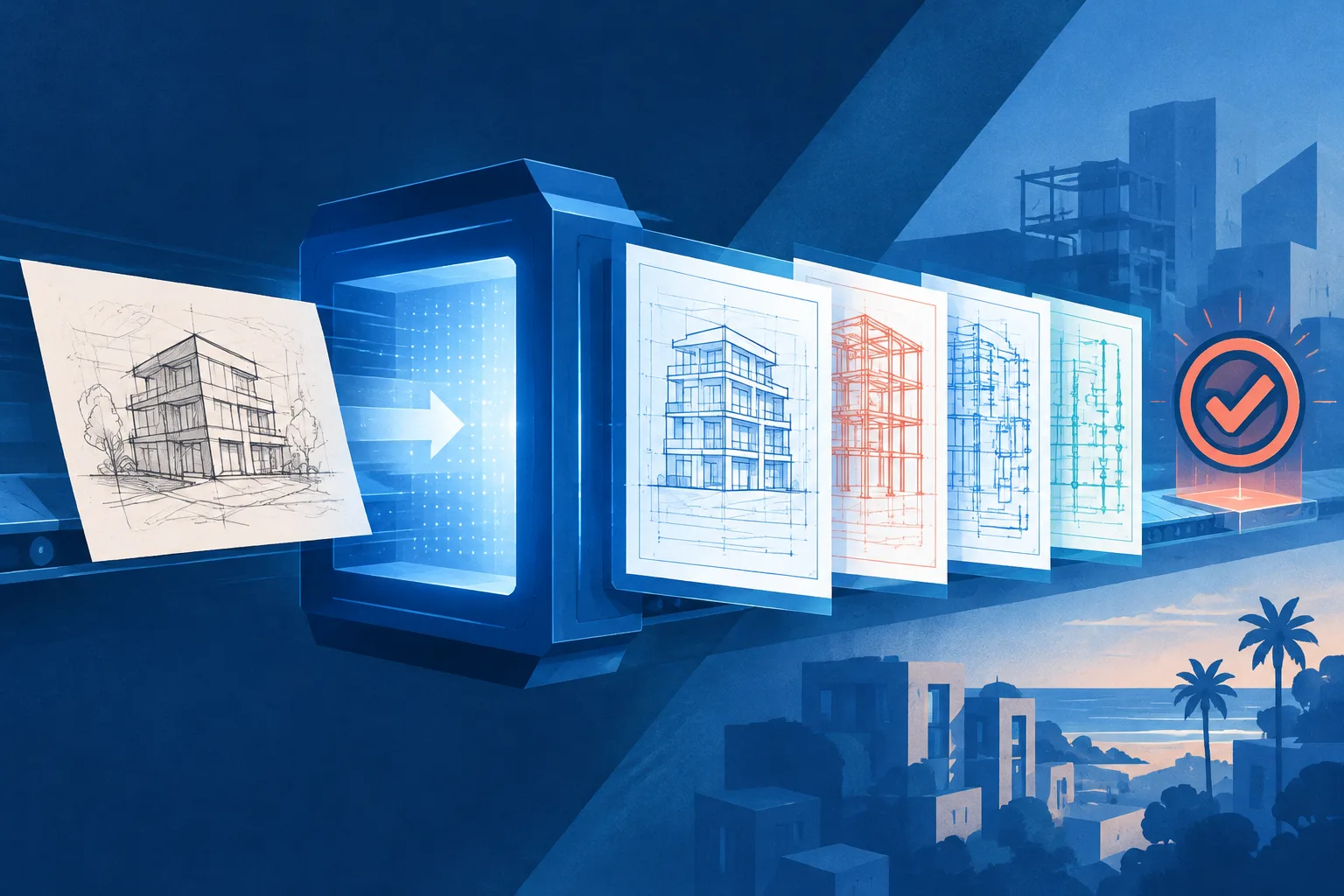
A Santa Monica startup is trying to automate one of architecture’s most labor-intensive tasks: turning an early concept into the coordinated drawing set needed to construct a building. TechCrunch reported on October 12 that Blueprints AI is preparing to release a second generation of its software, which the company says can produce code-compliant, permit-ready construction blueprints in minutes from a description, sketch or other two-dimensional source.
The claim is ambitious, and the report leaves an important boundary intact. Blueprints AI’s co-founders told TechCrunch that the technology does not replace licensed architects. Professionals still review the generated documents and apply their seal before the plans are submitted to permitting authorities. In other words, the system is being positioned as an automation layer for drafting and coordination, while legal and professional responsibility remains human.
Blueprints AI was incorporated in 2025 by architect and contractor Al Drams and data scientist Coco Cao, according to TechCrunch. Drams had explored automated design-document generation in a college thesis nearly two decades earlier, but said the necessary technology did not yet exist. He later established an architecture firm in 2018 and a construction business in 2021, giving the startup access to practical project experience as well as training material.
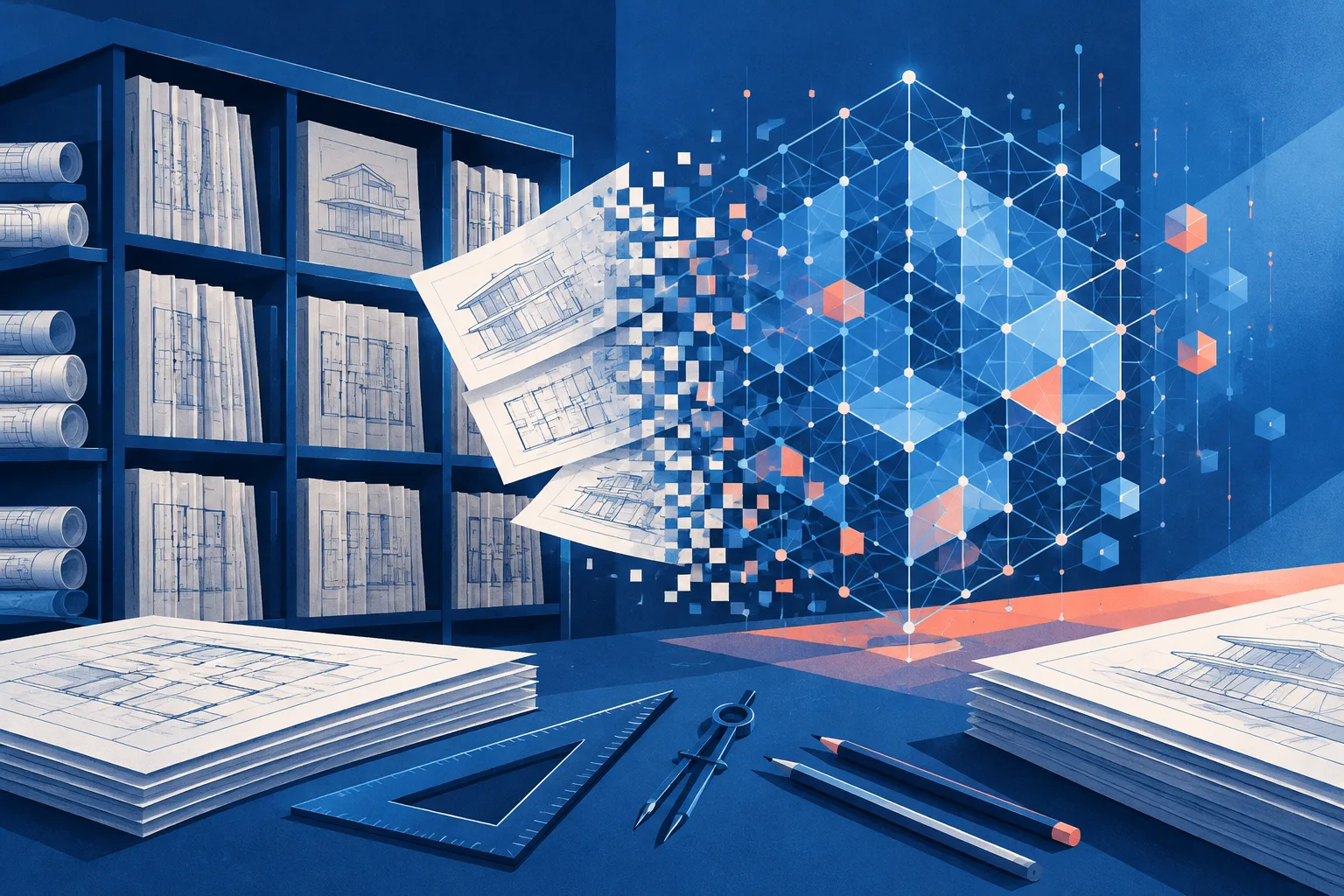
The company trained its models using eight years of approved drawing sets from Drams’ design and construction firm. Its first-generation product creates architectural construction documents and is sold in subscription plans ranging from $3,200 to $8,500 per month, with separate enterprise pricing. The startup is bootstrapped, and TechCrunch identified it as part of the 2026 Startup Battlefield 200 cohort.
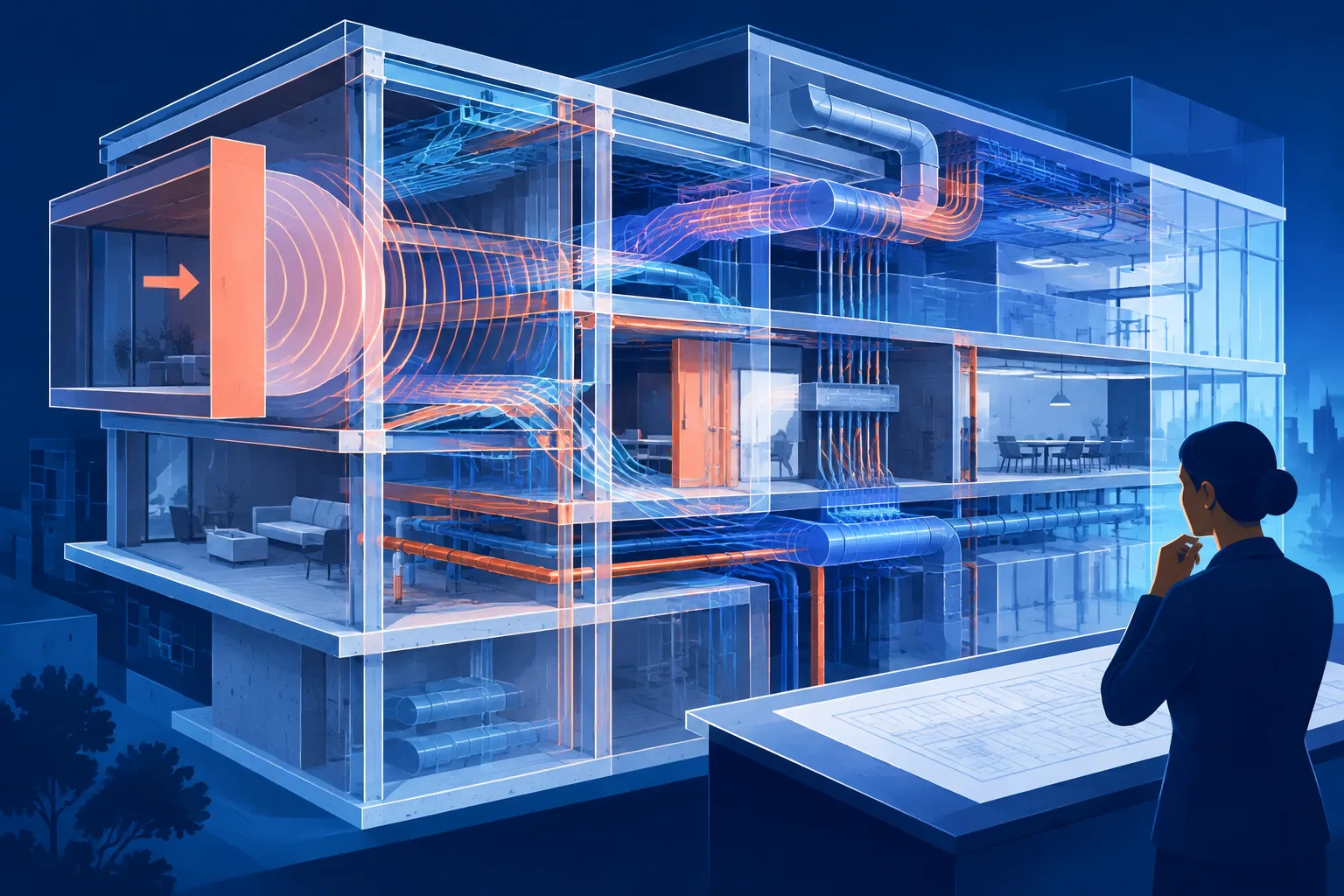
The second-generation system broadens the scope considerably. The founders say it can generate coordinated plans for architecture, structure, mechanical systems, electrical work, plumbing and interiors at the same time. Users can revise the project, and one design change is intended to propagate across the full set while being checked against local building codes. Early customers are already using this version, and the company said public availability would begin during the week of October 12.
Coordination is the difficult part of that promise. A change to a wall, for example, can affect structural details, mechanical routing, electrical placement and interior layouts. Automating those dependencies could reduce repetitive work and prevent mismatched documents, but TechCrunch’s report does not provide independent benchmarks for accuracy, permitting success or time saved. The startup’s claims therefore remain early evidence rather than proof that complex building documentation can be reliably automated across jurisdictions.
Drams told TechCrunch that architects spend about 80% of their time drafting and 20% designing, and that he wants to reverse that ratio. That estimate comes from the founder rather than a study cited in the report, but it captures the company’s pitch: move routine production work to software so licensed professionals can spend more time on judgment and design. Blueprints AI is targeting architecture and engineering firms as well as developers and property owners, with a possible flat-fee option for customers who need the software for only one project.
The roadmap extends beyond drawing generation. The company said a third version is being developed to add structural analysis and electrical-panel design. Those functions would push the software closer to calculations that carry direct safety consequences, making validation, traceability and professional review even more important. For now, the most consequential feature may be less the speed of producing lines on a page than the attempt to keep every discipline synchronized as a project changes.
If Blueprints AI’s system performs as described, it could reshape the economics of construction documentation without removing architects and engineers from the approval chain. The immediate test will be whether generated sets survive expert review and local permitting with fewer revisions, not simply whether they appear quickly. The report establishes a credible product launch and workflow, but the company has yet to demonstrate publicly that its minutes-long output consistently matches the reliability demanded by real building projects.
Comments
Loading comments…