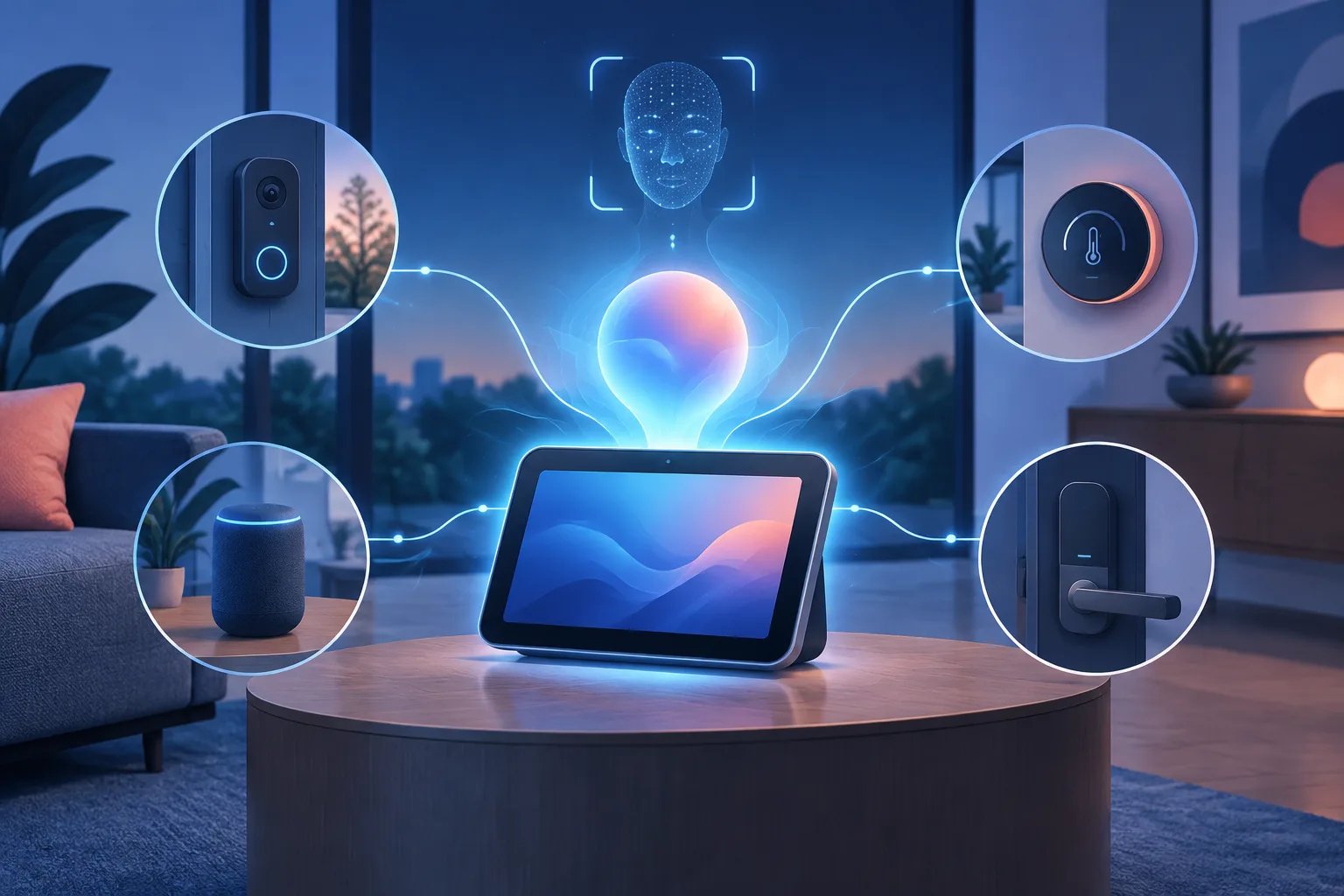
Apple is making its most direct attempt yet to turn an AI-upgraded Siri into the control layer for the connected home. The company unveiled HomeView on October 13, a seven-inch hub designed to hang on a wall or sit on a tabletop while managing devices such as doorbells, thermostats and smart locks, The Guardian reported. The product starts at $299, with preorders opening immediately and availability scheduled for November 13.
HomeView adds facial recognition and places Apple’s revamped voice assistant at the center of the experience. According to The Guardian, Apple described the new Siri as more conversational and able to use context from personal apps, including Messages and Calendar, to produce more relevant answers. Apple said that processing would draw on information from a user’s iPhone while keeping household data private and secure.
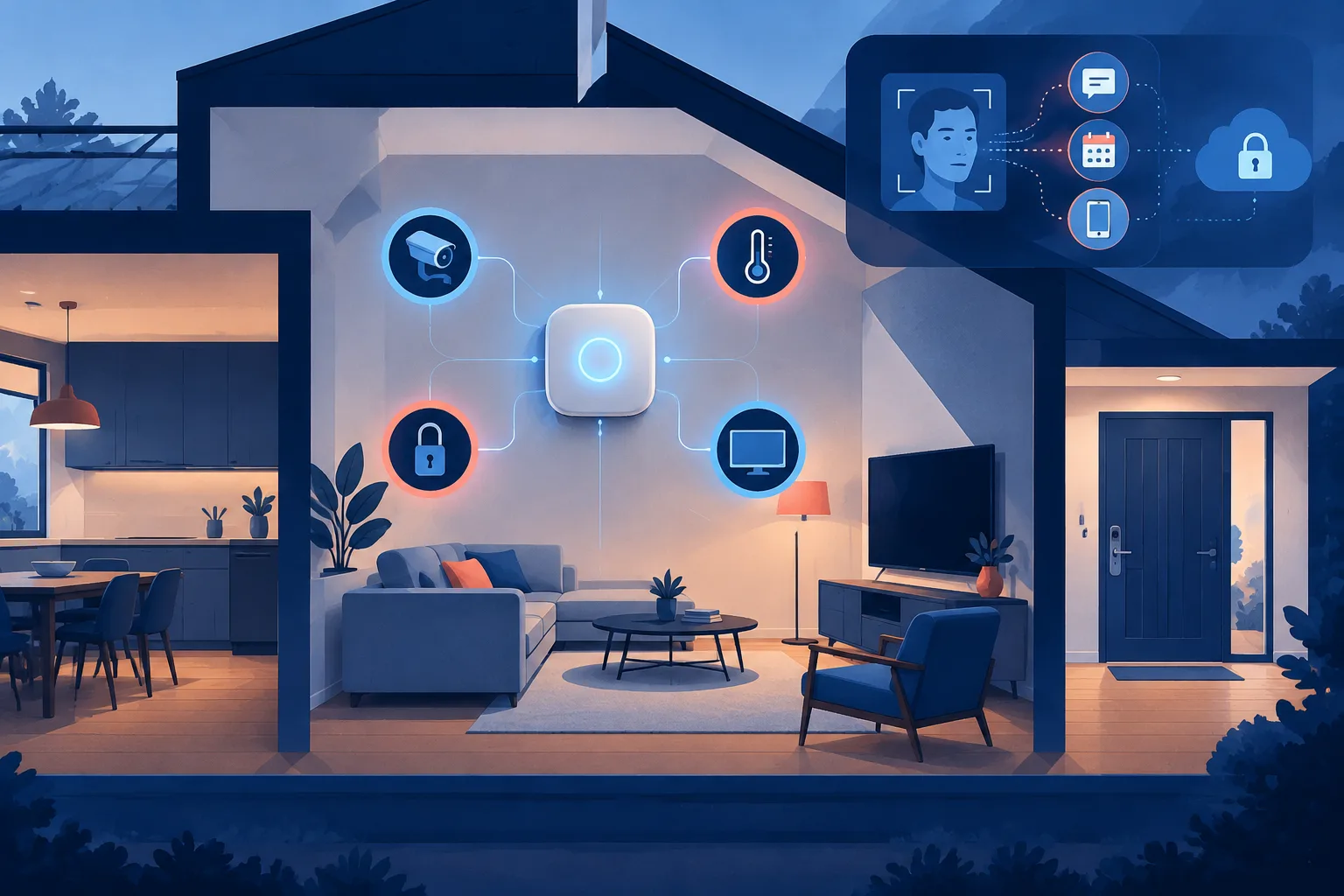
The launch matters because Apple has spent a decade participating in the smart-home market without establishing the same kind of foothold as Amazon or Google. Apple introduced its Home app in 2016 and followed with the HomePod speaker in 2018. Analysts cited by The Guardian identified two persistent obstacles: compatibility with a broad range of third-party devices and Siri’s limited ability to deliver useful answers.
HomeView is intended to address both sides of that problem. A screen and dedicated household position give Siri a visible control surface, while Apple is pairing the hub with a broader set of compatible accessories. The company announced products developed with LG and Schneider Electric, including cameras, a video doorbell, a floodlight camera, a thermostat and a smart lock that can be opened through Apple’s Home app.
Apple also introduced updates to HomePod and Apple TV, making the announcement a wider ecosystem move rather than a single-device release. The strategy links entertainment, voice assistance, home monitoring and device control through the same app and assistant. The Guardian’s report did not provide independent tests of HomeView or the upgraded Siri, so Apple’s claims about conversational quality, context and privacy remain to be assessed in real-world use.
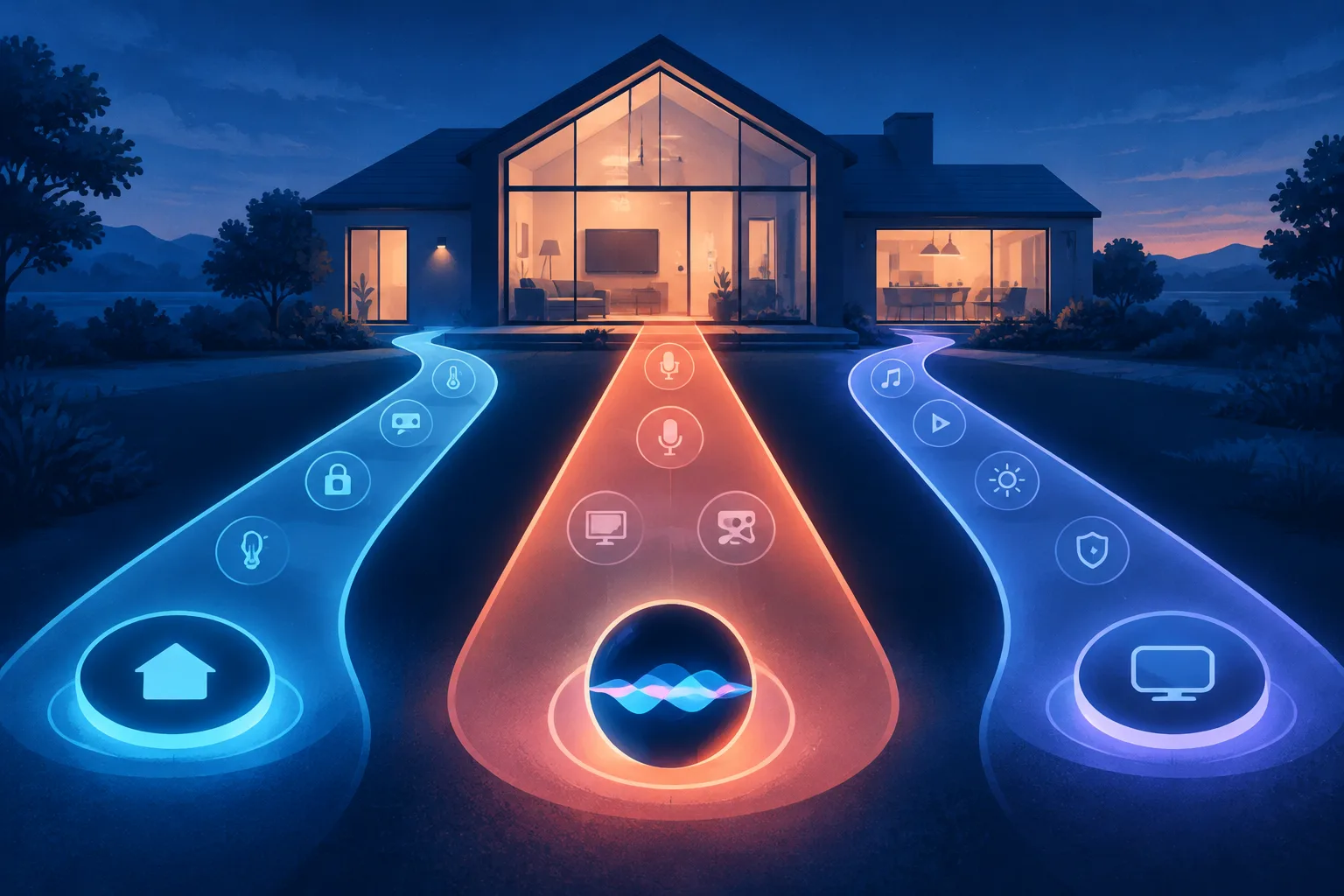
The competitive pressure is broadening. Amazon has invested heavily in Echo speakers and Ring doorbells and recently introduced premium tablets, while Google continues to compete through its Home products. The Guardian also noted newer pressure from AI companies such as OpenAI, whose hardware ambitions could create another category of assistant-centered devices. HomeView gives Apple a dedicated place for Siri before that market becomes more crowded.
The rollout will not be global at launch. Apple said HomeView would not be sold in the European Union because Siri AI remains unavailable there as a result of EU regulations. That creates an unusual gap for a product whose main differentiator is the upgraded assistant: Apple can sell conventional smart-home hardware broadly, but the value proposition of this particular hub depends on software that the company is not offering in the bloc.
HomeView therefore serves as both a device launch and a test of Apple’s AI strategy. The company is betting that personal context, privacy assurances and tighter coordination across phones, speakers, televisions and home accessories can compensate for entering the hub market behind established rivals. Success will depend less on the novelty of a seven-inch screen than on whether Siri is finally capable enough—and compatible with enough devices—to become the interface people trust with their homes.
Comments
Loading comments…