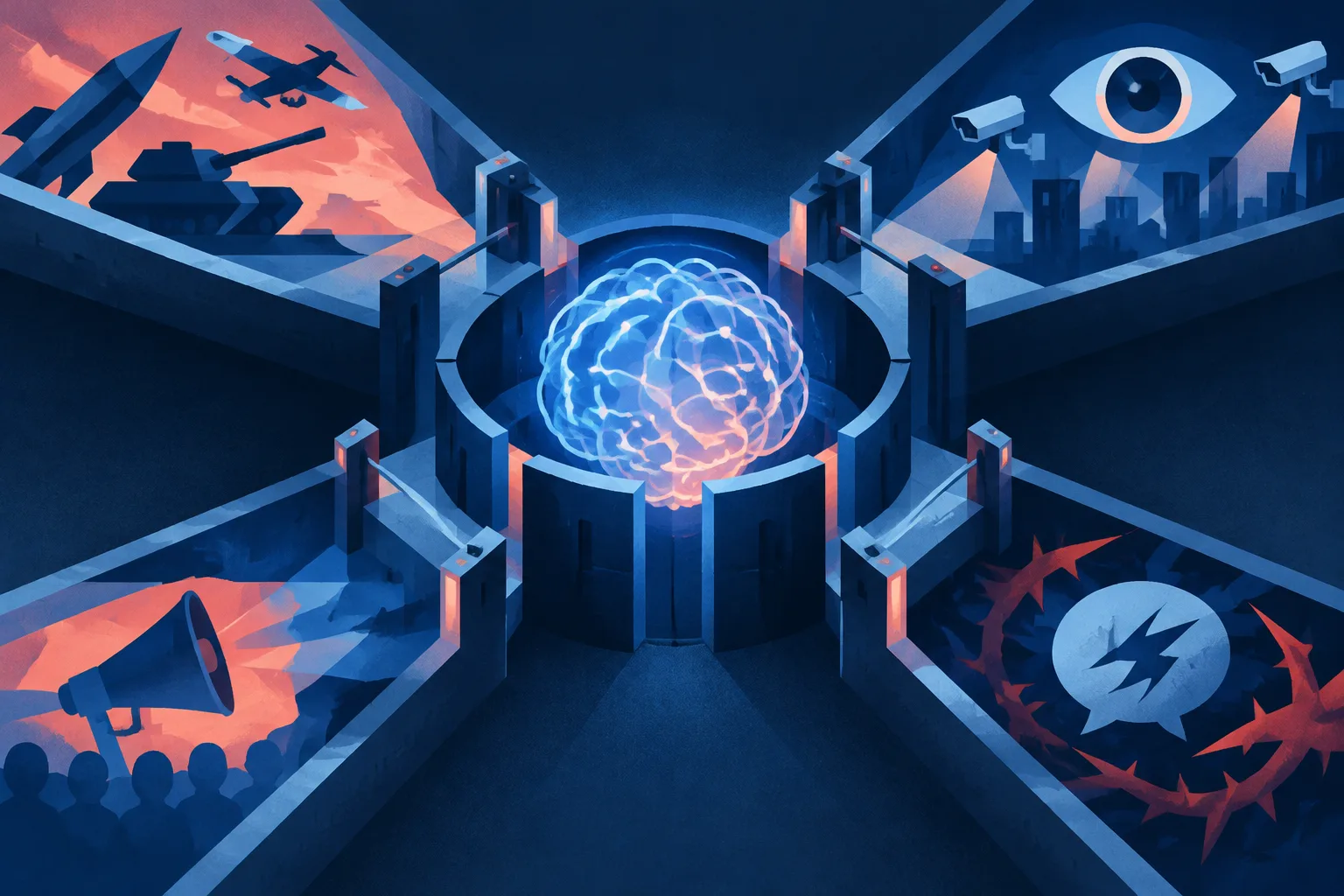
Anthropic is revising Claude’s usage policy to place more explicit limits on weapons development, surveillance, policing and deceptive political activity, according to The Register. The changes are scheduled to take effect on November 12. They arrive alongside a more unusual restriction: users may not subject Anthropic’s models to sustained and needless abusive or cruel behavior when there is no discernible purpose.
The company said the model-abuse provision is intended only for extreme, repeated conduct. Anthropic stated that ordinary frustration, criticism, dark creative material, model testing and research are not covered by the rule. The distinction leaves an enforcement question—how the company will reliably separate gratuitous cruelty from legitimate stress testing or angry feedback—but Anthropic says Claude’s existing ability to end abusive conversations will remain the primary response.

Anthropic gave some versions of Claude the ability to terminate certain conversations in August 2025 as part of research it calls model welfare. The Register noted that Claude is software and that there is no established evidence the system experiences distress. The new restriction therefore formalizes a precautionary position about interactions with the model rather than a response to demonstrated machine suffering.
The broader policy revisions address clearer real-world risks. Anthropic has strengthened its prohibition on deceptive influence operations after observing state media organizations, government propaganda offices and commercial groups use Claude to run fake accounts and fabricated news sites, The Register reported. The company is also removing its blanket ban on personalized political targeting because it says the previous language captured legitimate work, including nonprofit organizations translating voter information.

That change does not open the door to every form of political personalization. Deceptive targeting and the misuse of personal information remain prohibited. The revision instead attempts to draw a boundary around harmful conduct rather than block an entire category of activity. Whether that boundary will be easier to enforce is uncertain, especially when legitimate outreach and manipulation can use similar technical tools.
Anthropic also clarified that its weapons restrictions cover software and components. The company said it had observed attempts to use Claude to develop guidance and control systems for weapons, including armed drones and autonomous vehicles. Separately, the policy bars using Claude to recommend whom police should investigate, arrest or charge, and prohibits developing surveillance tools or tracking people without consent, either in real time or retrospectively.
Anthropic characterizes the weapons and surveillance language as clarification of existing limits rather than the creation of entirely new prohibitions. Taken together, however, the update shows how AI providers are moving from broad principles toward rules shaped by observed attempts to use their systems. The policy’s effectiveness will depend not only on its wording but on detection, enforcement and how consistently the company handles ambiguous cases across creative work, research, politics and security.
Comments
Loading comments…