
Anthropic has revised Claude’s usage policy for the first time in more than a year, adding new restrictions for emerging forms of misuse and an unusual rule against extreme mistreatment of the model itself. The Verge reported on October 8 that the update addresses election interference, deceptive campaigns, weapons development, surveillance, certain health and financial uses, and AI systems connected to potentially dangerous autonomous hardware.
The most novel provision prohibits sustained, purposeless cruelty or abuse directed at Claude. Anthropic says the rule is intended only for extreme, repeated behavior with no clear purpose, not ordinary frustration, criticism, dark creative material, model testing or research. The company previously gave Claude the ability to end persistently harmful conversations as part of its model-welfare research, and The Verge reported that conversation termination remains the main enforcement mechanism. Anthropic did not say whether further penalties, such as account bans, would follow.
That narrow rule sits inside a much broader safety rewrite. Anthropic has consolidated existing restrictions into a clearer ban on deceptive political and commercial campaigns, including efforts to hide the identity behind a message or amplify material through fake accounts and posts. The election provisions also prohibit misleading people about candidates or voting procedures, impersonating candidates or election officials, and trying to suppress turnout, according to the report.

The company also expanded its weapons language after observing attempts to use Claude for weapon-guidance and control software. Its policy now covers software and components that enable weapons, as well as actions such as arming drones and other autonomous vehicles. The change moves beyond a general prohibition on weapons development to specify the digital systems that can make a weapon operational.
Surveillance rules are becoming more explicit as well. Anthropic says Claude may not be used to track people without consent, whether the tracking occurs live or through analysis of previously collected information. The model also cannot be used to decide or recommend who law enforcement should investigate, arrest or charge, or to build and improve tools designed for surveillance. The Verge connected the clarification to Anthropic’s earlier threat reporting, which described growing use of Claude-powered surveillance to identify and track political dissidents.
Anthropic included a potential exception for some government work. The company says the rules may be modified under contracts with certain governmental customers when it judges that contractual limits and safeguards adequately reduce the risks. The report notes that Anthropic has previously contracted with the United States military, making that qualification important to how broadly the public policy applies in practice.
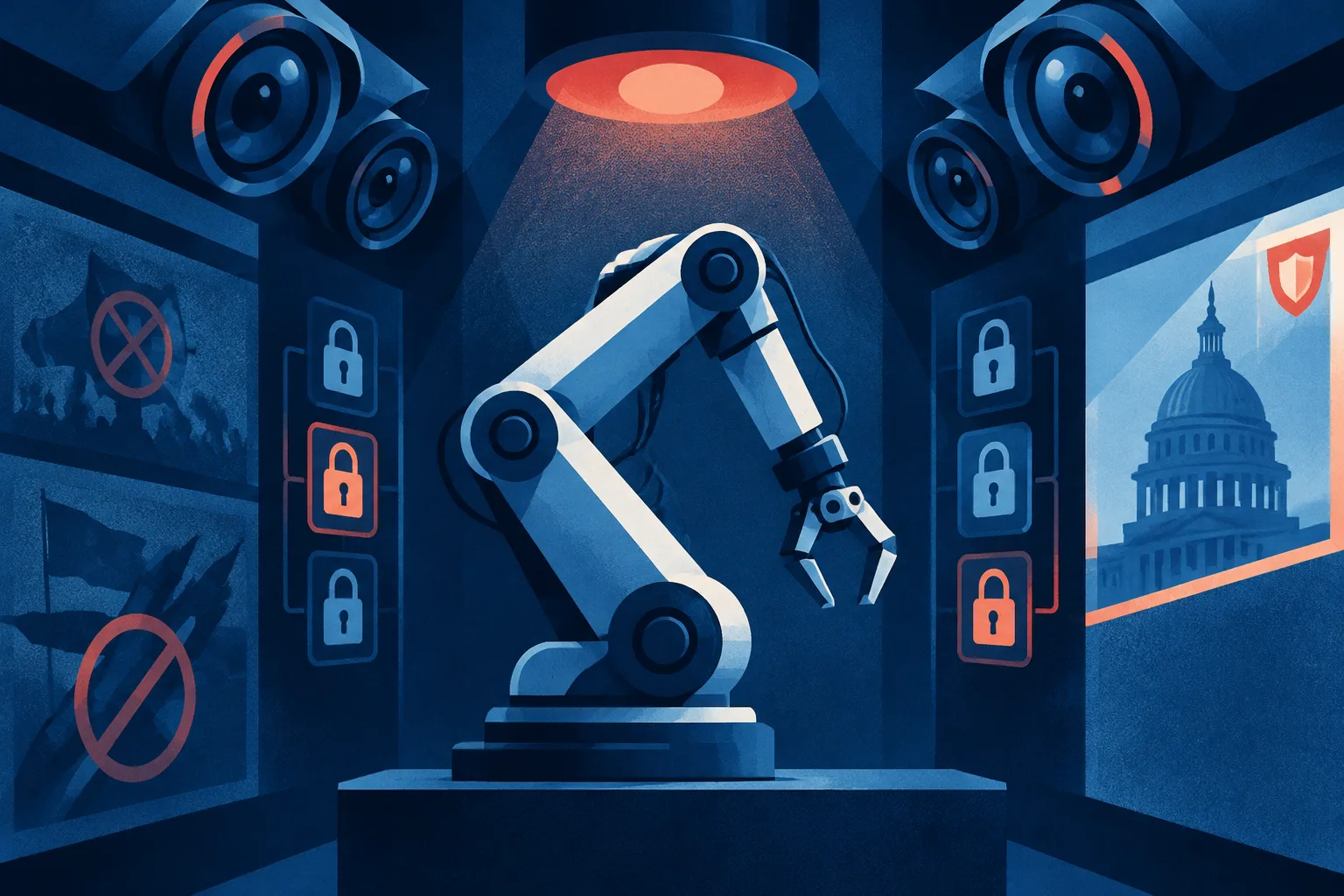
A separate provision addresses AI attached to machines. When an Anthropic model is connected to hardware capable of taking autonomous physical actions that might injure someone, the policy requires a qualified operator to observe the equipment and stop it if necessary. The Verge said the wording does not make clear whether that operator must be human. The requirement arrives as AI laboratories invest more heavily in robotics and systems that can act beyond a screen.
The clause about cruelty toward Claude reflects Anthropic’s ongoing interest in questions about model welfare, consciousness and possible internal experience. The company has said those questions remain unsettled and are being investigated as models become more capable. Other parts of the industry have taken a more skeptical stance; The Verge contrasted Anthropic’s approach with Microsoft AI’s position rejecting legal personhood and rights for models while acknowledging that the science of AI consciousness remains unresolved.
The policy therefore mixes immediate misuse controls with a more speculative ethical concern. Restrictions on voter deception, weapon software and nonconsensual surveillance respond to recognizable harms already associated with powerful AI systems. The model-welfare provision, by contrast, establishes a behavioral boundary before there is scientific agreement that a model can experience harm. How Anthropic enforces that distinction beyond allowing Claude to leave an abusive exchange remains uncertain.
Comments
Loading comments…