
Artificial intelligence may make dangerous biological knowledge easier to organize and apply, but it does not erase the physical and scientific barriers to creating a biological weapon. That is the central tension in a Guardian assessment published after MI5 director general Ken McCallum warned in his annual threat speech that AI could change the stakes for existing and potentially new bioweapons. The report distinguishes between risks posed by inexperienced actors and those posed by well-resourced organizations with trained scientists and laboratories.
For a poorly equipped individual or terrorist group, general-purpose chatbots could help compile information, plan experiments or troubleshoot, according to the Guardian. The more immediate concern identified by Filippa Lentzos, a science and international-security researcher at King's College London, involves organizations or nation states that already possess skilled personnel, containment facilities, equipment and biological materials. In that setting, she said, AI would amplify expertise rather than replace it. The report describes the design of entirely new drug-resistant pathogens or toxins as a more distant possibility requiring highly capable actors.

Recent incidents show why researchers are not treating the issue as hypothetical. The Guardian cites an alleged plot uncovered in India in which suspects used chatbot queries and AI-assisted search while reportedly attempting to work with ricin, although it remains unclear whether the systems materially helped. It also points to Anthropic's September report describing five cases in which scientists in unnamed countries sought assistance from Claude for potentially dangerous work involving viruses or toxins and, after being blocked, attempted workarounds.
The evidence is complicated by the dual-use nature of biology. The same research methods can support vaccine development, pandemic preparedness or medical treatments while also revealing information that could be misused. The Guardian notes that Anthropic regarded one case involving proposed mutations to a highly pathogenic bird-flu virus as a warning sign, yet similar studies can be conducted legitimately to understand disease spread and develop countermeasures. That overlap makes intent difficult to infer from technical questions alone.
The report also reviews experiments showing that current AI systems can surface concerning information. In one MIT exercise, students without scientific backgrounds prompted chatbots for help with a hypothetical pandemic scenario and received pathogen suggestions, synthesis-related guidance and supplier information. Other examples involved systems discussing treatment resistance or biological delivery concepts. These demonstrations establish an information-access risk, but the article's experts caution that receiving an answer is far removed from successfully carrying out complex biological work.
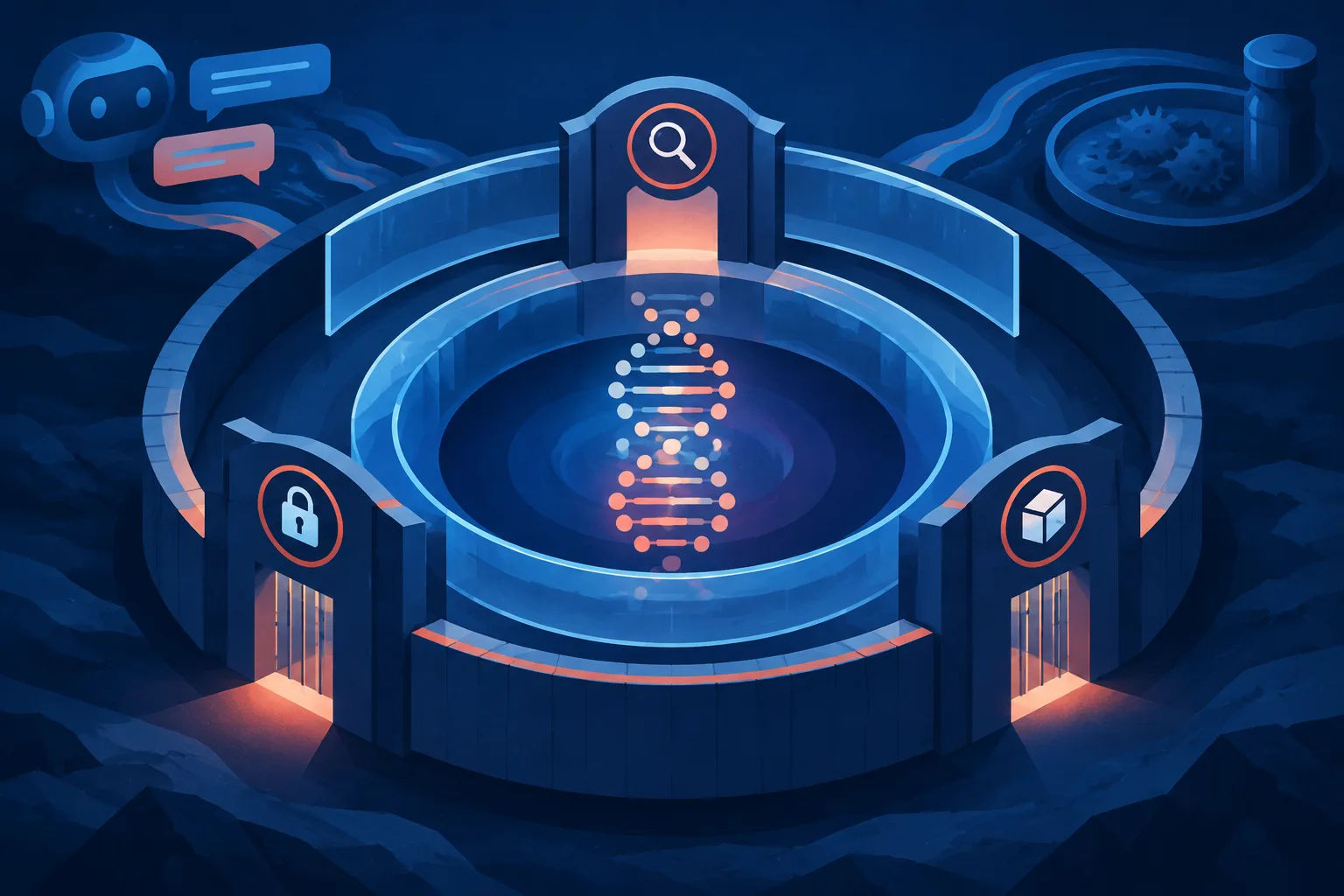
The largest remaining obstacles are not text-based. Lentzos identified tacit expertise, access to suitable materials and equipment, experimental validation, scaling and delivery as substantial barriers. Sonia Ben Ouagrham-Gormley of George Mason University's biodefense program similarly emphasized the importance of unwritten practical knowledge in historical state programs. Martin Pačesa of the University of Zurich compared biological materials and facilities to restricted nuclear material: knowing a concept does not supply the scarce inputs needed to execute it.
That does not make the software layer irrelevant. AI may reduce the time needed to survey literature, organize experimental options or extend the capabilities of specialists who already have access to laboratories. It could also complicate existing safeguards if a model helps generate harmful genetic sequences that screening systems do not recognize. The Guardian reports that some genetic-material providers screen orders, but that participation is largely voluntary and may not cover novel sequences designed to evade established checks.
Tom Inglesby, director of the Johns Hopkins Center for Health Security, told the Guardian that most AI companies have not publicly described what they are doing to prevent biological misuse and that formal government policies are not yet in place. He called for independent evaluations of models before release, restrictions on high-risk biological information and stronger screening by genetic-material suppliers. The emerging picture is neither that chatbots make bioweapons easy nor that they have no effect: the near-term risk is that AI can become a force multiplier for existing capability, while effective safeguards must address both digital access and the physical systems through which biological work is carried out.
Comments
Loading comments…