
Zenzap has raised $44 million to expand a workplace messaging service designed for employees who often coordinate shifts, supplies, and daily operations through consumer chat apps. TechCrunch reported on October 14 that the funding came from Bessemer, Lightspeed, The Garage, and individual investors including Wix president Nir Zohar and former EY general manager Yoram Tietz.
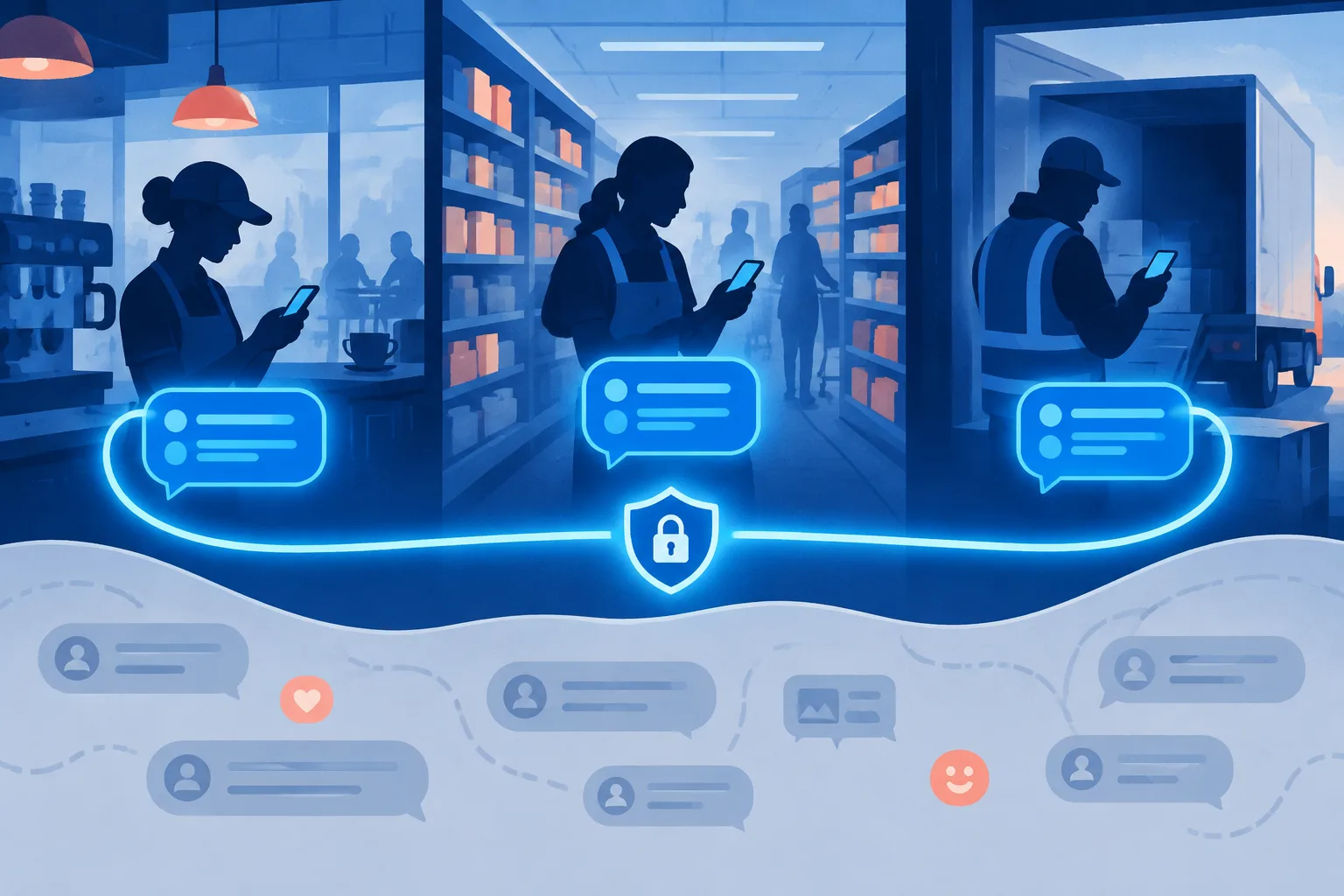
The company’s pitch is aimed less at desk-bound software teams than at businesses with mobile and frontline staff. Founder Guy Weiss told TechCrunch that Zenzap is intended for sectors including hospitality, construction, healthcare, and fast food. The service combines a private messenger with AI features while seeking to fit the information-technology and security requirements of employers.
That positioning puts Zenzap between two established habits: workers using familiar consumer messengers and companies deploying enterprise collaboration suites. Weiss argued that consumer apps are not suitable for an employer that wants to place an AI agent over internal conversations while maintaining IT compliance. He also contended that Slack and Microsoft Teams were not built around the everyday needs of mobile-first, nontechnical users. Those are the founder’s claims, and the TechCrunch report does not independently compare the products’ compliance or usability.

Zenzap’s free tier includes group and direct messaging, task management, calendar integration, schedule management, AI-powered voice chat, and search, according to TechCrunch. Paid plans start at $51 per month for as many as 20 users and add voice and video calls, task templates, smart task sorting, higher file-storage limits, workspace-wide AI search, and the ability to convert messages into tasks.
The product also offers AI agents for automating workflows, along with AI-assisted transcription of voice notes and calls. Zenzap charges for those capabilities through a credit-based pricing system. The feature set suggests that the company is treating conversational data as operational input: a message can be searched, transcribed, organized, or turned into assigned work instead of remaining buried in a chat thread.
Zenzap lists FedEx, Dollar General, Taco Bell, Starbucks, Casey’s, and Regal as customers, TechCrunch reported. Weiss said branches of IHOP and McDonald’s use the platform to coordinate shifts and discuss supplies. The report does not specify the size of those deployments, whether the relationships are company-wide, or how many active users the service has, so the scope of adoption remains unclear.
The startup employs 50 people across the United States, Tel Aviv, and Europe and plans to hire in product and research and development. Weiss founded the company in 2022 with Noam Neumann and Jonatan Bien after previously bootstrapping the e-commerce marketing platform StuccoMedia and selling it in 2015. He initially financed Zenzap himself and worked from Bessemer’s office before accepting the case for venture funding to support expansion.
Bessemer partner Adam Fisher told TechCrunch that Zenzap’s broad audience could be an advantage and said the venture firm uses the messenger internally to discuss and manage deal flow. He framed the opportunity as serving employees who still use personal messaging apps for work and who may want a clearer division between their private and professional communications as AI agents become more common.
The $44 million round gives Zenzap resources to test whether that thesis can travel across very different workplaces. Its challenge is not simply to add AI to chat. It must show that employers and frontline teams will adopt a separate work messenger, that its automation tools are useful across industries, and that the promised separation from consumer communication is strong enough to change entrenched behavior. TechCrunch’s report establishes the financing, feature set, and stated customer roster, but it does not provide independent evidence on retention, revenue, or the performance of the AI features.
Comments
Loading comments…