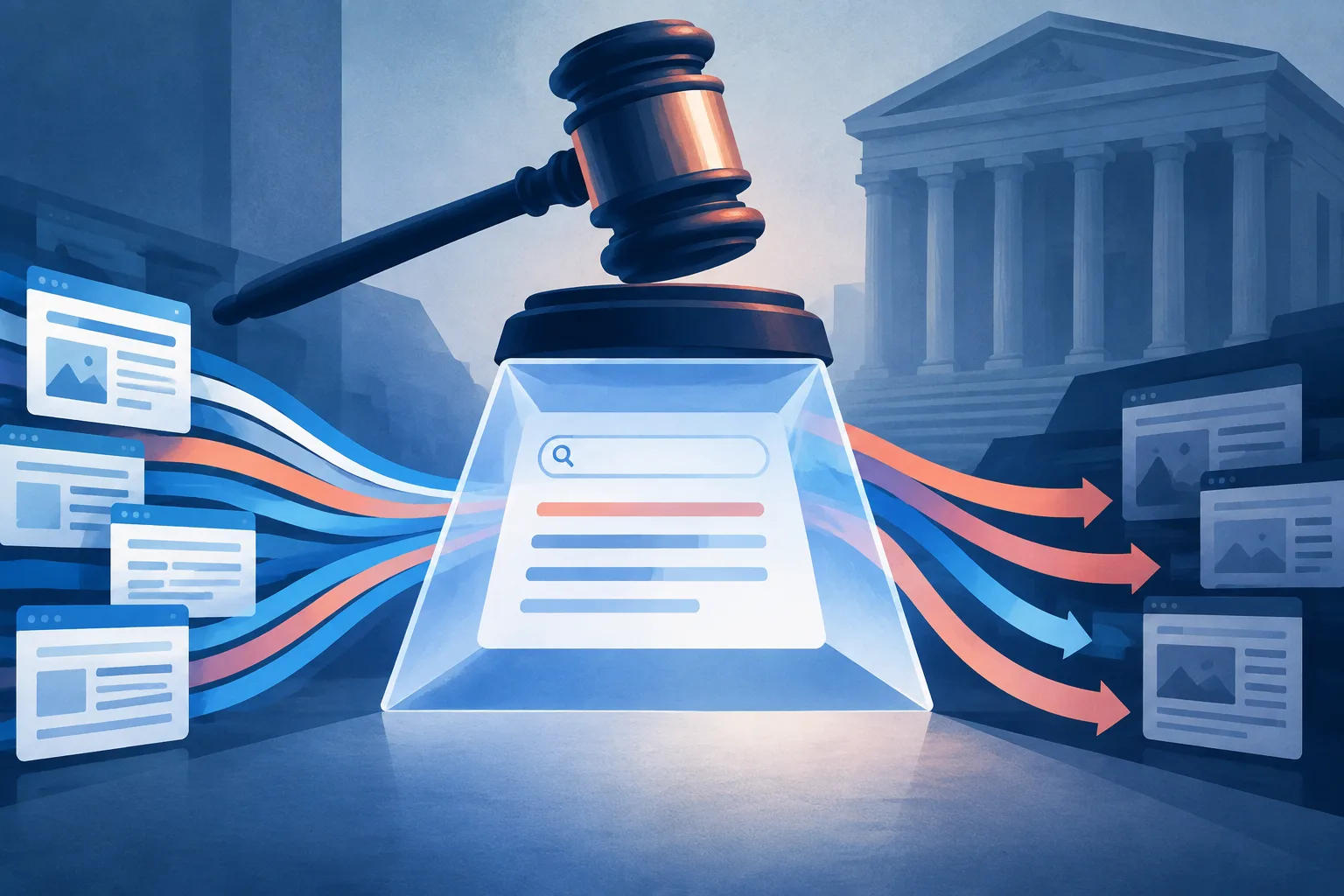
A federal judge has dismissed antitrust lawsuits brought by education company Chegg and Penske Media Corporation over Google’s AI-generated search summaries. The companies argued that AI Overviews diverted readers from their sites and allowed Google to benefit from publisher content without payment. US District Judge Amit Mehta concluded that the allegations did not establish a violation of antitrust law, according to The Verge, which cited earlier reporting by Reuters.
Chegg and Penske filed their cases last year, accusing Google of using its monopoly power to force publishers into an unacceptable choice. In their account, websites must allow their material to feed AI Overviews without compensation or risk losing visibility in Google Search. The publishers said the resulting summaries reduced visits to their pages and damaged revenue.

Mehta rejected the legal theory behind those claims. The judge wrote that the plaintiffs had shown only an expectation that Google would send them traffic in exchange for making content freely available to the search engine. He distinguished that expectation from an actual agreement, describing the arrangement instead as the ordinary operation of a general search engine.
That reasoning narrows what publishers can seek through antitrust litigation, at least under the claims presented in these cases. Mehta said the court was not unsympathetic to publishers confronting the economic effects of technological change. But he also wrote that antitrust rules cannot stand in for a legislative decision about how to address the consequences of new innovation.

The dismissal does not erase the commercial pressure behind the lawsuits. The Verge reported that news organizations and smaller websites continue to experience steep traffic declines as Google expands AI-powered search. When summaries answer a question directly on the results page, publishers fear that fewer users will follow links to the reporting, reference material, or educational content used to construct the response.
At the same time, Google may be testing a different relationship with some content providers. The Information reported this week that the company is paying roughly 100 publishers in a pilot program for contributions to AI Overviews, AI Mode, and Gemini, according to The Verge. The article does not identify the terms of those arrangements or suggest that the pilot changes the judge’s antitrust analysis.
The ruling leaves the larger policy dispute unresolved. Publishers can point to falling traffic and a weakening exchange between search engines and the open web, while this decision says that economic harm alone did not make the alleged arrangement an antitrust agreement. Mehta’s opinion places the next major question outside the courtroom: whether lawmakers will create new rules for compensation, access, or attribution when AI systems turn published work into answers that may replace the visit.
Comments
Loading comments…