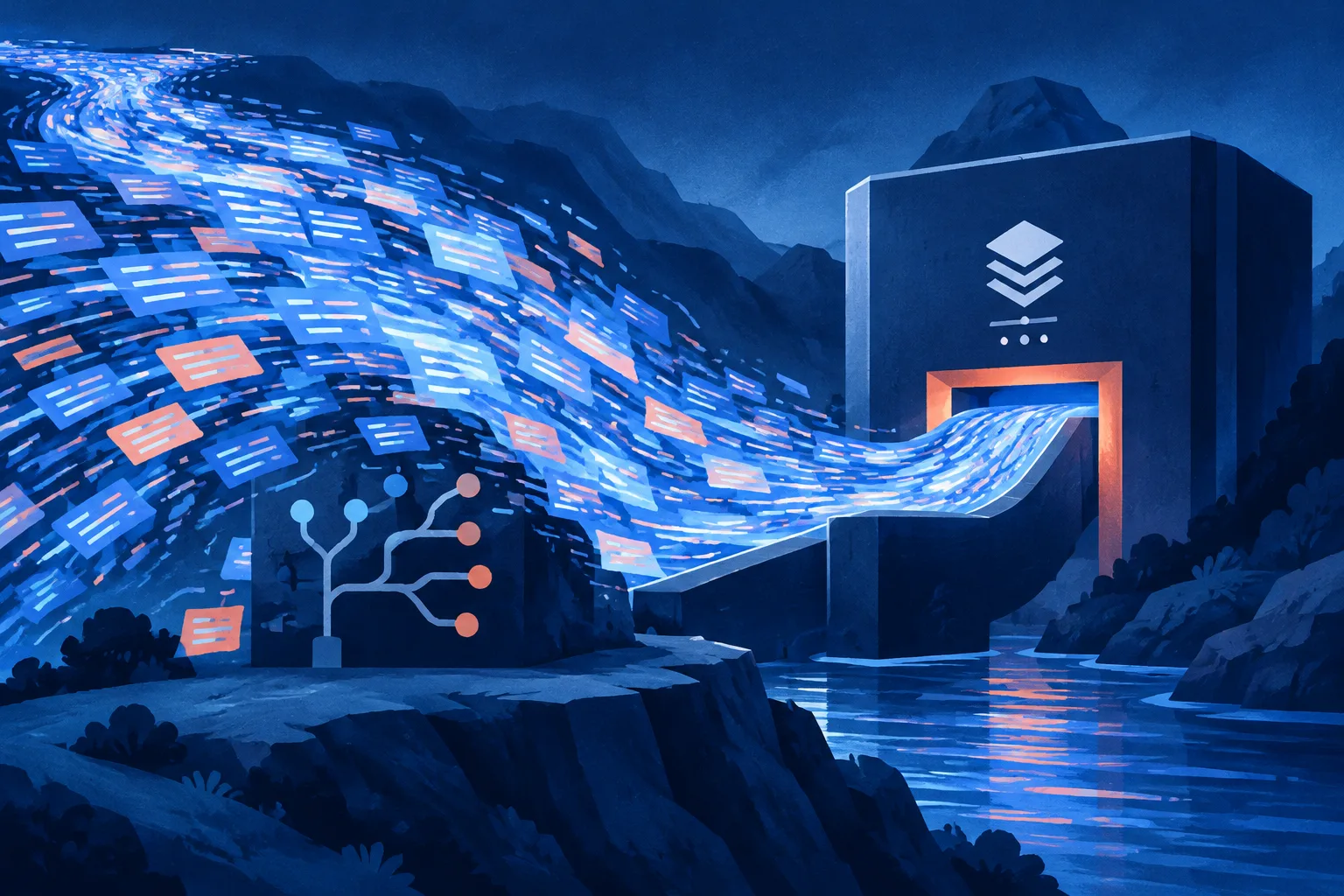
Anthropic says AI-assisted software development has moved its bottleneck from writing code to managing everything produced afterward. The Register reports that the company built a source-control system called Scion after its existing tools struggled with the volume of changes, builds and checkouts generated inside the organization.
The scale-up was rapid by Anthropic’s account. The company said it averaged about 2,500 merged code changes a day in May 2026 and exceeded 30,000 a day by September. That is a twelvefold increase in four months, and Anthropic does not expect the growth to slow because removing one constraint allows developers and agents to generate still more work.

The resulting pressure extends well beyond the number of commits. Anthropic said its main branch is about 100 gigabytes and that even a compressed working copy exceeds 25 gigabytes. Continuous-integration systems perform roughly 25 million code checkouts a day before developer machines, agent sandboxes and research jobs are counted. If every checkout fetched the repository conventionally, the company estimates traffic would exceed 600 petabytes daily.
Scion responds by moving more work from local clients to central servers. Its source-control queries are available through an API, allowing internal tools to inspect code without holding a complete repository. The design reduces repeated synchronization, though it places greater demands on the speed and reliability of the server side.
The system also replaces Git’s tree-oriented commit structure with what Anthropic calls a changeset. Each changeset is recorded in a write-ahead log and stores the files changed relative to its first parent, while compressed file contents are addressed through blob storage. The approach is tailored to Anthropic’s monorepo and to automated agents that need programmatic access at high frequency.
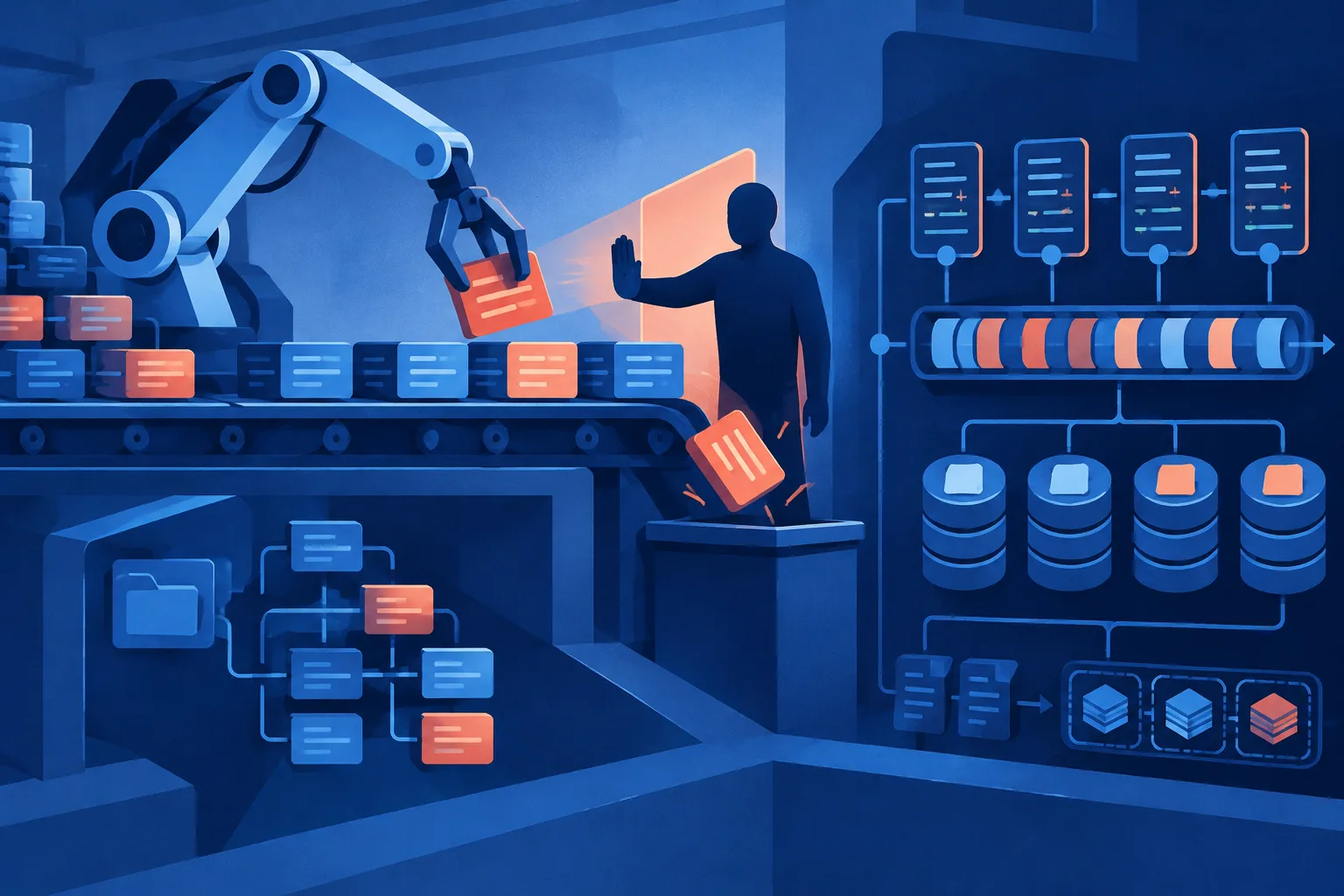
Claude helped create some of the infrastructure meant to absorb Claude-generated code. The Register says the model contributed not only to Scion but also to a code-review interface named Antique, a search tool and a source-control identity-and-access system. When Anthropic asked an internal preview of Claude Mythos to rewrite an early Git-to-Scion ingestion pipeline, the company reported that the new version used twenty times less memory and ran four times faster.
Human engineers nevertheless remained responsible for protecting the system’s core constraints. Anthropic said developers working on Scion often had to reject Claude’s proposed solutions because agents could follow a familiar pattern even when that pattern violated a rule the infrastructure could not compromise. The account presents the model as a powerful implementer, not as a substitute for architectural judgment.
Scion is not being presented as a universal replacement for Git. Anthropic says distributed source control remains appropriate for most repositories, and it does not plan to release its system as open source. Its broader claim is that other organizations will soon encounter similar scaling pressure. That forecast is unproven, but Anthropic’s experience offers a concrete preview of a software industry in which producing code becomes cheap while reviewing, integrating and governing it becomes the harder job.
Comments
Loading comments…